

 Oct 2025
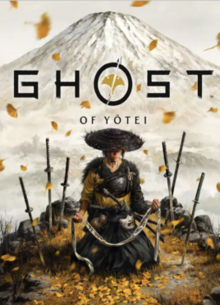

There is a stubborn breed of sequel that arrives not to reheat yesterday's triumph but to sharpen it into a new blade. Ghost of Yōtei is that kind of follow-up: a standalone continuation from Sucker Punch that trades the wind-swept plains of Tsushima for the stark, snow-silvered world around Mount Yōtei in 1603. You play as Atsu, a mercenary who has spent sixteen years whispering vengeance into her sword arm after the Night of the Burning Tree. The promise here is simple and old-fashioned-revenge, redemption and a finely tuned swordfight-and the studio largely keeps that promise. Watching a game like this land in 2025 is a curious exercise in nostalgia for critics who remember the print era: massive box art, glossy strategy guides and pages of frame-by-frame screenshots. Ghost of Yōtei wears its inspirations proudly. It wants to evoke samurai cinema, it wants to make you feel like the tragic lead in a monochrome duel, and it wants to give you a hefty toolkit to do it. Where it succeeds, it sings like a well-tempered katana; where it falters, it reveals the same open-world creaks that have been familiar since the last console generation. Expect a serious, cinematic narrative anchored by a capable lead, a combat system that rewards study, and an open world that is gorgeous if occasionally repetitive.
If you came to Ghost of Yōtei expecting a carbon copy of Tsushima, the first thing you'll notice is the new vocabulary. The old stance system has been shelved for a weapon counter system: instead of switching stances to match foes, Atsu's arsenal determines which counters are effective. This is more than window-dressing. Early on you have a katana and a grappling hook-Sucker Punch gives that grappling hook from the first hour, which changes traversal and encounter design in welcome ways. As you progress you unlock yari (spear), kusarigama (chain-sickle), ōdachi (greatsword), dual-katana options and a gratifying variety of ranged tools: hankyu and yumi bows return, and new toys like the tanegashima matchlock and the tanzutsu pistol make for cinematic long-range moments. Combat keeps the core of what made Tsushima feel weighty-parries, timed combination moves and the satisfying moment when a perfectly placed counter snaps an enemy's posture. New wrinkles such as disarming maneuvers, the ability to pick up and throw dropped weapons, and a summonable wolf companion add tactical layers. Boss architecture is deliberately dramatic: the Yōtei Six are more than faceless generals, and each encounter asks you to bring a different approach. The game's non-linear structure-choose the order of most fights against the Six, with Snake and Lord Saito fixed as prologue and finale-gives the campaign a pick-your-path quality that suits modern tastes while preserving a cinematic throughline. Outside of combat, Yōtei leans into a buffet of activities. Camps return as functional hubs for healing, cooking and crafting. Onsen bathing, sumi-e painting (replacing haiku), shamisen playing and gambling via zeni hajiki flesh out the life between duels. You can recruit allies into a Wolf Pack, take on bounty hunts, and master weapons through dedicated quests that unlock new abilities. These side systems are competent and occasionally charming; they rarely surprise. The guiding wind mechanic from Tsushima returns as a low-friction navigation aid, and a trio of visual modes-Kurosawa, plus homages to Takashi Miike and Shinichirō Watanabe-gives players neat options for presentation and tone. Multiplayer lives on in the form of Legends, a co-op mode announced as a free update for 2026. Expect two-player story missions and four-player survival bouts against monstrous interpretations of the Yōtei Six. For single-player purists the multiplayer is optional, but it stands as a promising way to stretch the game's combat into cooperative chaos.
Sucker Punch's scenic priorities are obvious: this game wants to be postcard-perfect. From the crisp, bone-white snowscapes of Teshio Ridge to the eerie green curtains of aurora borealis above the lake, the world is composed with a cinematographer's eye. Environmental sound recorded in Shiretoko National Park has a tangible effect; wind and distant wildlife lift the landscapes out of wallpaper and into atmosphere. Lighting and particle effects during storms and snowfall are particularly strong on PlayStation 5 hardware and lend combat an operatic flair when blades flash in falling snow. Character animation and facial work are generally excellent. Atsu moves like someone who spends all her free time sharpening swords and regrets, and NPCs have enough nuance to sell the quieter beats in the story. There are moments, however, where the open world betrays its seams: side-activity locales can feel reused, and certain quest design choices lean on familiar open-world tropes-go here, kill these, return-rather than the more handcrafted sequences the main campaign favors. Performance on PS5 is stable in my runs, with the occasional pop-in or LOD transition that a day-one patch will probably address. Presentation modes are more than gimmicks. Kurosawa mode's stark monochrome is not merely stylish; it changes the perception of scale and motion in a way that highlights Sucker Punch's choreography. The other two modes-wilder, more pulpy tributes-are fun and demonstrate a studio that knows how to play with tone without undermining the game's emotional core.
Ghost of Yōtei is the kind of sequel that treats its heritage with reverence but refuses to remain a museum piece. Its strengths are concentrated: satisfying, weighty combat; a central revenge narrative that earns its emotional moments; and a world that is frequently ravishing. Critics will argue-rightly-that the open-world scaffolding shows its age in places. Sidequests can feel rote, pacing can wobble, and the occasional design convenience will remind you this is an action-adventure built on an established template. Yet when a duel lands, when a story beat cuts clean and the score swells, the game achieves what it sets out to do. For players who loved Tsushima and wanted more samurai cinema with sharper teeth, Yōtei is a worthy successor. For newcomers seeking a leaner, more linear blockbuster, the game occasionally yearns for that focus. My verdict, printed with the no-nonsense clarity of a review once destined for newsstands, is this: buy it if you hunger for cinematic swordplay and a melancholic, well-told revenge tale. Skip it only if your patience for open-world padding has been exhausted by the last console generation. Either way, Sucker Punch has delivered a title that will be debated, praised and replayed in the months to come, and that, in the end, is what these samurai stories were always meant to do.
 Gravity Ghost: Deluxe Edition on PS4
 Echo Night 2: The Lord of Nightmares on PlayStation
 Action Man: Operation Extreme on PlayStation
 Adventure Time: Finn & Jake Investigations on PS4
 Alba: A Wildlife Adventure on Switch
 Door Kickers: Action Squad on Switch
 Infamous First Light on PS4










 Another SquareThought Site