

 Aug 2025
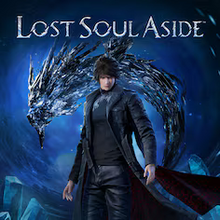

Lost Soul Aside reads like a development fairy tale: one graduate student (Yang Bing) shows a flashy prototype clip in 2016, a major publisher sees the spark, and nearly a decade later you get a Sony-backed, UE4-powered action-RPG shipped to PS5 and Windows. The technical pedigree is interesting on paper - Unreal Engine 4, a boutique Shanghai studio grown into a 40-person team and direct technical support from Sony on performance, audio, and project management - and that pedigree is visible at times in the final product. The game is unapologetically action-first: Kaser is your avatar, Arena is your Swiss Army-companion (a dragon-like entity that literally transforms into weapons and abilities), and the combat loop is what the team focused on most. That ambition is both Lost Soul Aside's strongest attraction and, occasionally, the source of its rough edges. Critics were split on whether the tradeoffs were worth it: Metacritic sits in the 'mixed' neighborhood (PC 55, PS5 62), which is where the technical realities and the design aspirations collide.
If you want the mechanical headline: Lost Soul Aside is a tight, weapon-swapping action system wrapped around a single-player, mostly-linear adventure with a handful of open-area detours and a 100-wave survival gauntlet called the Surge of Voidrax. The core interaction loop hinges on two complementary systems: Kaser's physical weapons (sword, greatsword, poleblade, scythe) and Arena, the companion who morphs into weapon forms and unique 'Arena powers' which provide offensive utility and situational effects. That combination yields a design focused on moment-to-moment decision-making: choose a weapon archetype for reach and recovery, swap to Arena-form to chain a special, then follow with Kaser's normal attacks to extend combos and reposition. From a technical-design perspective, the game wears its inspirations on its sleeve. The DNA of Bayonetta/Ninja Gaiden/Devil May Cry is visible in combo timing, emphasis on weapon diversity, and the expectation that animation transitions have to be immaculate. Ultizero's approach is pragmatic: implement four distinct weapon states, then layer Arena transformations as a kind of 'secondary moveset' that augments each state. That requires tight animation blending and input responsiveness. When the systems execute cleanly, input-to-output latency feels satisfying - quick weapon swaps, immediate Arena activation, and combos that visibly flow. When the systems falter, the issues are the typical ones for ambitious action games from a smaller studio: occasionally stiff transition frames, hit detection that feels just off during crowded encounters, and moments where enemy telegraphs and player animations don't perfectly line up. Level and progression structure emphasize linear pacing with narrative beats: save-and-hub function is deliberately manual and diegetic (Liana serves as both a character and the save mechanic) so checkpoints are meaningful but sparse. That design choice increases the stakes of combat encounters but also exposes players to repeated traversal whenever a mistake happens. Surge of Voidrax operates as a stress-test of the combat engine - 100 waves pushes combo variability, enemy spawn patterns, and the engine's ability to handle many simultaneous actors. For players who enjoy modular combat practice, Surge is a solid value add; for players who expected a fully open-world exploration or more robust RPG systems, the game's structural conservatism can feel limiting.
Hand-in-hand with the combat ambition is a clear visual program: an attempt to marry fantasy spectacle with a degree of photoreal detail. Yang's stated design goal - blending fantasy and realism - manifests in character costumes (notably Kaser's outfit, physically produced with input from Japanese fashion house Roen and then recreated digitally) and in the game's lighting and material work. Running on Unreal Engine 4, the team leaned on a conventional modern AAA toolkit: physically based rendering, layered materials, and particle-heavy VFX for Voidrax corruption and Arena powers. The asset quality is inconsistent in a way that reveals the project's long development arc: some set pieces and character models are finely realized with crisp textures and compelling silhouette design, while certain textures and background geometry can read as lower-res or reused. From a performance and platform standpoint the PS5 release benefits from Sony's direct optimization assistance during development; this appears to have helped smooth some of the game's heavier scenes and manage particle costs in prolonged fights. The PC port, however, shows why Metacritic numbers can diverge: platform fragmentation and driver variance likely contributed to a lower aggregate score on Windows, while the PS5's controlled hardware targets made optimization more effective. The Deluxe Edition cosmetics (Arena Golden Blaze, weapon fragments, accessory options) are pleasant, and they show attention to LOD and shader cost tradeoffs - cosmetics generally don't tank performance, which indicates decent engineering discipline when it comes to budgeted rendering passes. The other side of the coin is VFX abundance in late-game and Surge encounters, where particle counts and bloom spikes can create momentary frame pressure and visual clutter that occasionally undermines the readability of combat.
Lost Soul Aside is a technically ambitious action-RPG built around a signature companion mechanic and a clear combat identity. The reality of a long, multi-year indie-to-studio development cycle shows up in the final product as both character - creative design choices like Arena and weapon swaps that sing - and roughness - intermittent animation/hit-collision edge cases and uneven asset polish. Sony's involvement paid dividends in areas like performance optimization and production support, which helped the PS5 version land closer to the team's vision than the PC port in the eyes of many critics. If your tolerance for technical imperfections is high and you crave a combat system that rewards experimentation with weapons and companion powers, Lost Soul Aside offers enough mechanical juice to be worth your attention. If you demand a highly polished, seamless AAA experience across platforms or prefer expansive open-world RPG depth, this game will feel like a capable but imperfect dragon: impressive to behold, occasionally prone to hiccups, and fundamentally interesting despite its flaws.
 Antiquia Lost on PS4
 Another Lost Phone: Laura's Story on Switch
 Batora: Lost Haven on Xbox Series X/S
 Sony PS3
 Sony PS2
 Microsoft Xbox Series X/S
 Nintendo Switch










 Another SquareThought Site