

 Aug 2025
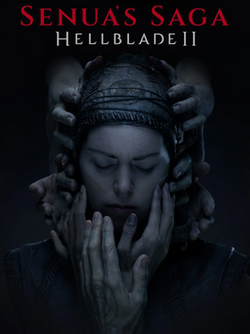

Senua's Saga: Hellblade II arrives like a Scandinavian postcard that also screams in your ear. It's a follow-up to Hellblade: Senua's Sacrifice, transplanted from Orkney to a very photogenic ninth-century Iceland and grown into something much larger, louder and better lit. Ninja Theory expanded from a twenty-person passion project to a studio of roughly eighty people working on this title, and it shows. The game keeps its thinly veiled obsession with psychosis (in a considered way, not a cheap shock-horror way), doubles down on binaural voices, and pairs them with the kind of visuals that make you feel guilty for playing on a couch instead of getting a PhD in glaciers. The PS5 release brings an "Enhanced" update across platforms, and on PlayStation 5 that means a Performance Mode giving you a smoother 60 frames-per-second ride, a new roguelike-ish mode wrapped around resisting the Dark Rot, improvements to Photo Mode and developer commentary. It also gives you Melina Juergens' Senua in full cinematic glory - her motion-captured performance won awards for a reason. If you enjoy moody mythology, audio that whispers secrets in both ears at once, and combat that looks like it was choreographed by someone who watches too much medieval TV, this sequel is the kind of thing you put on your watchlist and then immediately force your friends to stare at for six hours.
Senua's Saga is a third-person action-adventure that keeps the original's appetite for atmosphere and shrinks the patience required for slow puzzle-babble. The core loop is familiar: explore landscapes, solve environmental puzzles with runes and context, collect little lore bits like hidden faces and Lorestangir posts, and occasionally stab things until they stop being a problem. Exploration feels purposeful: weather and physics matter, so expect to slide off icy slopes, be buffeted by storms, and suffer the kind of travel penalties that make a quick detour feel like a personality test. Combat has been rebuilt to feel more immediate and tactical compared to the original. Senua's move list is bigger, the encounters are faster and more fluid, and there's a time-slowing mechanic for snappier strike windows. Enemies arrive with clearer patterns and distinct weaknesses, which encourages swapping tactics mid-fight rather than mashing the same button until the animation feels remorseful. Motion-captured choreography was inspired by large-scale TV fight sequences - think personal, brutal brawls rather than sword-dance ballets - and that translates into fights that look and feel cinematic. The trade-off is that spectacle sometimes outruns substance. Several reviewers noted the combat favors cinematic moments over mechanical depth; it looks excellent and often feels satisfying, but it doesn't necessarily reward the kind of repetitive mastery you get in deeper hack-and-slash games. Pacing also trips over itself: interludes of excellent character work and heavy atmosphere can be punctured by prolonged combat beats or puzzle segments that hang around for longer than they need to. The built-in roguelike mode added for the PS5 Enhanced update tries to give the late campaign a different rhythm by focusing on resisting the Dark Rot, which is a neat idea if you want a new way to experience the same game systems. The game is single-player and similar in length to its predecessor; expect roughly a six-hour main experience if you move with purpose, longer if you dawdle through the scenery or hunt collectibles. The puzzles are more integrated with the environment than in many modern action titles; runes and environmental manipulation ask you to interact more with the world than to think like an awkward videogame textbook. Meanwhile, the voices that haunt Senua remain both gameplay guide and narrative device, steering you through choices and mood shifts. If you like story-led games that occasionally make you work for the moment, this one is tuned for that audience.
If you wanted the graphics description in a brochure it would read: "Unreal Engine 5, MetaHuman faces, satellite data of Iceland, hair physics that behave like living things and more subsurface scattering than a medical journal." In plain terms: this is one of those games where facial animation and environmental fidelity are not merely features but personality traits. Ninja Theory scanned clothing, hair, and period materials, used satellite data to rebuild landscapes, and leaned on Epic's MetaHuman and third-party tools like Ziva Dynamics to get the finer details right. The result is photorealism pushed into cinematic territory - Senua blinking, breathing, and crying looks suspiciously like a person and not a polygon pretending to be alive. Audio gets its own praise because it earned one. Binaural recording makes the Furies and other voices creep around your head in a way that starts as atmospheric and can easily graduate to legitimately unsettling. The soundtrack leans on ritualistic, throat-singing textures (Heilung contributed) and detailed Foley work, and that sound design isn't a garnish: it's the main course. The PS5 Enhanced update's Performance Mode is a meaningful improvement if you prefer smoothness to a more "cinematic" 30fps cap that Ninja Theory originally used for Series X/S. Lighting and textures won awards, and for once the awards don't feel like bribery. If visuals are what you camped in an internet queue for, this game will be the moment your GPU swears it needs a break.
Senua's Saga: Hellblade II is a gorgeous, often harrowing piece of interactive storytelling with a combat system that enjoys looking impressive and occasionally forgets to be ruthlessly deep. It takes the intimacy and psychological weight of the first game and widens the lens: Senua is no longer only an inward storm, she's a person with relationships, responsibilities and a voice that a little too often whispers in stereo. The PS5 Enhanced edition fixes some performance gripes and adds modes that extend play without undermining the main narrative. If you want a tightly told, visually superb six-hour romp through myth and mind, buy this. If you want a deep, endlessly replayable combat simulator, temper expectations. Most players will find the package worth the ticket: artful, polished, occasionally flawed, and frequently unforgettable. Score: 8.5/10 - because it looks and sounds like a masterpiece, behaves occasionally like a blockbuster, and still remembers to make you care about its heroine.
 Hellblade: Senua's Sacrifice on Xbox Series X/S
 Senua's Saga: Hellblade II on Xbox Series X/S
 Sony PS3
 Sony PS2
 Microsoft Xbox Series X/S
 Nintendo Switch
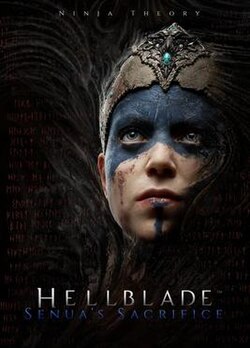 DmC: Devil May Cry Definitive Edition on PS4
 DmC: Devil May Cry on PS3










 Another SquareThought Site