

 Oct 2025
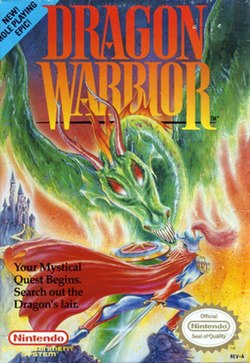

Dragon Quest is the video game equivalent of a grandfather who invented the family recipe and then refused to stop improving the stove. The original 1986 Dragon Quest (Dragon Warrior outside Japan) laid the blueprint for console RPGs: menu-driven commands, turn-based combat, experience-based progression, and a top-down world where the Dragonlord lurks ominously on the horizon. The HD-2D Remake of Dragon Quest I & II arrives with that venerable DNA intact but dressed in today's visual tech - an Unreal Engine 4-powered hybrid that fuses classic 2D sprite readability with modern lighting, shaders, and depth tricks. This review targets the Switch version and leans hard on technical details, because if you're going to remake a foundational RPG you may as well interrogate how the pipes and pixels have been rewired.
Fundamentally, the remake preserves the original gameplay architecture described in the sources: single-party adventure, random one-on-one turn-based encounters, a lightweight menu with 'fight / run / spell / item' options, and a world where the difficulty gradient is signalled by geography (bridges, islands, and the increasing monster levels as you venture from Tantegel Castle). Those systems are simple by modern standards, and the HD-2D project smartly treats them like a museum piece you still want to play rather than a museum relic. On the mechanical side, the remake keeps the economy of resources (limited inventory, HP/MP management, inns and shops, and the punitive half-gold-on-death reset to the castle) that defined the original tension. Where the release leans forward is in quality-of-life and system hygiene: previous remakes (notably the GBC compilation) added quicksave, stored gold options, and faster XP yields to compress the grind. The HD-2D package appears to adopt that lineage - menus are modernized with direct button bindings and fewer nested lists, and the message speed options that used to be a startup setting are now an in-game toggle. Those changes matter: they preserve the original design while trimming friction that would otherwise force today's players to wrestle with archaic pacing. Encounter design remains classic random battles, which is a deliberate design choice rather than an oversight. The remake does not attempt to convert everything to visible overworld foes; instead, it uses encounter rate tuning and map design to control pacing. For players who prefer less randomness, modern remakes sometimes offer accelerated encounter rates or autofights - options well worth including here. Combat itself is faithful: one monster at a time, spell/MP budgeting, and the classic risk/reward of attempting to flee. The decision to keep single-target, simpler battles is sensible because the tactical surface of Dragon Quest I is not in flashy combos but in resource planning and route optimization. Localization and narrative quirks are treated with respect. The series has historically seen multiple translations - from the pseudo-Elizabethan English of the NES localization to the GBC retranslation that restored closer-to-Japanese names (Erdrick->Loto, Dragonlord->DracoLord). The HD-2D Remake walks a narrow line: maintaining the charm of Toriyama's art and Sugiyama's tunes while giving modern players clear naming and readable dialogue. The inclusion of a post-credit narrative sting (a cameo for Hargon) is the kind of small addition that rewards series lore fans without altering the core loop. From a controls standpoint on Switch, the game benefits from standard controller mappings (d-pad/left stick for movement, face buttons for confirm/cancel, shoulder buttons for quick access to menus). Handheld and docked modes will likely influence UI scaling; pixel clarity for 2D sprites must be preserved at lower resolutions, something the remake's art pipeline must be tuned to do reliably.
The HD-2D label is not a fashion statement - it's an engineering approach. The remake uses Unreal Engine 4 to layer high-resolution lighting, volumetric and sprite-based particles, and cinematic camera moves over a foundation of pixel-art character sprites and tiled maps. That hybrid pipeline solves two problems at once: it preserves sprite clarity (essential for readable enemy telegraphs and UI text) while allowing modern graphical affordances (dynamic shadows, bloom, depth-of-field) to add drama to spell effects and overworld vistas. Technically, HD-2D is about compositing: 2D sprite assets live on flat planes in a 3D scene; lights and post-process shaders then act on those planes to create convincing depth. The benefit is that Toriyama-derived character silhouettes stay crisp, but spells like 'RADIANT' suddenly feel weighty because of bloom, light shafts, and particle systems layered on top. The Unreal Engine 4 basis gives the team mature rendering tools-deferred lighting, temporal anti-aliasing, and robust asset streaming-which are important when deploying to Switch hardware with its memory and bandwidth constraints. On a GPU with limited VRAM, the usual HD-2D trade-offs apply: texture atlases and clever sprite packing reduce draw calls, while LODs for background geometry and baked lighting on distant tiles preserve framerate. Effective use of post-process sharpening and UI mipmapping ensures that pixel work doesn't become a blurry mush on a 720p handheld screen. The remake's visual success hinges on how well it balances those trade-offs: keep sprite pixel integrity, avoid over-blurring from DOF, and make particle overdraw manageable so spells don't trigger frame drops. The orchestral and chiptune hybrid audio design (Koichi Sugiyama's melodies are a franchise touchstone) also demands a careful audio mix so cues remain clear even when the scene gets busy.
Dragon Quest I & II HD-2D Remake on Switch is a technically thoughtful reconciliation of retro design and contemporary presentation. The team's use of Unreal Engine 4 to realize HD-2D aesthetics is the right tool for the job: it preserves the sprite-first readability that the original gameplay requires, while adding lighting and effects that make exploration and spellcasting feel cinematographic without changing the underlying mechanics. The gameplay remains intentionally spare - random encounters, simple battle commands, and an emphasis on resource management - but modernized interface and save options reduce needless frustration and let the design breathe. If you come to this remake expecting an overhaul that turns the game into a modern action-RPG, you'll be disappointed; its ambition is conservation through refinement. If you want the original Dragon Quest experience with a fresh coat of technical polish - cleaner menus, HD-2D cinematics, and Sugiyama's themes presented with fuller production - this is a satisfying translation. For fans who prize fidelity and newcomers who want an approachable classic that doesn't feel like a time-capsule punishment, the Switch version is a smart compromise: reverent to the past, engineered for the present. Score: 8/10 - an excellent technical restoration that remembers why the original mattered, and chooses to enhance rather than rewrite its legacy.
 Dragon Quest X Offline on PS5
 Dragon Quest Treasures on Switch
 Dragon Quest Heroes II on Switch
 Arcania: The Complete Tale on PS3
 The Banner Saga 2 on PS4
 Gothic Remake on PS5
 Kurikin Nano Island Story on DS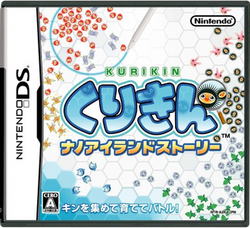
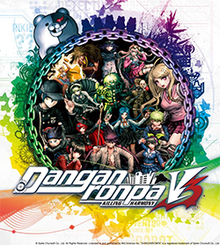 Danganronpa Trilogy on PS4
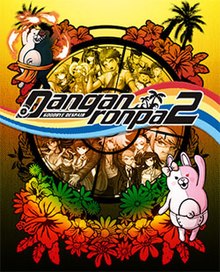
 Danganronpa 2: Goodbye Despair on Switch
 428: Shibuya Scramble on PS4
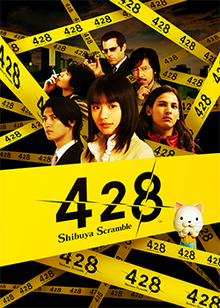 428: Shibuya Scramble on PS3
 Dragon Quest IV on PlayStation










 Another SquareThought Site