

 04 Sep 2025
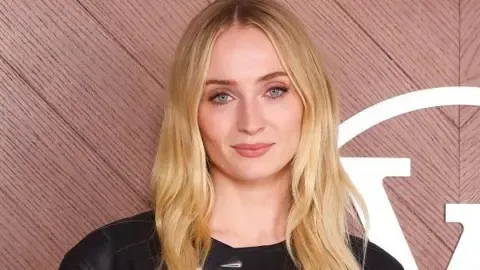
Prime Video just added a fresh arrow to the quiver of adaptations: Sophie Turner has officially been cast as Lara Croft in Amazon's live-action Tomb Raider series, which begins shooting in January 2026. The series is being shepherded by creator/writer/executive producer Phoebe Waller-Bridge, with Chad Hodge aboard as co-showrunner and Jonathan van Tulleken directing and executive producing. If you grew up muscle-memorying the sound of Lara's climbing grab or yelling at environmental puzzles, this news raises one gigantic question: can a TV show capture the specific kind of challenge and skill that made Tomb Raider games a rite of passage for players?
Tomb Raider isn't just a character, it's a curriculum. Across decades of games - from the rigid, trap-filled stages of the PS1 era to the gritty, survival-focused trilogy that rebooted Lara's origin in the 2010s - the franchise has always been about testing a player's toolkit. The challenges are modular but merciless: precision platforming, context-sensitive puzzle solving, emergent combat encounters, resource scarcity that forces decisions, and the stamina-sapping mental load of exploration. In short, Tomb Raider asks you to be patient, smart, fast, and occasionally very ruthless with timing.
There are trophies for button-mashing triumphs, but the good stuff comes from learning to read an environment. The jump that looks possible but kills you if you mistime it. The lever that telegraphs nothing and is hidden behind a physics puzzle. The narrow corridor that changes the pacing from macgyvering your way past traps to full-on stealth. Those are the moments that make Lara an icon - not her sunglasses, not her zipline, but the way the game demands expertise.
If a show wants to reflect the games honestly, the production has to understand what it is asking viewers to believe Lara can do. Here's the short list of skills that define the Tomb Raider experience, and why they matter:
These aren't just mechanics; they're a personality. Lara's competence in games comes from long-form practice loops where failures teach muscle memory and players evolve strategies. Translating that to TV means tastefully staging challenges so audiences can feel the stakes without having to grind a checkpoint over and over.
Video games are interactive by design - you fail, repeat, learn, and eventually master. TV has no controller. But that doesn't mean it can't convey the sensation of difficulty. There are three storytelling levers a Tomb Raider series can pull to communicate skill-based challenge:
Done well, the show can make viewers feel smart by proxy. They'll anticipate the solutions the same way players do in a game - rooting for that satisfying click when the puzzle finally yields.
Sophie Turner is best known for Sansa Stark's emotionally resilient arc and her comic-book turn as Jean Grey in the X-Men films. On paper she brings range: quiet interiority and a capacity for sudden ferocity. That duality is useful for modern Lara, whose evolution across the 2010s games was all about a young woman learning to fight for survival while retaining moral clarity.
But casting an actor is also about believability in the physical demands. The role will likely require parkour training, stunt coordination, weapons handling, and the ability to sell exhaustion without collapsing into melodrama. Turner has already done physically demanding work, and with the right movement coaches she can develop the precision hikers and gamers recognize as authentic Lara. Moreover, under a director like Jonathan van Tullek ken and a creative lead like Phoebe Waller-Bridge, there's an opportunity to balance bone-crunching survival with a renewed, sharp-witted characterization.
Phoebe Waller-Bridge's involvement is the spicy seasoning here. She's brilliant at making protagonists lovable without reducing them to a punchline. Expect a script that leans into Lara's inner voice - quick observational intelligence, dark humor, strategic decision-making - while resisting the urge to over-explain every gameplay-like beat. If the show channels the games' puzzle-driven tempo and Waller-Bridge's knack for character-driven comedy and tension, Amazon could land a fresh Tomb Raider that respects both fans and newcomers.
Chad Hodge as co-showrunner and Jonathan van Tulleken as director/EP suggest the series will balance serial storytelling with visual spectacle. Production kicking off in January 2026 gives the team time to build proper stunts and practical sets rather than leaning entirely on CGI - a key step in selling tactile challenges.
One of Tomb Raider's cleverest mechanics is using the environment as a weapon or a shield. On-screen, that translates into choreography where Lara fights smarter, not just harder. Expect fight scenes that emphasize ingenuity: turning a broken mast into a makeshift spear, collapsing a corridor to block pursuers, or using fire and falling debris strategically. Resource management in a narrative can be shown through simple yet potent beats - she patches wounds with improvised bandages, debates whether to use scarce bullets or conserve them, or sacrifices tools to escape a trap. These choices convey scarcity tension without hand-holding.
If you want to get inside Lara's mindset - either as a fan aiming to crush the hardest Tomb Raider challenges or as someone curious about what the actor will train for - here's a cheeky training regimen that covers the fundamentals:
Adaptations often fail when they reduce gameplay to spectacle. Gamers remember nuance: the learning curve, the pain of repeated deaths, the eventual euphoria of nailing a sequence. If Amazon's Tomb Raider leans into those skills - not just the glamorous explosions - it can justify its existence to the very audience that made Lara Croft a cultural monolith. And for anyone who's ever thrown a controller across the room after missing a ledge, seeing an actor wrestle with the same problems in a way that respects player intelligence will be glorious catharsis.
Sophie Turner's casting is the first tangible piece of a puzzle many of us have been eyeing since Prime Video greenlit the series. With Phoebe Waller-Bridge at the helm and a production schedule that permits careful stunt and set work, there's reason to be cautiously optimistic. The biggest gamble will be whether the show respects Tomb Raider's core: that the fun of Lara Croft is equal parts brain and brawn. If the series can dramatize the franchise's hard-earned lessons without diluting them into mere action beats, viewers will get something both faithful to the games and thrilling on its own terms. Until January 2026, dust off your climbing gloves and your lateral-thinking brain - the tombs are coming to the small screen, and they expect competence.










 Another SquareThought Site