



If you look up "time-traveling mansion, dandelion spires and an accidental busking hero who moves in because rent is cheap," congratulations - you have discovered Popotan. Oshiete! Popotan is the PlayStation 2 port of a fairly notorious Japanese visual novel originally made by Petit Ferret. This PS2 release (handled by Success and published by WellMADE) takes the DVD-ROM version of the game, trims the adult-only bits to satisfy Sony's content rules, sprinkles on some UI and graphical tweaks and ships it out with a reversible poster, a music CD and a themed calling card if you pre-order like it's the early 2000s all over again. The game's premise is equal parts melancholy and sugar: Chris, a directionless drifter and part-time busker, wanders into a European-style mansion in a post-cataclysmic Tokyo and promptly becomes the live-in convenience-store clerk slash reluctant mascot for three sisters and their robot maid. The sisters - Ai (18), Mai (14), and Mii (11) - are a motley crew who may or may not be linked to a giant dandelion-spire that wrecked Tokyo ages ago. Yes, the setup is weird. Yes, the visuals are cute. Yes, the smallest sister is eleven. The PC original was an eroge; the PS2 version removes the explicit scenes but keeps the story beats, the timey-wimey mystery and the occasional eyebrow-raising moment.
If you have ever played a visual novel, you know the drill: lots of reading, a menu prompt, and the crushing responsibility of choosing between two dialogue options that will change the course of your life (or at least the current route). Oshiete! Popotan is a text-first experience. Most of your time is spent digesting the protagonist's existential grumbling and the sisters' attempts to be adorable, while making decisions at branching points that direct which sister's storyline you pursue. The PS2 port builds on the DVD-ROM changes: it keeps the semi-predetermined main plot elements but lets personal arcs branch depending on your choices. Unlike the early PC build where saves were restricted to when text was present, the PS2 version lets you save with a little less commitment-phobia - a welcome QoL improvement for the impulse-saver contingent. Beyond the standard visual-novel fare, Popotan tucks a quirky little rhythm/music mini-game into Mii's scenario. When Mii cosplays as "Magical Girl Mii," you get a ball-bouncing timing game where hitting the notes at the right moment fills a magical-power meter. Do well and the story veers toward success; do poorly and the consequences ripple into the narrative. It's retro-cute and, more importantly, breaks up the reading with an actual interactive diversion - a tiny island of action in a sea of reading. Choices unlock content. Finish a sister's route and you can access new characters or omake extras. Ai's route, for example, unlocks a bonus story featuring Unagi (a ferret/mascot character), and completing Mii's properly paves the way for extra mini-game modes. The PS2 port claims to compensate for the removed adult scenes with new events, adjusted scenes and improved graphics. Whether those changes fully replace the original game's tone is subjective, but they show the devs tried to offer something extra rather than just censor and ship. The game uses a simple but clever character-placement system so characters farther from Chris appear smaller, and those closer are larger. It's a subtle visual shorthand for "who's in the room and how important they currently are," and it's charmingly old-school. Also worth mentioning: the original PC release had some severe launch bugs (glitches, save/load failures and mini-game failures), but Petit Ferret patched those out early on. The PS2 port is based on the cleaned-up DVD-ROM edition, so at least you won't be haunted by the 'it won't start' demon.
Oshiete! Popotan isn't trying to be a PS2 tech demo; it's a 2D, character-driven visual novel, and it leans heavily into the strengths of that format. Akio Watanabe (working under the Poyoyon Rock moniker) provided the character art, and if you've seen early-2000s bishōjo character design you'll feel right at home: big sparkly eyes, hair that defies gravity for expressive purposes, and a design language tuned for merch and opening sequences. Petit Ferret created over a thousand two-dimensional assets for backgrounds, events and character poses; the characters' mouths and eyes animate minimally, but there are dozens of pose variations to keep scenes visually interesting. On PS2, WellMADE tried to sweeten the deal by polishing the assets and adding small graphical improvements. These polish touches make the mansion and ruined-Tokyo backdrops feel like carefully drawn dioramas rather than bland static images - which matters, because the art carries a lot of the game's emotional weight. The character placement system - where size denotes distance from the camera - amplifies the sense of space without needing full 3D. If you're playing for the visuals, you'll likely enjoy the character sprites and the way they emote via pose swaps. Sound design and music deserve a shout-out too. The series is blessed (or cursed, depending on your musical tolerance) with theme songs and music by Under17, whose catchy, high-energy tunes were bundled early on as pre-order bonuses and helped the franchise reach a cult audience thanks to the internet. The PS2 port includes a music CD in some editions and leans into that poppy, idol-esque soundtrack vibe. Voice acting is present for the main cast, and while some performances are divisive (Mii's voice got some flak in English dubs), the Japanese cast brings a lot of personality to the sisters. The overall audio-visual package fits the mood: light, occasionally melancholic, and instructed to look adorable while hinting at a bigger mystery.
Oshiete! Popotan on PS2 is a guilty-pleasure visual novel that tries to be both candyfloss and mystery cake at the same time. If you're there for slice-of-life warmth and character bonding, it delivers: Chris' slow thawing from drifter to semi-responsible convenience-store employee is a surprisingly gentle human story. If you're there for the original PC eroge's explicit content, the PS2 port politely asks you to sit down and enjoy the story instead - while still retaining enough weirdness (time travel, a dandelion spire, a nine-yearly five-year hop through eras) to keep things interesting. There are caveats. The game's tonal swings can be awkward; some episodes edge into heavier territory while others play like a light comedy commercial for cute merchandise. The inclusion of a young eleven-year-old as a major romantic-interest route in the original game's premise remains an uncomfortable note for many - the PS2 release's censorship and re-treading of certain scenes do not erase that element of the source material. Critics who reviewed the port were lukewarm (Famitsu's 22/40 score is evidence that the translation from PC to console was not universally adored), yet fans appreciated the extras, improved stability and the tiny gameplay diversions. If you're an anime/VN tourist exploring early-2000s Japanimation culture - or you're one of the people who watched the "Caramelldansen" meme explode into the internet - Popotan is worth a look as a cultural artifact. It's not a flawless game, but its charm is genuine: memorable character designs, a simple but effective interface, a catchy soundtrack and a narrative that wants to be both cute and strangely sticky with mystery. For a PS2-era visual novel that tried hard to adapt an adult game into a console-friendly package, 6.5/10 feels about right: quirky, occasionally brilliant, sometimes problematic, and definitely memorable.
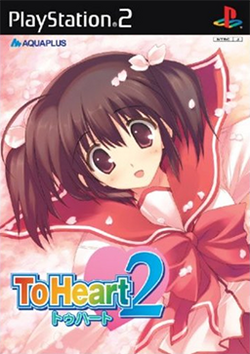
 Pachislot To Heart 2 on PS3
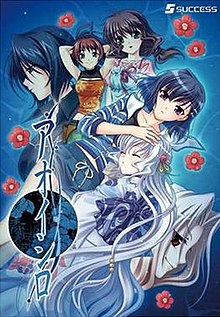
 Tomoyo After: It's a Wonderful Life on PS3
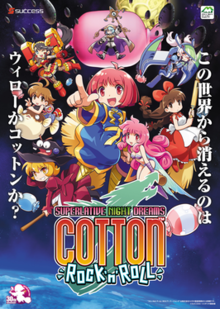
 Cotton Rock 'n' Roll on PS4
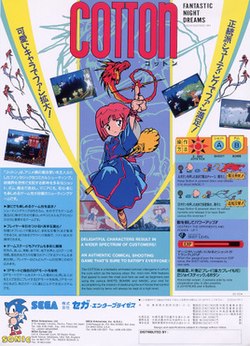
 Arcade Archives: Cotton: Fantastic Night Dreams on Switch
 Akai Ito HD Remaster on Switch
 Cotton Rock 'n' Roll on Switch
 Cotton 100% on PS4












 Another SquareThought Site