



Pool Shark 2 (stylized Pool:shark 2) landed on consoles in late 2004 as Blade Interactive's sequel to their earlier cue-sports offering. Officially published by Zoo Digital Publishing, the game released on PlayStation 2, Xbox and Windows - the PS2 version notably fared better with critics. This review focuses on the PS2 build and treats the game like an engineer at a pool hall: precise, mildly cynical, and suspicious of anyone bragging about 'realistic physics.' I dig into the technical bones - controls, physics, platform tuning, and how the PS2 version compares against its Xbox and PC siblings in terms of polish and performance according to contemporary reception.
Pool Shark 2 is, at its core, a cue-sports simulator that offers single-player and multiplayer modes. The mechanical stakes in any virtual pool game are simple on paper and brutally revealing in practice: input fidelity, physics accuracy, collision resolution, camera ergonomics and feedback loop latency determine whether a 45-degree bank shot feels like art or a network of broken springs. On PS2 the game's control mapping leverages the DualShock's analog sticks and pressure-insensitive buttons to translate thumb nudges into cue movement and aiming. That mapping is critical because unlike arcade-y physics where the engine forgives your sins, cue-sports sims demand millimeter-level consistency in angle and speed. Technically the game's shot system seems engineered around a deterministic shot-resolution pipeline: player input defines cue direction, cue elevation (for English and masse attempts) and shot power, which together seed the physics solver. The ball dynamics then unfold under the game's collision and friction model. Critical in this chain are two developer decisions: the integration timestep used by the physics solver and the collision detection granularity. A smaller timestep yields more accurate spin and slow-roll behavior at the cost of CPU cycles. Blade Interactive appears to have found a practical midpoint on PS2 where object stability and responsiveness trade off favorably against console limitations. The consistent reception of the PS2 build (Metacritic ~77/100) suggests the studio tuned the solver's parameters per-platform, which is exactly what a good port team does. Where the gameplay frays is not in concept but in edge cases. Long, low-speed follow-throughs and complex multi-cushion caroms expose numerical imprecision; small angular discrepancies compound across collisions and manifest as inexplicable seven-foot misses. That is likely a product of collision resolution prioritizing speed (fewer iterations per collision) over absolute accuracy. The AI, another technical pillar, functions acceptably as a pacing mechanism for single-player - it doesn't out-cheat you with supernatural aim, but it also doesn't reliably simulate a high-skill human opponent in shot selection nuance. Multiplayer, when present, is straightforward local pass-and-play and split-screen affairs, which sidestep networking botches entirely but also limit the game's longevity compared with online-enabled tables that were becoming more relevant in that era. The UI and camera systems are worth calling out. A clean, unobtrusive HUD that communicates cue angle, power meter, and spin vector is the difference between a satisfying table and a fog of indecision. Pool Shark 2 prefers a classic overlaid HUD with a free-floating camera that can lock overhead or zoom to a follow-cue perspective. That camera variety is a pragmatic feature for accessibility, but camera interpolation and cinematic easing occasionally introduce motion that slightly desynchronizes visual cue contact from the audio-visual thump - a tiny but noticeable latency artifact for players sensitive to audiovisual alignment. Practically speaking, PS2 players receive the most refined presentation of these systems compared to other platforms, which may explain platform variance in critical reception.
Graphically Pool Shark 2 sits squarely in the mid-2000s console aesthetic: realistic textures for felt and wood, character models that are serviceable but not photoreal, and lighting that emphasizes contrast on the table surface to sell depth. The visual realism that matters for cue sports is not photoreal hair or facial micro-expressions, but the table: cloth wear, pocket geometry, cushion rebound behavior and specular highlights that convey ball spin. On PS2, the texturing and specular work are tuned to keep the table readable at typical camera distances, and shader work is simple but efficient - largely dependent on per-vertex lighting with a few per-pixel touches where hardware permits. Performance-wise the PS2 version appears to be the best-balanced build. Contemporary aggregate scores show the PS2 edition enjoyed 'generally favourable reviews' versus the 'mixed or average' response for PC and Xbox. That discrepancy often points to optimization choices: PS2 builds that are tuned natively to the hardware frequently avoid framerate dips that plague under-optimized PC ports with mismatched engine assumptions or Xbox builds carrying additional visual fidelity at the cost of consistent framerate. On PS2, stable framerate and predictable draw calls are more important for gameplay feel than an extra dozen texture megapixels. The PC's lower Metacritic score (54/100) suggests potential issues with scaling, input mapping, or that the physics engine wasn't retuned for vastly different CPU/GPU combinations. PC ports of console physics games often suffer from timing issues because desktop environments can run the physics at a higher or lower tick rate than intended, resulting in 'float drift' that changes the behavior of spin and speed. Conversely, the Xbox's middle-ground score indicates a competent port with some visual or performance compromises but not catastrophic ones. On PS2, the careful balancing act between visual fidelity, draw distance (trivial in a billiards game, but relevant for background geometry), and physics timestep gives a coherent feeling at the table that reviewers appreciated.
Pool Shark 2 on PS2 is a textbook example of the importance of platform-aware engineering for sports sims. Blade Interactive delivered a PS2 build where control responsiveness, a tuned physics solver and stable performance coalesce into a playable and reasonably authentic cue-sports experience. If you want a quick verdict: PS2 owners looking for a solid local multiplayer pool sim in 2004 could do worse than this sequel; it's polished in the areas that matter for cue games. The PC and Xbox releases' lower critical reception, as documented by Metacritic, underlines that ports are technical beasts - unrefined timing, input handling and lack of per-platform tuning can ruin what was otherwise a tidy PS2 package. For an 18-year-old who likes to nerd out about why a virtual 8-ball hugs versus skips a cushion, Pool Shark 2 is enjoyable because it invites forensic analysis. It's not the final word in digital pool - edge-case physics and sometimes bland AI keep it from mastery - but on PS2 it hits a sweet technical spot where the fundamentals are honest and responsive. Score it as a competent, technically-minded cue-sports sim: fun at the table, better on PS2, and an instructive case study in why cross-platform engineering matters.
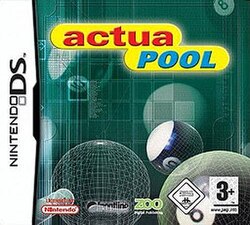
 Actua Pool on DS
 Pool Paradise on PS2
 Accolade Sports Collection on Xbox Series X/S
 Deca Sports DS on DS
 Alan Hansen's Sports Challenge on PS2












 Another SquareThought Site