

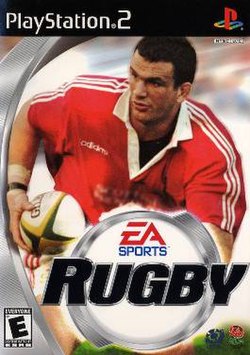

If video games were novels, Rugby (released on PS2 in mid-2001) would be one of those earnest ensemble dramas with sweat-streaked protagonists, tactical monologues, and a chorus that refuses to stop explaining the obvious. Built by Creative Assembly and stamped with the EA Sports seal, this entry doesn't try to re-invent the playbook so much as dramatize it: over 20 teams, more than 500 players and 20+ stadiums all parade across the pitch like a reluctant soap opera. The cast list includes the real-world legends who took part in the 1999 Rugby World Cup and a cover boy in Martin Johnson who looks like he could bench-press your seriousness. Meanwhile, commentators Bill McLaren and Jamie Salmon double as Greek chorus and halftime critics - part lorekeepers, part ex-coach uncle who yells good advice from the stand. This review treats the teams and players as characters with arcs: some heroic, some tragic, some bewilderingly flat, but all entertaining to watch if you like the sport or enjoy a good, sweaty narrative.
Rugby rigs its gameplay as a theatrical conflict between honor, stamina and the game's own control scheme. The scrum is the inciting incident: a slow, heavy, communal shove where your forwards can either become a symphony of coordinated pain or a pile of confused models flailing for the ball. That tension sets the tone for most matches. The fly-half is the tactician, the protagonist making choices about direction and tempo. The forwards are the tragic bulk, trading glamour for necessity: collisions, rucks and mauls are their scenes, often unsung but vital. Then there are the wings and fullbacks, cinematic in their sprints and the usual suspects for the game's highlight moments - classy runs that feel like a character finally realizing their potential. Controls are serviceable rather than poetic. Passing, kicking and tackling have weight to them; timing matters. When it works, a well-executed chip-and-chase feels like the payoff of a long subplot: the winger you've worked to free finally shakes his marker and the crowd roars (or at least the generic crowd noise swells). When it fails, the centre drops the ball as if forgetting his lines and the moment collapses into awkward silence. The AI is competent enough to stage believable opposition: smarter teams will pressure your decision-makers, forcing clumsy passes and rushed kicks, while weaker sides allow you to play out your script without much improvisation. Career-less but roster-rich, Rugby chooses breadth over a single-player saga. The inclusion of national teams from the 1999 Rugby World Cup gives the game a historical cast list - you can pit the underdog against the champion and watch narrative expectations either hold or hilariously crumble. There's no deep manager mode to craft character development across seasons; instead players age and get remembered by stat lines and highlight reels. Multiplayer is where many character arcs find closure: two friends can turn a journeyman flanker into a folk hero during an evening of knock-out matches. The commentators add finishing touches, providing context and sometimes unintentionally comedic narration. Bill McLaren's baritone and Jamie Salmon's ex-player perspective attempt to add depth, but often they repeat catchphrases like a theme tune, which starts charming and ends less so. Rugby's balance is its most human trait. It's honest in its limitations: not a sim trying to be a miracle, not an arcade game desperately trying to be real. It sits in that niche where strategy and spectacle meet, and if you enjoy the interplay of personality types on a pitch - the stern captain, the reckless wing, the dependable prop - there are satisfyingly dramatic arcs to be found in a single full match. Expect memorable one-offs rather than growing epics; the game gives you a dozen compelling short stories instead of one long, involved novel.
The visual presentation is a time capsule of early PS2 ambition. Players are blockier than modern standards but animated with a convincing sense of mass; scrums look heavy, tackles are clattery and the stadiums have shape and character. Character faces aren't photorealistic (even Martin Johnson looks more like a heroic statue than a man), but the kits, grass and lighting do enough to place you in varied locales - from wet, muddy pitches to sunlit arenas. Camera work privileges the drama: close-ups on line-outs and replays feel theatrical, enhancing the idea of players as characters. It's not pretty in a hyperreal sense, but the aesthetic supports the game's narrative aim: to make each collision feel consequential. Over time the textures blur and the crowd becomes a wallpaper of movement, but the core animations - the run, the tackle, the forced turnover - remain satisfying and readable.
Rugby on PS2 isn't a character-driven drama in the usual narrative sense, but it wears its ensemble cast proudly. Creative Assembly and EA Sports didn't build a saga with player progression and sweeping epics; they assembled a roster that behaves like a troupe of actors on a pitch, with short, meaningful arcs appearing every match. If you want a deep career mode that ages and reshapes souls, look elsewhere; if you want the thrill of a well-timed pass, the catharsis of a defensive turnover and the small cinematic joys of a winger running down the sideline while the commentator goes slightly overboard, Rugby delivers. The critic scores at release hovered around the 'good, not dazzling' mark - the consensus fits: fun, occasionally clumsy, and earnest. Give it a night, invite a mate, and let the characters on the field tell you their brief, bruising stories. You'll probably leave with a few great highlights and a new appreciation for what a prop can endure.
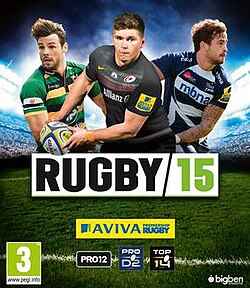 Rugby 08 on PS2
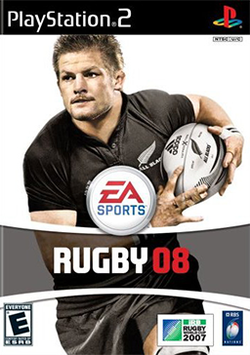 Jonah Lomu Rugby on PlayStation
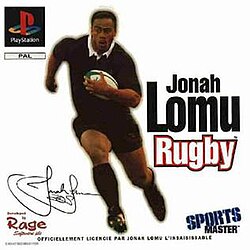 Rugby League Live 4 on PS4
 Accolade Sports Collection on Xbox Series X/S
 Deca Sports DS on DS
 Alan Hansen's Sports Challenge on PS2
 EA Sports MMA on PS3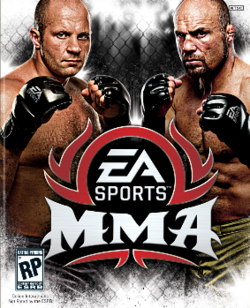
 Alien: Isolation on PS4
 Alien: Isolation on PS3
 AFL 99 on PlayStation
 Sonic Classic Collection on DS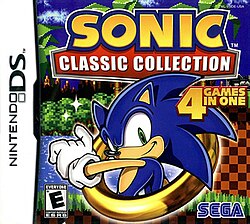












 Another SquareThought Site