

 Jan 2012
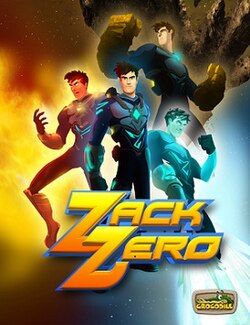

Zack Zero is a 2.5D platform‑adventure from Crocodile Entertainment that asks you to do something videogames do best: save somebody you care about from a cartoonishly evil mastermind. In this case it's Marlene, kidnapped by the sinister Zulrog for possession of a time‑travel material called Kelestinia. The game landed on PSN in January 2012 and later made its way to PC, and it arrives wearing the platformer badge proudly - which means you'll be judged mostly on how well you can time jumps, read level geometry, and not scream at gravity in public. The title sits comfortably in a space that rewards precise movement, pattern recognition and a stubborn willingness to repeat a section until your thumbs beg for mercy. Reviews were mixed when it released - aggregated scores sit around the mid‑50s to 60, with some outlets downright scathing and others more forgiving - and a lot of that split comes down to how forgiving you are of rough edges when the core challenge is interesting.
The first thing to understand about Zack Zero is that it is a challenge commodity: every facet of the game is either an obstacle to overcome or a subtle test of technique. As a 2.5D platformer, the primary skills it demands are the classics - precise timing, spatial awareness, and the ability to convert visual rhythm into mechanical consistency. Levels in this genre tend to present obstacles that are less about raw button‑mashing and more about reading the stage, and Zack Zero leans into that. You will feel smarter when you beat a tricky sequence because it usually rewards planning and pattern recognition rather than frantic luck. Expect a learning curve that is honest rather than punishingly unfair. Early sections teach you how to move and react, but the difficulty ramps up when enemies, hazards and platform layouts start to overlap. That overlap is where the game tests multitasking - managing momentum while lining up a jump, tracking an enemy's movement while avoiding a timed trap, and keeping an eye on environmental quirks that change how you approach a given stretch. It's a test of cognitive juggling: process the rhythm, predict the next beat, and place your thumb accordingly. Skillful play in Zack Zero crops up in three principal areas. First, timing: jump windows are often tight and demand split‑second decisions. Second, positioning: the game frequently requires you to land on small platforms or hit moving targets, so your spatial judgment matters. Third, pattern recognition and memory: many encounters aren't solvable by improvisation alone; they expect you to observe, internalize the pattern, and execute consistently. These are the same traits that make speedrunners salivate and casual players occasionally fling controllers toward the ceiling in despair. Combat in platformers like this rarely revolves around complex combos; it's more about the rhythm of engagement. You'll find that surviving an enemy gauntlet involves baiting attacks, finding the safety pocket in the scenery, and capitalizing on openings. Rather than a button‑mash solution, combat often feels like a puzzle with moving parts. Boss fights - to the extent reviews and genre cues imply them - tend to amplify the same skills: decipher attack patterns, conserve movement resources, and strike when the boss is exposed. Patience becomes a weapon in itself. The game's structure encourages trial and error, but whether that repetition feels satisfying or grinding depends on the tightness of the controls and the clarity of level design. When the inputs and visual feedback line up, the repetition is rewarding: you see your mistakes, correct them, and progress. When they don't, repetition can feel like punishment. That tension explains much of the polarized critical reception: players who clicked with the game's rhythm found a rewarding platform challenge, while others got snagged on polish issues and inconsistent pacing. Beyond raw platforming chops, Zack Zero nudges you toward developing meta‑skills: patience, humility, and a willingness to learn from failure. The platformer tradition trains the player like a monk practicing the same kata - except with more explosions and fewer incense sticks. If you enjoy improving your muscle memory, getting better at reading enemy patterns, and squeezing smoother inputs out of dodgy situations, you'll find the core loop satisfying. If you want handholding or abundant checkpoints, this game might test your temper more than your technique.
Visually, Zack Zero sits in the comfortable middle of the 2.5D spectrum. The promotional artwork and in‑game presentation lean on stylized digital visuals rather than realism, which fits the game's arcade‑like challenge. The 2.5D perspective gives the stages a sense of depth while keeping the action predictably planar - a good compromise that lets designers put interesting geometry in the foreground without forcing the player to think in full 3D. There were comments at launch about uneven polish in presentation, and that impression shows up in the way some animations and background layers are handled. The overall aesthetic doesn't distract from the gameplay, but it doesn't theatrically elevate it either. For a platformer, clarity is king and Zack Zero largely keeps the throne: obstacles are readable, enemies are distinguishable, and the environments communicate what you need to do. If you're after visuals that redefine the console generation, this isn't poster art for a museum, but it does what matters most for a platformer - it tells you where to land and what to dodge.
If you're hunting for a platformer that emphasizes classic skills - timing, precision, pattern recognition and the kind of patient repetition that turns frustration into competence - Zack Zero is worth a look. Crocodile Entertainment delivered a game with a recognizable challenge core and a personality that shows up in the story beats about Marlene, Zulrog and the mysterious Kelestinia. The title's mixed critical reception (Metacritic around 60/100; GameRankings mid‑50s) reflects split expectations: some reviewers praised the challenge and design, while others flagged rough edges and inconsistencies. Play this if you enjoy leveling up your muscle memory and learning from your mistakes. Be ready to accept that the reward is the improvement itself, and that some mechanical and aesthetic details may feel rougher than in bigger studio releases. For players who like to measure their progress in fewer deaths and truer landings, Zack Zero delivers a satisfying platform workout. For everyone else, it's a competent, occasionally brilliant effort that sometimes forgets to smooth the path it insists you travel. My score lands at 6/10 - a respectable middle ground for a game that will click deeply for some and frustrate others, depending on how much you love the challenge of mastering a platformer's demands.










 Another SquareThought Site