

 Oct 2021
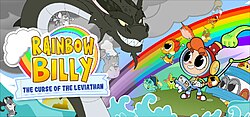

Rainbow Billy: The Curse of the Leviathan arrives with an art-director's pastel fever dream and a designer's soft spot for unconventional mechanics. On PS4 the game positions itself somewhere between a light exploration platformer and a turned-down RPG where the guns are replaced by conversation prompts and the loot is a better understanding of your feathered or furry companions. The premise is intentionally sincere: a non-binary eight-year-old protagonist named Billy sails the Land of Imagination to recolor a drained world and to heal animals who manifest their emotional baggage as gameplay obstacles. From a technical-review perspective, Rainbow Billy is interesting because it tries to merge two fairly distinct systems - open-world navigation across themed islands and symbol-matching encounters that stand in for empathetic conversations. The result is a product that is mechanically tidy and, for the most part, coherent. It's also a game that traded some mechanical depth for accessibility and message clarity. That trade-off is deliberate, and its success depends on whether you value clarity and heart over crunch and systemic complexity.
At its mechanical core Rainbow Billy splits play into two layers: macro navigation/exploration and micro encounters. On the macro side you pilot Friend-Ship and hop from island to island through monochrome seas - a neat framing device for progression gates based on story beats. Each island acts like a themed hub: collectibles that restore colour, animals to befriend, and environmental puzzles that are light on platforming difficulty but heavy on readable signposting. For players who prefer precise input and twitch platforming, the game never attempts to be Dark Souls; instead it focuses on traversal as a pacing device between its conversational minigames. The micro gameplay - the part that makes the title stand out from other indie platformers - is the symbol-matching combat. This system is explicitly non-violent and framed as empathetic dialogue. Enemies present a set of symbols as their 'health' and you bring allies whose queued symbols match those icons. The queues act simultaneously as your party formation and as a turn-management system: if an ally is first in their queue they activate a skill (for example staying an extra turn). This queue-first-activation mechanic creates an extra planning layer above simple match-making: position matters, not just presence. From a technical design perspective the symbol-queue system is elegant in its minimalism. It reduces combat to pattern recognition and resource management: you must assemble a sequence of allies that fills the enemy's symbol slots before your morale (the player's health) drops. Morale functions as a soft timer, discouraging endless experimentation and forcing players to balance riskier, higher-payoff ally setups against safer, lower-yield ones. The fact that defeated non-boss enemies join your roster leads to a steady increase in available permutations, and the game uses that growth to keep the encounter space interesting without requiring complex numerical balancing. Instead of dozens of stats, allies gain additional symbols when leveled by feeding them fish or fulfilling their requests - a progression loop that increases your combinatorial options by changing the ally's symbol footprint. This design has two important implications. First, ally count and symbol variety scale the search space rather than the numbers: you're not building optimal stat-lines or min-maxing damage; you're assembling symbol templates. That lowers cognitive load and makes recruitment feel meaningful even if individual allies don't have deep customization. Second, because ally skills trigger when they're at the front of a queue, you get emergent tactical moments where order trumps raw power. Developers used a small rule set (symbols, queues, front-of-queue bonuses) to create surprisingly varied encounters, which is commendable economy of design. However, the trade-offs are visible. The symbols-and-queues loop is intentionally accessible, which means players who crave mechanical complexity might feel underwhelmed after the first dozen hours. Critics pointed to repetition - and it's an honest critique rooted in the nature of the loop: once you've seen the primary symbols and a couple of skill archetypes, the encounters start recycling familiar patterns. The level-up system (giving allies extra symbols) mitigates this by increasing what combinations are viable, but it doesn't introduce new mechanical layers or meta-systems to reinvent how you approach fights. Another subtle design choice is how non-combat rewards are integrated with progression. Befriending animals unlocks backstories and increases ally power. That fusion of narrative unlocks and mechanical upgrades strengthens the theme - you are literally making friends to recolor the world - and it doubles as an onboarding trick. The UI presents requests and fish as explicit tasks: feed the ally to unlock more symbols. The loop is readable and direct, which is important for younger players and for the title's empathetic framing. On PS4 the controls and input mapping are straightforward: button-driven selection, intuitive symbol highlighting, and a queue visualization that keeps the cognitive load manageable. The HUD is kept minimal so the symbol icons are the visual focal point during encounters; this is a deliberate clarity choice and works well in practice. There are occasional pacing issues where the transition from exploration to an encounter can feel abrupt - a small UX refinement could smooth that handoff - but overall the presentation of mechanical information is strong and accessible. Finally, the game's choice to make encounters non-violent and to treat 'combat' as conversations has design consequences beyond tone. It reduces punitive loops and systemic complexity (no bleeding, no gear treadmill) while increasing emphasis on narrative and character collection. For a game that foregrounds empathy and representation - including making the protagonist non-binary and consulting experts during development - these mechanical choices line up with the message. The cost is less strategic depth, but that cost is arguably conscious and coherent with the game's design goals.
Rainbow Billy's graphics are the headline: reviewers consistently praised the colourful, storybook aesthetic and the game's commitment to a bright, high-contrast color palette. On PS4 the art direction is the primary 'engine' doing heavy lifting for player engagement. The use of stark black-and-white spaces to symbolize what has been drained from the world gives color restoration visible weight - you actually watch geography regain saturation as you progress, which is a satisfying feedback loop. From a technical readability standpoint, the UI and iconography get high marks. Symbol-based combat demands legible icons at a glance, and the game's designers prioritized clear shapes and strong silhouettes over ornate decoration. That makes tactical choices faster because you're parsing symbols, not deciphering embellishments. The queue visualization - which needs to communicate order, skill activation status, and symbol identity - is implemented cleanly: color-coding and consistent icon placement keep the cognitive friction low. There are a few trade-offs in fidelity and animation complexity. The game's art opts for stylized 2D/3D hybrid presentations rather than pushing for photorealism or particle-heavy spectacle. That works in the game's favor because it keeps GPU overhead low and maintains a uniformly charming visual identity across islands, allies, and the Leviathan. For players who judge visuals by shader complexity or ultra-realistic textures, the style won't impress. For those who value design congruence, the low-poly/hand-drawn aesthetic feels intentional and appropriate. Symbol visibility, color contrast, and the incremental recoloring mechanic are all thoughtful technical choices. They support accessibility in practice - not as a checkbox but as a central part of the experience. The game's use of black-and-white binaries to symbolize diversity and inclusion is a design-informed metaphor; ManaVoid even consulted specialists to ensure the protagonist's representation was handled responsibly, which is reflected in how the UI and narrative elements avoid muddying or contradicting the visual language.
Rainbow Billy: The Curse of the Leviathan is a tidy exercise in minimalist systems design married to a strong narrative purpose. On PS4 it runs as an approachable, well-explained package: the traversal lets you breathe between conversations, and the symbol-queue battles create unexpectedly interesting tactical choices without demanding long math sessions or inventory management. The game's biggest strengths are clarity and intention - every core mechanic reinforces the game's theme of empathy. Its weaknesses are equally intentional. The simplified, non-violent encounters and the relatively shallow progression loops make repetition inevitable for players looking for mechanical depth. Critics also noted that the game's treatment of mental-health themes sometimes flattens complexity into digestible doses; the sincerity is laudable, but the simplified model doesn't replace careful, nuanced exploration of difficult topics. Those are important caveats but also reflect choices consistent with the title's audience and tone. If you want a PS4 game that rewards pattern recognition, likes tidy UX, and values message over mechanical sprawl, Rainbow Billy will charm you. If you want a combat system that keeps throwing new knobs to twist, it will feel light. For its ambition, readability, and emotional intent - and for presenting a non-binary protagonist handled with outside consultation - the game earns a solid 7.5/10. It's a polished, thoughtful indie that knows what it wants to be: a gentle, technically coherent experience that asks you to listen rather than to dominate.










 Another SquareThought Site