

 Jul 2015
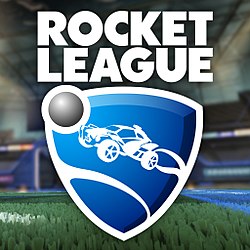

Imagine soccer, but everyone drives tiny rocket-powered cars, nobody gets sweaty, and the ball is apparently allergic to normal physics. That's Rocket League - a ridiculously simple premise that refuses to stay simple because between the flips, boosts, and the occasional aerial bicycle kick you'll swear the universe briefly aligned in your favor. Launched on PS4 in July 2015 by Psyonix (the same folks who gave us the gloriously named precursor Battle-Cars), Rocket League took the "one-more-match" concept and injected it with nitro, neon, and a soundtrack that makes you feel athletic while sitting on your couch.
At heart Rocket League is glorified, vehicular indoor soccer: two teams (from 1v1 up to 4v4) use rocket-powered cars to shove an oversized ball into the other team's goal. Matches are usually five minutes, and if neither team wants to be that guy who loses on time, sudden-death overtime sorts things out. What makes the game sing is how approachable its core mechanics are - throttle, steer, jump, boost - and how those few inputs combine into the most chaotic ballet of car-on-ball-on-car you've probably ever seen. The game keeps you entertained with a steady parade of modes and tweaks. Standard ranked and casual playlists satisfy your competitive itch, while Mutators let you tinker with the rules (low gravity? cube ball? yes please). There's the legendary Snow Day (hockey with a puck), Hoops (it's basketball, but also a car), Rumble (power-ups that often feel like cheating in the most fun way), Dropshot (break the floor like you're a tiny demolition derby), and a rotating cast of limited-time modes such as Spike Rush and Gridiron for when you want FIFA but with explosions. Custom Training is a delight for the obsessive: you can build scenarios, practice awkward aerial redirects, and feel like an amateur stunt driver who occasionally scores. Rocket League's progression is mostly cosmetic - cars, wheels, goal explosions, banners - which is a merciful design choice because skill, not wallet, dictates wins. Over time Psyonix introduced DLC cars, seasonal Rocket Passes, and cross-promotional vehicles (DeLorean, Batmobile, Mario-themed skins on the Switch). Monetization has evolved - crates to blueprints, item shops and credits - and while the economy sometimes triggered player grumbles, it never forced pay-to-win; the only thing you can buy that actually improves your game is more time practicing. The title also embraced cross-platform play and cross-progression later on, and becoming free-to-play in 2020 opened the gates to a flood of new players. If you ever want to feel like a pro, join ranked. If you want to feel like a clown, play casual with Rumble on. Both are valid life choices.
Rocket League looks like what would happen if arcade neon had a baby with a sports broadcast. The arenas are vibrant and distinct - from the classy Utopia Coliseum to the cyberpunk Neo Tokyo and the undersea Aquadome - and the presentation sells the idea that you are piloting full-sized cars inside a stadium even though you are, in reality, hovering over a bowl of virtual turf. Psyonix prioritized smoothness, aiming for 60 frames per second on modern hardware, which is essential because when you rely on split-second aerials and boost timing, performance matters more than shininess. PS4 Pro support later improved resolution options and maintained the buttery frame rate for one- and two-player splits. As for the physics, be prepared for debate. Some people call it "floaty" - a criticism that surfaces when the ball seems to have a personality of its own and occasionally refuses to be slammed home like a normal object. Others praise the consistency and the strange, satisfying contrast between the quick cars and the more languid ball. Either way, that slightly odd physics cocktail is part of the charm: it creates moments where a lucky tap becomes a highlight reel goal, and it rewards positioning and teamwork as much as raw speed. The soundtrack, composed by Mike Ault and boosted by later Monstercat additions, is energetic and strangely motivational - you will absolutely headbang while boosting towards the net.
Rocket League is one of those rare games that is easy to pick up, spectacular to watch, and nearly impossible to put down. It fixed the major complaints of its predecessor by raising the frame rate, smoothing matchmaking, and focusing on the core fun loop. The post-launch life has been impressive: free content updates, inventive modes, esports circuits, and a parade of crossovers that let you play soccer in a DeLorean if you're into that sort of thing. The physics can be polarizing - sometimes the ball behaves like a reluctant balloon - but that quirk is baked into the identity of the game and leads to theatrical, replayable moments. If you own a PS4 and enjoy multiplayer chaos, Rocket League is a mandatory download (and if you weren't convinced back in 2015, the PS Plus promotion that launched it should have done the convincing for you). It's competitive without being cruel, stylish without being serious, and endlessly energetic. Score: 9/10 - because it's nearly perfect at what it sets out to do, and the few missteps (economy tinkers, the occasional physics gripe) don't stop you from having the time of your life ramming a ball into someone else's net while pretending you meant to do that.
 Rocket Arena on PS4
 Mutant Football League on Switch
 Accolade Sports Collection on Xbox Series X/S
 Deca Sports DS on DS
 Alan Hansen's Sports Challenge on PS2
 EA Sports MMA on PS3










 Another SquareThought Site