

 Feb 2022


Imagine a cursed pop-up book with commitment issues: it keeps swallowing the world and turning it into encounters, treasure, and slightly judgmental ink stains. That, in a nutshell, is Roguebook - a roguelike deck-builder from Abrakam Entertainment that repackages the sort of card-combat magic fans of Slay the Spire might be sniffing for, while also giving the whole thing a storybook aesthetic that insists on spilling tea out of the margins. Published by Nacon and landing on consoles (including PS4) on February 24, 2022, Roguebook is built on the same Faeria universe Abrakam previously explored, and it pairs turn-based deck play with an overworld that looks suspiciously like your grade-school diary after a rainstorm. You play single-player runs where your adventures unfold across the literal pages of a lore book. Enemies, shops, and secrets hide under flaps of parchment, and you reveal them with ink you earn in combat. Think of ink as the game's version of those tiny, mysterious currencies games keep giving you (except it actually makes thematic sense here). It's familiar but fresh: there are unlocks, card upgrades, and an escalating loop of challenge that rewards learning - and occasionally, aggressive scribbling with a brush.
If you enjoy the deliciously cruel loop of losing, learning, and returning stronger, Roguebook will cozy up to your gaming habits like a cat on a radiator. Each run has you pick two heroes whose decks are combined into a single toolkit. The joy (and sometimes the mild panic) comes from trying to make two distinct archetypes cooperate rather than argue like roommates over a single bathroom. One character might lean into summoning minions, while another is a glass-cannon spell-slinger, and the game's challenge is in making those styles complement each other rather than competing like a cover band and a wedding DJ. Combat is turn-based and built around deck-building, so basic expectations are met: you play cards, manage resources, and aim for synergies. The twist is the overworld-as-book design. You traverse an open map that's literally a book page, and as you win fights you accrue ink. Spending ink reveals nearby map tiles; spending brushes (which reveal larger swathes) adds a little strategic map-planning - do you risk wandering down a poorly inked path hoping for treasure, or do you carefully unveil the safe route to the boss? It's a neat shift from the branching tower-staircase of other roguelikes, and it gives the run a tactile, exploratory feel. There are also money and gems to collect. Gems function as a card-enhancing resource: attach one and the card gets extra oomph or a new ability. Permanent unlocks exist too, so the more you play, the wider your options for future runs - new characters, new cards, and little systems that ladder you out of the beginner gauntlet. Bosses are theatrically bookish: avatars of the Roguebook itself, selected randomly, which gives the final fights a pleasantly meta vibe. The whole thing winks at you and then promptly slaps you with a written-ink gauntlet. Design pedigree matters here: Richard Garfield - yes, that Richard Garfield - helped with the game's design, and you can feel that careful card-game brain humming behind the scenes. Roguebook was crowdfunded on Kickstarter in June 2019, and the love of the community shows in the way the systems interlock; this is a game that was iterated with feedback, not just slapped together like a hastily drawn treasure map. Critics' response, at least per early reviews, is mixed-to-positive: the PC, PS5, and Xbox One versions received positive notices on Metacritic, while Switch had a bumpier reception. PC Gamer praised its clever twists while noting that nothing felt wildly novel; IGN liked the overworld and character deck combos but worried that the dual-deck system dilutes focus a bit, and NME felt Roguebook piled on a few too many ideas at once. Those are fair points - this is a game that sometimes asks you to juggle quite a few balls - but it also rewards patience. If you lean toward experimentation, you'll find plenty to tinker with. If you crave laser-focused single-archtype builds, you might occasionally want a simpler diet of cards and fewer spices.
Roguebook's visual premise - the whole world as a lore book - is its strongest stylistic card. The overworld literally looks like pages with flaps, doodles, and marginalia come to life, which is charming in a way that makes you want to tiptoe through the chapters wearing reading glasses and a cape. The art direction ties the combat and map together: attacks feel like annotations and spells like hurriedly penned notes, which keeps the aesthetic consistent and enjoyable. Console ports arrived in 2022, and while Switch suffered performance notes like longer load times, the PS4 experience generally benefits from the extra horsepower compared to portable hardware; load issues cited for the Switch don't seem to plague the bigger boxes as much. The UI and card art are readable and clean without being sterile - you never squint trying to figure out what a card does, which is a blessing when the game is asking your brain to manage multiple systems. This is a game that prefers personality over photorealism: think illustrated storybook pages, not eye-wateringly realistic goblins. If you like your games to have charm and a strong visual identity, Roguebook will keep you smiling while you reorganize your deck for the eleventh time.
Roguebook is a playful, occasionally messy love letter to deck-building that prefers to add flavors rather than strip the experience down to bare mechanics. Its book-as-world conceit is delightful, the two-hero deck combos offer a fun puzzle of cooperation (and occasional chaos), and the unlock/progression systems make repeated runs feel meaningful rather than repetitive. There are sensible criticisms: it borrows familiar ideas, it sometimes packs in a lot at once, and certain console versions varied in polish. Still, its charm, depth, and willingness to experiment make it a worthwhile stop for anyone who enjoys roguelike deck games and wants something that looks like it was illustrated by a clever spellbook. If you're on PS4 and you like your roguelikes with personality, Roguebook is worth the ink. It's not reinventing card games in a cosmic way, but it does a lot of things very well, and it leaves you with that rare post-run sensation of having both learned something and laughed along the way. Score: 8/10 - a well-drawn adventure that rewards curiosity, persistence, and the occasional desperate swipe with a brush.
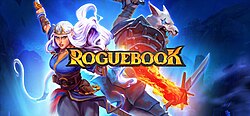 Roguebook on PS5
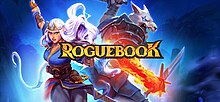 Roguebook on Xbox Series X/S
 Islanders on Switch
 Dawn of Discovery on DS
 TerraTech on Switch










 Another SquareThought Site