

 Sep 2015


Rugby League Live 3 on PS4 arrives like a prop charging into contact: not the flashiest arrival but built to do the hard yards. If you are into rugby games for the tactical tussles, the split-second decisions and the sweaty palms that come with a line break, this one is for you. The emphasis here is on simulation-style nuance rather than arcade showboating, and that shapes every challenge you will face. With Be A Pro, Career Mode improvements, a FanHub aimed at obsessive customization, and dynamic weather and lighting, the game throws a lot of subtle tests at the player. This review drills into those challenge aspects and the skills required to get good, whether you want to grind through a career as a rising forward or outfox opponents online.
First up, the game's modes set the stage for different kinds of challenges. Be A Pro lets you shepherd a single player from U20 to the big leagues, which is less about button-mash glory and more about mastering the micro skills of your chosen position. Playing as a forward forces you to nail contact timing, ruck play and offloads under pressure, while a back demands crisp passing, angle-running and finishing instincts. Career Mode expands on that, offering a sense of progression that rewards mastery of role-specific mechanics rather than raw talent points. The core gameplay is where Rugby League Live 3 tests you. Passing and timing are the game's bread and butter. A late, hurried pass will bounce into an opposition hand and become a teachable moment about patience. The game expects you to read the defensive line, judge support runners, and execute slick hits or split-second cut-out passes. Tackling is also more than a hold-and-hop; it is about timing and technique. Successful defenders latch at the right moment, use the correct tackle type for the situation, and think about the ruck. This becomes particularly evident when you play with fatigue factored in - the wrong tackle at the wrong time gets punished by missed tackles and opened lanes. Kicking is another major skill pillar. The FanHub integration gave the title a goal kicking training drill with a global leaderboard, which is a surprisingly revealing indicator of how technical the kicking mechanics are. On the PS4 pad, accuracy is a mix of aiming, timing and managing pressure. Place kicks become a mental game - you need to control calm thumbs as the animation plays out, much like a real kicker calming their breathing on the sideline. General kicking in open play demands good vision; poorly weighted grubbers or long bombs are easy to intercept if you do not factor wind, time of day and turf conditions into the decision. Weather and day-night progression are not just pretty lights - they alter the game's personality mid-match. The dynamic time of day lighting and rain system can change ball handling and visibility, forcing you to adapt. A slick pitch and driving rain mean you suddenly need cleaner passing, safer carrying and smarter kicking. This is where the simulation lean pays dividends; matches become live problems to solve rather than identical rehearsals. The FanHub, available through Steam, is built for the players who enjoy mastering systems. Its customization tools and the goal kicking drill give competitive and solo players something to chew on beyond matches. The global leaderboard for the kicking drill is a nice carrot: practice translates to measurable improvement. However, console players have a slight barrier here since FanHub is Steam-centric. This makes the path to fine-tuning rosters and players a bit clunky for PS4 users who are not also PC tinkerers. Multiplayer elevates the challenge further. Teamwork and communication are suddenly mandatory if you want to avoid being steamrolled. Set plays, structured defense and coordinated kicks are the difference between a nail-biter and a blowout. The licensed tournaments and the variety of teams give match-ups that reward different strategies: Super League tactics can feel distinct from NRL clashes, and the presence of youth competitions like the Holden Cup lets Be A Pro careers have more believable progression. There is a learning curve. Raw newcomers will probably be hoodwinked by flashy animations but punished by game systems that reward careful decision-making. Patience, practice in the kicking drill, and a focus on positional responsibilities will turn shaky performances into competent displays. The instant replay with super slow-mo is not just for vanity; it is a coaching tool. Watch your mistakes in super slow motion, learn why a line break happened, and you will begin to anticipate instead of react.
On PS4 the visuals are functional with a focus on clarity over spectacle. The dynamic time of day and full sun movement make for some enjoyable half-time lightshows, and the weather transitions like mid-game rain are effective both aesthetically and in how they signal mechanical shifts. Player models and stadiums are serviceable but rarely blow you away compared to the big-budget sports behemoths. The improved instant replay system, complete with user-defined camera placement and super slow-mo, is a valuable visual tool for learning. It lets you study body position, tackle technique, and ball trajectories frame by frame - essentially turning the replay into an affordable coaching session. If you play on PS4 Pro or a high-end setup, expect smoother frame pacing and slightly cleaner textures, but don't come in expecting photorealism. The art direction favours readable visuals, which is exactly what you want when every passing and tackle needs to be judged precisely.
Rugby League Live 3 on PS4 is a game that prefers to test your rugby IQ rather than your reflexes alone. The best moments come from earning a line break through good structure, executing a pressure kick when it counts, or rescuing a shaky match with smart defensive reads. The Be A Pro and Career modes reward positional mastery, the FanHub's kicking drill pushes you to perfect a technical skill, and dynamic weather adds mid-game puzzles that keep matches interesting. It is not flawless - console players who want deep customization might grumble that FanHub lives on PC, and the presentation is practical rather than flashy. Still, for players who like sports games that demand reading the play, timing, and technique, this is a satisfying package. Score wise, it earns a 7.5 out of 10. That reflects a solid simulation with meaningful challenges and genuine room for growth through practice, tempered by a few accessibility and presentation quirks. If you are the sort who enjoys grinding drills, learning from super slow-mo replays, and mastering both the hulking art of forward play and the balletic craft of a back's timing, pick this up and get to work. Expect to get better the more thought you put into it, and prepare to have your mistakes explained mercilessly by gravity, mud and slightly annoyed teammates online.
 Rugby League Live 3 on PS3
 Rugby League Live 2 on PS3
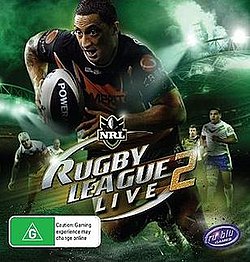 Rugby League Live on PS3
 Accolade Sports Collection on Xbox Series X/S
 Deca Sports DS on DS
 Alan Hansen's Sports Challenge on PS2
 EA Sports MMA on PS3
 Don Bradman Cricket 17 on PS4
 Cricket 22 on Xbox Series X/S
 Cricket 22 on PS5
 Ashes Cricket on PS4
 Cricket 24 on PS5










 Another SquareThought Site