

 Aug 2025
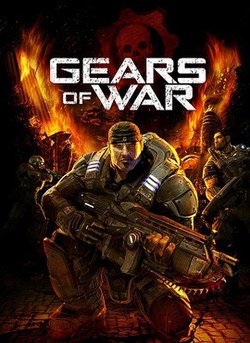

Gears of War: Reloaded is the beefed-up, cross-platform ode to grit and chain-sawed close combat that finally lets PlayStation owners play dress-up in Marcus Fenix's armor. Based on Ultimate Edition and rebuilt for modern hardware, Reloaded wraps the original 2006 blockbuster in glorious 4K/60 (and multiplayer at a manic 120FPS), HDR, VRR and spatial audio. But beneath the upgraded pixels and buttery frame rates is the same narrative muscle car running on a story that is equal parts simple and oddly human: a squad of broken people trying to do the right thing in a world that insists on exploding. This review focuses less on the tech checklist and more on the five-act emotional engine-Marcus, Dom, Cole, Baird and the rogues' gallery-because if the game's engine is a V8, the characters are the fuel that keeps it from stalling.
Reloaded's bones are classic Gears: tactical cover, the romance of the Lancer (chainsaw attached), and the delicious mechanical cadence of active reloads that reward nerve and timing. But where gameplay mechanics often feel like a toolbox, Gears turns that toolbox into a stage for personalities. Marcus Fenix is not an archetypal blank-slate hero; his reinstatement from prison-after he desert-ed for the very human (and stupidly noble) reason of trying to save his father-gives every firefight the aftertaste of personal atonement. When you crouch behind cover and pop out to shred a Locust with a perfectly timed active reload, it feels a little like Marcus trying to get something right for once. That tiny mechanical victory stacks up into narrative weight. Dominic "Dom" Santiago plays second fiddle in co-op mechanically but acts as the game's emotional compass. He pulls Marcus out of prison and never really lets go-both figuratively and, later, tragically. The scripting treats Dom as the friend who anchors Marcus's humanity. Delta Squad's dynamic is where the gameplay and story dovetail: Augustus Cole's brash bravado makes for loud, morale-boosting banter during assaults; Damon Baird's sarcastic, tech-savvy commentary shades encounters with a different tone-one of weary practicality. Those voices matter in Reloaded because the remaster's improved facial work and voice fidelity (John DiMaggio's Marcus won awards for a reason) let the cracks in these characters' facades show in the heat of battle. The campaign structure-recover the resonator, map the Hollow, carry the Lightmass Bomb-reads like a straightforward action movie quest, but it's punctuated by personal stakes. The group suffers real losses: Anthony Carmine and Lieutenant Minh Young Kim die in service of the mission, and those deaths anchor later beats. Execution mechanics that force you to finish downed foes are more than multiplayer cruelty; narratively they harden the battlefield into a place where choices (and failed protections) count. General RAAM, the Locust's blunt-force antagonist, gets the giant-boss arc-ultimately defeated in a railcar duel that caps the train-level crescendo. The sequence is cathartic gameplay-wise and narratively tidy: RAAM embodies the militarized immovability the Gears oppose, and his death lets Marcus and Dom briefly breathe. Yet the campaign still suffers from the original's lack of deep exposition. Reloaded improves presentation and packs DLC and extras from Ultimate Edition, but it doesn't magically expand the characters' inner lives. There's an economy to the storytelling: actions and losses imply emotion rather than spelling it out. For many players this is fine-Gears sells atmosphere and pace-but if you came wanting a 10-chapter psychological study you'll be left wanting. The game succeeds when it leans into what it can show: brotherhood forged in mud, humor that lightens the smoke, and quiet moments where a single line from Hoffman or a pause from Marcus says more than a full cinematic. Multiplayer benefits from Reloaded's technical sprint: 120FPS matches feel surgically tight, and cross-platform invites plus cross-progression via Microsoft accounts mean your Delta Squad cosmetics and campaign progress aren't trapped on a single box. That connective tissue suits the game's emphasis on squads-your online team is an extension of the emotional unit you push through the campaign, and the faster, smoother multiplayer makes each execution and clutch revive hit harder.
Reloaded is a facelift that doubles as a new suit of armor for the characters. Where the 2006 original used Unreal Engine 3 to push the Xbox 360 into 720p glory (and famously helped justify Microsoft doubling system RAM), Reloaded brings sculpted detail to faces, grime and scabbed paintwork in ways that help storytelling. The "Destroyed Beauty" visual motif-cities that are both gaudy and rot-benefits from 4K textures, HDR's bloom, and improved lighting that turn an otherwise generic ruin into a place that feels mournful. Close-ups during conversations show micro-expressions that the original couldn't render: a twitch in Baird's jaw when a joke drops too flat; swagger in Cole's grin; a flicker across Marcus's eyes that suggests the guilt he carries. Sound and score were always a strength of Gears, and Reloaded respects that. Kevin Riepl's mechanical percussion and orchestral swells feel richer with spatial audio on PS5, and the legacy of the 'Mad World' trailer (still one of the most iconic game commercials of the 2000s) looms over the presentation-each explosion and whispered exchange has room to breathe. Voice performances hold up remarkably well: DiMaggio (Marcus) and Speight (Cole) earn their earlier awards; the clearer audio makes their arcs-Marcus's stubborn redemption, Cole's chest-thumping optimism-more readable. Visually, the Ultimate Edition's remodeled characters translate well to current-gen polish, though the underlying character beats remain the same: improved fidelity, familiar script.
Gears of War: Reloaded on PS5 is the definitive way to play Marcus Fenix's origin-era rampage if you're coming in late or dusting off an old love affair. The technical upgrades-4K, 60FPS campaign, 120FPS multiplayer, HDR, VRR and spatial audio-aren't window dressing; they amplify what the game does best: visceral, tactical combat and a surprisingly human squad story. The cast's arcs are shot through with tragedy, loyalty and comic relief; Marcus's redemption tour, Dom's steadfastness, Cole's chest-thumping bravado and Baird's cranky intellect form a quartet that sells every firefight as a moment between friends. Reloaded can't fix the one flaw critics noted about the original: the story rarely digs deeper than its immediate stakes. It hints at emotional gravity-Marcus's father, the sacrificial losses, the Locust Queen's ominous promise-but it resists turning those hints into a slow-burn character study. If you accept the game as a tight, action-first narrative propelled by well-drawn archetypes, Reloaded is a glorious, polished, and sometimes moving experience. If you wanted an introspective, dialog-heavy RPG about war trauma, look elsewhere. For players who love big guns, buddy dynamics, and a remaster that respects both tech and tone, score it a solid 8.7/10. And hey-PlayStation finally gets to join the party. Bring revives, and try not to get sentimental when Carmine goes down; the campaign means it when it asks you to care.
 Deadly Dozen Reloaded on PS4
 Kingpin: Reloaded on PS4
 CRSED: F.O.A.D. on Xbox Series X/S
 Eat Lead: The Return of Matt Hazard on PS3
 Lemnis Gate on Xbox Series X/S
 Evil West on PS5










 Another SquareThought Site