

 May 2026
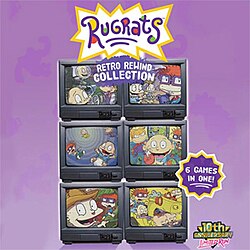

I remember the 1990s as if someone left a VHS tape of Saturday morning cartoons in my memory player and then forgot to fast-forward. Rugrats: Retro Rewind Collection arrives in 2026 with the sort of retro wink that promises to transport you back to sticky fingers, crunchy cereal and the era of chunky consoles. Put plainly: Limited Run Games has taken six Rugrats titles originally released by THQ between 1998 and 2001, wrapped them in a modern emulator shell (Carbon Engine under the hood), and offered them on contemporary hardware - in this case, the PlayStation 5. A serious-minded 1990s reviewer looks at a collection like this and checks three boxes before anything else: preservation, playability, and value. On preservation, the package makes a courteous showing: digital scans of original box art and manuals, an in-game music player and optional visual filters for that old-school sheen. On playability, however, the picture is murkier. The collection arrives with modern conveniences - rewind, save states, multiple visual filters - but critics have been blunt: these games have not aged gracefully. The PS5 version sits firmly in the "mixed" camp on Metacritic (54/100), and the consensus among several outlets is that nostalgia alone won't paper over awkward controls and camera work. This review aims to treat the collection like a cartridge dropped into a top-loading SNES - with a keen eye and an unblinking stare.
The Retro Rewind Collection is not a single unified game but a museum wing containing six exhibits. They include PlayStation-era titles such as Rugrats: Search for Reptar, Rugrats: Studio Tour and Rugrats in Paris: The Movie, and handheld fare that originally appeared on Game Boy, Game Boy Color, and Game Boy Advance like The Rugrats Movie, Rugrats: Time Travelers and Rugrats: Castle Capers. Limited Run supports single-player and multiplayer modes where the originals supported them, and bundles emulator conveniences: rewinding mistakes, save states, and tutorials. Those QoL options are appreciated and, in several moments, are the difference between frustration and playing on. Playability is the crux. The original games were often ambitious for their time - 3D platforming attempts on the PS1 and compact, directional handheld levels on GBA/GBC - but ambition doesn't age automatically. Critics from Nintendo Life and TechRaptor point out that awkward control schemes and problematic in-game camera systems plague many of these titles. From the outside, the PS1 entries feel like relics trying to run with a modern controller: tumbling camera angles, imprecise jump windows, and tutorials that sometimes misrepresent in-game mechanics. TechRaptor specifically noted inaccurate tutorials and argued that the PlayStation ports sometimes feel worse than the original release, a damning assessment when you consider the opportunity retro compilations have to polish. On the handheld side, the bite-sized levels still carry their old charm, but they also underline why some designs have been left to the past. Time Travelers and Castle Capers are competent in short bursts but show their limited palettes and rigid level design when stretched out. TheGamer praised Search for Reptar as the standout, suggesting it holds its own better than most in the set, but also emphasized that the collection's appeal hinges largely on nostalgia. For anyone lacking the warm glow of 1998-era memories, these games are unlikely to convert newcomers. From a preservationist perspective, the emulator features are the collection's most defensible choices. Rewind and save states mitigate save battery limitations and the 'you-died' slog that older designs sometimes demand. Visual filters are included for those who prefer scanline haze and CRT softness; purists and modernists alike can toggle how 'old' they want their Rugrats. The package also includes scans of original manuals and box art - small, respectful archival touches that keep the collection from being purely a digital cash-in.
Graphically, the collection wears its age like faded denim. The PlayStation titles carry the polygonal blockiness familiar to anyone who spent lunch money on PS1-era discs: characters with charmingly crude silhouettes and textured worlds that read as crude by today's standards. The optional visual filters do a tidy job of recreating CRT warmth, which ironically helps some of the uglier polygons look intentional rather than just budgetary. The handheld games retain the flat, colorful sprites and tight palettes of late-'90s Game Boy and GBA games; they look the part and, in small windows, still pop. Limited Run's inclusion of box art and manual scans adds a retro-gallery feeling that reinforces the collection's archival impulse. Audio-wise, the in-game music player is a pleasant inclusion: you can hear the original chips and loops without loading a level. However, presentation polish only takes you so far. The technical implementation of the emulation is competent but not immaculate: reviewers noted that sometimes the PS5 controls accentuated quirks in the original input schemes, and the result can be a less satisfying control experience than on the systems these games first inhabited. In short, visuals and audio are authentic and occasionally charming, but they don't hide mechanical shortcomings.
If I were writing in a magazine printed with more ink than caution, I'd place this collection on the shelf alongside other nostalgia-minded anthologies and let the reader decide. Realistically, Rugrats: Retro Rewind Collection is a curator's package with a mixed catalogue: it preserves, documents and packages the titles with thoughtful extras, but it doesn't meaningfully rehabilitate them. Critics have been blunt - Metacritic scores put the PS5 release in the mid-50s and the Switch version even lower; OpenCritic shows a single-digit recommendation rate. Outlets like Nintendo Life and TechRaptor landed at 4/10, while TheGamer was kinder with a 3/5, calling out Search for Reptar as the best-in-show. If you are a collector or someone who remembers the late 1990s with the kind of affection normally reserved for an old mixtape, this collection offers hooks you will enjoy: box art, manuals, the music player, and rewind salvation. If you are a modern player seeking tight controls, camera sensibility, and timeless design, this package is unlikely to convert you. Limited Run has also announced a physical deluxe edition and a 2027 Game Boy Color cartridge called Rugrats Portable Collection, moves that underline their confidence in selling to collectors. A 1990s reviewer would close by saying: this is an honest effort to preserve a very particular corner of licensed gaming history, but playing through it is more like leafing through a well-kept scrapbook than reliving an evergreen classic. Buy it for the artifacts, rent it for the nostalgia trip, and don't expect these toddlers to teach modern platformers new tricks.
 Marvel MaXimum Collection on PS5
 Retro City Rampage on PS3
 Coloball 2002 on PS2
 Game Dev Story on PS4
 Press Your Luck on PS3
 Trivial Pursuit on PS3
 Bubsy in: The Purrfect Collection on Xbox Series X/S
 Bubsy in: The Purrfect Collection on Switch










 Another SquareThought Site