

 Sep 2025
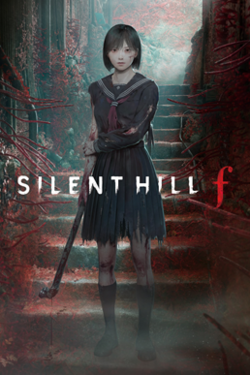

If you flick back through the annals of horror gaming like a teenager paging through a dog-eared strategy guide, Silent Hill has always been the series that smells faintly of incense and bad decisions. Silent Hill f arrives as a curious, confident detour: a spin-off set not in the fog-drenched streets of the town you thought you knew, but in 1960s Japan, in the photogenic yet unsettling village of Ebisugaoka. NeoBards, piloted by director Al Yang and a script by Ryukishi07, trades much of the franchise's usual firearm comfort for a gutsy, melee-focused design philosophy. The result is part shrine to the franchise's psychological roots and part experimental punk record - sometimes brilliant, occasionally stubborn, and frequently the kind of game you insist you "only" played for research until dawn.
Silent Hill f redraws the boundaries of what the series can be by refusing the obvious. There are no guns, no comfortingly loud heel-clicking while you fumble for ammo; instead, the game borrows heavily from soulslike design to deliver a melee system built on dodges, parries, light and heavy attacks, and the brittle satisfaction of a weapon that might snap in your hands. Weapons wear out. This is not a mechanic tacked on for cruelty; it insists you treat each scrap of metal as a temporary friend. When you are unarmed, Hinako Shimizu - a high schooler with righteous bad dreams and worse family dynamics - cannot punch her way out of trouble. Evade, run, live to fight another dubious omen. The RPG elements here are thoughtful without being indulgent. Skill trees allow for customization: you can lean into nimble dodging, sturdier strikes, or sanity-preserving subtleties. Health is split into three tracks: physical health, stamina, and sanity. They drain for different reasons - stamina bleeds during combat, sanity erodes in the Fog World and when facing unspeakable things, and health is the blunt instrument for survival. Consumables matter and some choices bend narrative threads; the red capsules you find are a deliciously ambiguous design touch that work mechanically and thematically. Shrines function as save points and the game's currency sink: you convert items into Faith to boost stats or create omamori that grant RNG boons. Faith and omamori feed New Game Plus, so beating the game once does not mean leaving all your hard-earned superstitions on the cutting room floor. Exploration favors tension over spectacle. Ebisugaoka is quiet, populated by an armada of silences and memories; walking it is nearly as unnerving as the combat. Puzzles are woven into the environment and the narrative, rarely stopping the mood for cheap gating. The narrative itself - a layered story of dual selves, fox masks, arranged marriages and doll-possessed warnings - unfolds with multiple endings. Only one ending is available on the first run; the rest unspool across New Game Plus playthroughs. It is a structure that rewards attention and repetition rather than rote checklisting. The game occasionally stumbles when combat repetition undermines the atmosphere. Several reviewers echoed this: the fight system is exciting at first, then can feel like a recurring melody that loses its menace before you are ready. Despite that, resource scarcity and the permanent-seriousness of weapon degradation often restore a hairline of anxiety, and the interludes in the Dark Shrine - bright, ritualistic, and weirdly maternal - keep you wary of overconfidence. Ultimately, Silent Hill f treats gameplay as a vehicle for mood and memory. It asks players to accept limitations, to be careful and to feel stupid sometimes. That stubbornness will delight purists and frustrate convenience addicts in equal measure.
This is one of those rare modern games that makes you sit back and think, "They really built a postcard and then let the postcards rot." Using Unreal Engine 5, NeoBards renders Ebisugaoka as a thing of aching beauty: rolling mists, red spider lilies, and wooden houses that look like they remember being younger. Artist Kera strikes a balance that avoids the franchise's previous gore-heavy aesthetic, opting instead for a fusion of delicate traditional beauty and slow corruption. The monsters are where the design truly bites. Combining Ryukishi07's twisted imagination with Kera's hands, the creatures stick in the brain the way a bad jingle does - irritatingly effective. Akira Yamaoka and Kensuke Inage deliver a soundtrack that shifts between plaintive court music echoes and ambient dread; the Fog World and Otherworld music articulate the game's Japanese horror essence without becoming nostalgic fan service. Performance on PS5 is generally solid. The game runs smoothly in most scenes, with load times that feel merciful and haptic feedback that complements - rather than cheapens - each hit. A few texture pop-ins and occasional collision quibbles appear in busy sequences, but nothing that unravels the sense of place. The motion-manga UFO ending is a cheeky, unexpected palette cleanser that proves the game has a sense of humor - however warped. Visuals win awards for style in some quarters and, honestly, deserve the praise; they are the sort of visuals that would have gone on a glossy cover of a late-1990s magazine if those magazines still printed things you could staple.
Silent Hill f is a resolutely modern experiment in the costume of classic psychological horror. It is not a remake, nor a nostalgic remake in spirit; it is an attempt to re-centre the series' Japanese horror roots while daring to twist the gameplay into something unfamiliar for the franchise. The narrative is unsettling, the production values are high, and the audio-visual marriage hits notes most survival horrors can only hum about. Combat will annoy some, enchant others, and the game's refusal to pamper players will feel like both a virtue and a mild act of cruelty. This is a game for people who like their atmosphere thick, their soundtrack weird, and their story to require elbow grease. It sold like wildfire on day one for good reason: it feels fresh, risky and, at times, profound. If you grew up on the stern reviews of the 1990s - the ones that used to measure a game's worth in nights lost and pages torn out of magazines - consider this a title that would have earned a long, serious appraisal and a cautious recommendation. Play it with the lights off, keep the red capsules metaphorical, and prepare to be unsettled in a way that lingers after the credits. Score: 8.6/10.
 Silent Hill: The Short Message on PS5
 Fe on PS4
 Crow Country on PS4
 Tormented Souls on PS5
 The Forest on PS4
 Crow Country on Xbox Series X/S










 Another SquareThought Site