

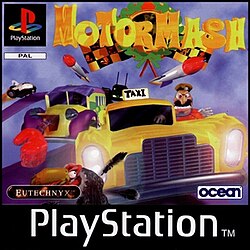

Motor Mash is a top-down kart-racer from Eutechnyx that wears its Micro Machines influence like a neon decal: obvious, unapologetic, and occasionally brilliant. Launched on PlayStation in late 1997 and later patched into PCs with higher resolution and 3D acceleration, the game offers 48 tracks across six themed biomes and a roster of a dozen caricatured drivers with distinct vehicles. Reviews at the time were mixed, and the technical reasons for that split opinion show up plainly when you start pulling apart the game's systems: rendering, camera design, collision and handling, and how multiplayer is implemented for four people crowding a single viewport.
Motor Mash's core loop is a compact, competitive top-down racer: pick one of twelve characters, each tied to a specific vehicle profile, and blast through short tracks while collecting power-ups and trying to shove rivals off the road. That vehicle-per-character approach is important for the game's feel. Instead of a homogeneous speed curve across the roster, each vehicle has different handling parameters-turn radius, acceleration, top speed and likely a hidden weight/mass value governing collisions. Those parameters determine playstyles: some cars feel twitchy and light, others plant-y and slow to pivot. This variety is the game's primary mechanical hook, and it shows that Eutechnyx focused effort on the physics model rather than just palette-swapping sprites. Power-ups are placed as discrete pickups on the track surface; detection is classic overlap-based pickup logic (drive over the icon and you get the effect). The pickups split into offensive weapons and velocity boosts, which introduces a risk-reward vector: do you go out of your way to nab a weapon and risk losing position, or stick to racing lines and rely on driving skill? Multiplayer-local only, two to four players-amplifies that design decision. Races are oriented around physical displacement as much as lap time: the stated multiplayer victory condition is often to push opponents off the track, which places collision response and contact physics at the center of competitive play. The AI and balance lean conservative. Single-player offers opponents that behave predictably, which means the game is approachable but not ruthless; that matches the critical take that the game is "too familiar"-it uses established arcade-racer tropes rather than innovating on AI complexity. Track variety is arguably Motor Mash's strongest game-long retention device: six thematic environments (City, Wild West, Nightmare, Atlantis, Arctic, Jungle) deliver different visual signposts and obstacle sets. These thematic assets are not just cosmetic; they attempt to alter racing lines and situational awareness by placing tangibility in the form of track hazards, narrow choke points and level-specific props that can be used tactically. Where gameplay runs into technical friction is the camera and object occlusion. Motor Mash uses a shared top-down camera for its multiplayer, which simplifies rendering but complicates sightlines. Track objects-trees, saloon doors, underwater ruins-can obstruct player vehicles depending on sprite layering and z-order rules. Reviews flagged this frequently: a player maintaining an inside line can suddenly find their car visually obscured, a symptom of static camera zoom/angle combined with poor occlusion prioritization. The multiplayer design amplifies this problem because competitive outcomes rely on split-second reactions; if the camera or environmental layering hides a pickup or an incoming opponent, that becomes a systems-level failure rather than a minor irritation.
Graphically, Motor Mash drew praise for its cartoon styling and amount of visual variety. The PlayStation presentation is sharp for a top-down title of its era: readable sprites, bold color palettes for each themed world, and clear particle-ish effects for power-ups. The art pipeline leans on 2D sprites placed in a 3D-ish scene graph-common for late-90s racers working within PlayStation memory and fill-rate constraints. On PC, the Windows release introduced higher resolutions and optional 3D acceleration. Practically, this means crisper textures and reduced pixelation at typical desktop resolutions; hardware acceleration also likely helped with sprite scaling and rotation so that turns and object transforms look smoother than on the console's fixed pipeline. Technically minded players will notice how the rendering choices interact with gameplay. The fixed top-down projection eliminates the need for complex perspective correction, which saves CPU/GPU work, but it also exposes z-ordering problems: objects have to be drawn in a strict order to avoid visual popping, and when the game stacks environmental decorations on top of player sprites you get the occlusion complaints reviewers had. Frame rate and input latency are other considerations. The PlayStation build runs within the hardware's usual constraints, and reviewers who liked the visuals still called out that the pacing felt "too slow" to stay exciting-an interesting note because frame pacing and perceived speed are as much an audiovisual design problem as they are about raw physics numbers. The faster sensation in other racers is often achieved with field-of-view tricks, motion blur or greater sprite-scale change during turns; Motor Mash opts for a steadier, readable camera that trades raw adrenaline for clarity-until objects block that clarity.
Motor Mash is technically competent and occasionally clever, but it lives in the long shadow of Micro Machines. Eutechnyx's pedigree shows in the handling differentiation and the compact track design, and the PC version's higher resolution and 3D acceleration demonstrate a smart porting choice to take advantage of more powerful hardware. The game's primary weaknesses are systemic: camera/occlusion choices that undermine split-second multiplayer decisions, and a design that plays safe rather than pushes the top-down racer forward. If you want a polished, family-friendly top-down racer with a lot of tracks and a solid set of weapons, Motor Mash delivers. If you're chasing the frantic, unblockable thrill of a truly aggressive arcade racer, you'll find it competent but safe. Score-wise, the result is middling-plus: appealing visuals, decent technical underpinnings, solid vehicle variety, but hamstrung by camera decisions and a lack of originality. In short: a technically interesting footnote in late-90s racing, worth a look for fans of the subgenre but unlikely to convert anyone who already owns Micro Machines.
 Mini Motor Racing X on Switch
 Fatal Fury: City of the Wolves on PS5
 No Place For Bravery on Switch
 Bang Bang Racing on PS3
 Team Sonic Racing on Switch
 Car & Driver Presents: Grand Tour Racing '98 on PlayStation
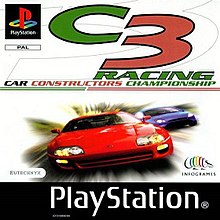
 C3 Racing on PlayStation
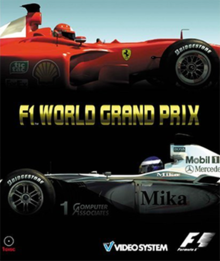
 F1 World Grand Prix 2000 on PlayStation
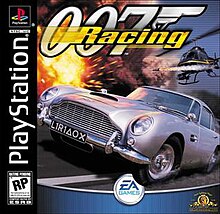
 007 Racing on PlayStation
 Pimp My Ride on PS2












 Another SquareThought Site