

 Jul 2026
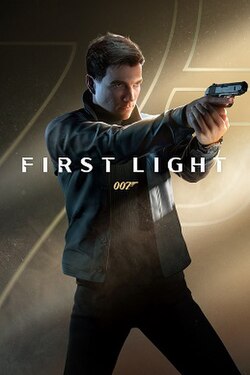

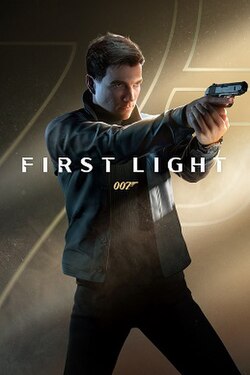
There is a peculiar comfort in seeing a long-dormant licence return to form. 007 First Light arrives like a polished briefcase on a rainy platform: buttoned, practical and a little smug about itself. IO Interactive - the studio that taught a generation how to make murder into an exercise in etiquette with Hitman - has taken on the much larger brief of reinventing James Bond for games. The end result plays like a 1990s glossy magazine feature come to life: handsome, carefully staged, and built to impress. This is not a slavish rip-and-rebuild of any single Bond film. It is an origin story, a training montage in three dimensions, and an attempt to graft IOI's stealth sophistication to the cinematic flourishes the franchise expects. On the Nintendo Switch 2, where the hardware is a compromise between portability and ambition, First Light performs admirably enough to feel like a proper Bond game rather than a mere port of someone else's spectacle.
The bones of First Light are straightforward: third-person espionage punctuated by close-quarters combat, gadget work, cinematic set-pieces and the occasional quick-time event. IOI splits the difference between the sandbox patience of Hitman and the narrative momentum of an Uncharted block-buster. You play a 26-year-old James Bond (embodied here by Patrick Gibson), a recruit whose brashness counts for as much as his skill. Training exercises scaffold the early hours - think Rocky with a Walther - and then the game sends you across a series of compact but cinematic locales that demand different ways of thinking. Stealth is rewarded and encouraged. The AI gives you the usual patrol loops and ears for suspicious noises, but the real novelty comes from a suite of tools that let you bluff, bribe, hack and improvise your way past nastier encounters. Central to the experience is Bond's Q Watch: an in-game Omega Seamaster that hacks electronics, stuns fools with a laser and serves as a neat little Swiss Army gadget. The watch, combined with environmental interactions and a modest toolkit of gadgets, keeps missions varied. Combat is a hybrid: IOI borrows the freeflow parry-and-counter feel of the Arkham games while grafting in the option to go lethal if Bond's licence to kill is invoked by the story. Parrying, takedowns and improvised weaponry make hand-to-hand encounters tactile and often brutal. Guns exist, but ammo is scarce; the game nudges you toward creativity rather than spray-and-pray. Mission design leans toward a linear vein with generous moments of illusionary choice. There are sequences where the level appears to be an open playground and where multiple solutions are hinted at, only to funnel you - gently, not always unpleasantly - back to a narrative set-piece. That design choice will rile players looking for Hitman's freeform improvisation but will satisfy those who want a cinematic arc in addition to clever emergent moments. Driving sections and the Aston Martin Valhalla cameo provide classic Bond window-dressing, though they feel more like contractual obligations than integral gameplay innovations. IOI's first attempt at drivable vehicles on this scale is competent, but it lacks the dynamism that the rest of the game's systems achieve. IOI's combat and stealth systems are largely successful; the bluff mechanic - talking your way out of encounters or manipulating enemies with environmental props - is a particularly smart addition that lends the game a flavour of espionage that too many action games only pretend to have. Pacing is uneven at times: a roughly 20-hour runtime means that some chapters steamroll forward while others linger, and a few physics hiccups and glitches persist. Those issues rarely derail the experience, but they are visible on a platform where optimization matters.
On more powerful hardware the Glacier engine shows off IOI's ambitions: volumetric smoke, ray tracing and fully dynamic global illumination are part of the studio's boast list, and the result is frequently cinematic. Textures, character models and facial performance are up to modern AAA standards; the younger Bond looks like he walked off a movie set and into a render farm. On the Nintendo Switch 2, IOI had the balancing act of shrinking fidelity without killing atmosphere. The game arrives on Switch 2 later in the year for optimisation reasons, a sensible move - as-released performance will matter to players who expect to pocket a AAA spy thriller. Some of the game's strongest visual work occurs in tightly directed set-pieces: the Iceland prologue, shadowed Slovakian hotel corridors and a gleaming Antarctic facility are staged like film scenes, with keen eye for lighting and spectacle. The volumetric smoke and particle work help sell moments where chaos erupts; small touches-the watch interface, the gleam of the Valhalla, character attire from Q's lab-lend texture and Bond-appropriate luxury. There are occasional rough edges in physics and clipping, and driving sequences look a touch stiffer than the rest of the game's choreography. Overall, however, First Light manages to be handsome and presentable on Switch 2 while reserving its highest visual flourishes for capable docks and TVs.
007 First Light is a serious undertaking: IO Interactive set out to create a young Bond who can exist apart from any particular film actor, and they largely succeed. This is a Bond that earns his badges and his quips; it is also a game that remembers to let you be clever about murder and evasions, not merely stylish about them. Critics have praised the writing, the cast and the way the game balances stealth and spectacle, and those plaudits are not hyperbole. My concerns are familiar: an occasionally funnelled level design that pretends at openness, some awkward driving moments, and a smattering of technical quirks. Still, when First Light hits its stride it captures both the fantasy of being Bond and the craft of being a spy. For Switch 2 owners this will be a must-watch if not an immediate must-buy on day one; the optimisation window is a sensible caution, and the platform's portable nature will add a new way to experience the game's quieter, more devious moments. IO Interactive has given us a competent, occasionally brilliant Bond adventure that nods to its Hitman heritage without becoming a clone. It stands as a strong start to what could - given the studio's stated ambitions and the game's warm reception - become a proper trilogy. Consider this a robust handshake from a studio that knows how to make assassination feel intelligent and spectacle feel earned. Score: 8.5/10.
 Infamous First Light on PS4
 First Kiss Story on PlayStation
 Action Man: Operation Extreme on PlayStation
 Adventure Time: Finn & Jake Investigations on PS4
 Alba: A Wildlife Adventure on Switch
 Adventure Time: Finn & Jake Investigations on PS3
 Hitman 3 on PS5
 Hitman on PS4
 Hitman III on PS4
 Hitman: World of Assassination – Signature Edition on Switch 2
 Hitman 2 on PS4










 Another SquareThought Site