

 Oct 2025
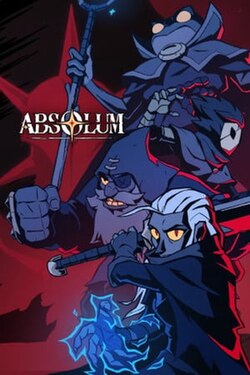

Absolum is a side-scrolling beat'em up that tries to be both a sweaty knuckle-fight and a laboratory experiment in systems design. Built by Guard Crush Games with Supamonks handling visuals, and published by Dotemu, the game blends classic arcade brawling with roguelike progression: the base combat is razor-sharp and deterministic, while the meta-progression around Rituals, Inspirations and permanent unlocks injects variance into each run. The hook is simple - fight through the Sun King's forces in the fantasy world of Talamh, pick up temporary modifiers, and either walk away richer or get sent back to the realm to spend souls on new toys. If you're the kind of player who judges a game by its frame data and whether its dodge window respects your tears, Absolum has a lot to chew on.
Combat is the spine of Absolum, and it shows the pedigree of devs who worked on Streets of Rage 4. You pick one of four classes - Karl (dwarf guns-and-fists), Galandra (heavy sword elf), Cider (twin-dagger agile assassin), and Brome (wizard frog who surfs on his scepter) - each with distinct reach, cadence, and interrupt options. Inputs are straightforward: light and heavy attacks, dodge/sidestep, and a resource-driven special called Arcana. The combo system feeds mana: chaining consecutive hits not only increases damage opportunity windows but also fills the Arcana meter, turning your normal rhythm into access to high-impact abilities. That loop - press offense to charge resource to execute a payoff - feels mechanically satisfying because the tradeoffs are clear and readable. The defensive toolkit is worth studying. Dodging or attacking into an enemy's hitframe at the last millisecond results in a deflect that leaves the foe stunned. It's not called a 'parry' in the copy, but functionally it behaves like a high-skill timing window: predictable, readable telegraphs reward practice rather than luck. This means fights are not pure mash but timing and spacing tests. The presence of a lateral sidestep (a three-dimensional dodge in a 2D plane) mitigates projectile spam and forces positioning into the design conversation. Roguelike elements are sewn onto the beat'em-up backbone in a modular way. At run start you equip Rituals - passive modifiers that alter attacks, add effects, or tweak stats. These Rituals are randomized as you clear encounters, and crucially they are lost on death. The game's permanent progression lives in a hub-realm where, after a failed or successful run, you can recover health, buy permanent unlocks, and experiment with new builds. Bosses drop 'Inspirations', active skills that change combat expression. The level layouts themselves are deterministic rather than procedurally shuffled, but branching path choices and randomized Ritual drops preserve a meaningful degree of replayability. This hybrid approach resolves one of the central tensions in blending roguelikes with set-piece beat'em ups: you keep the craft of hand-designed encounters while allowing run-to-run variation through modifiers and pickups. On the systems side Absolum favors clarity. Hitstun windows and combo scaling are consistent enough that advanced players can plan multi-hit strings and bait deflects. The game's mechanical ceilings are high: a player who understands each character's reach, hitbox rhythm, and Arcana timing can consistently neutralize encounters without relying on op artifacts. The balance team leaned into class niches rather than homogenizing characters: Karl leverages ranged options to control space, Galandra wants front-loaded trades, Cider is about animation-cancel burst, and Brome manipulates verticality with his scepter 'surfing'. Cooperative multiplayer is present for two players and preserves the core mechanics rather than handcuffing them; it scales well because encounters are designed for simultaneous inputs rather than shoehorning in a second stick figure. Design critiques: the loss-on-death Ritual economy is intentionally punishing and can feel harsh to players who prefer incremental unlock progress over run-scoped experimentation. Also, while deterministic level maps let the team craft memorable encounters, they reduce the emergent randomness roguelike fans often crave. The tradeoff is a consistent design language: you know a room's geometry and can optimize builds around it, which makes the game great for those who prefer precision systems analysis rather than pure unpredictability.
Supamonks handled art and animation, and their work is the game's billboard. Absolum's characters, enemy designs, and boss silhouettes read clearly at a glance - an essential trait for a game where split-second spatial decisions matter. The animation quality is particularly notable: weight is conveyed in sword swings and recoil, and Brome's airborne surf has a believable inertia that factors into combat decisions. These are not mere cosmetic flourishes; readable frames and expressive keyframes directly affect gameplay because telegraphs must be visible to allow deflect windows to function fairly. The visual presentation also racked up attention on the awards circuit, with nominations and longlistings in categories like Best Visual Art and New IP, which aligns with how the game prioritizes clarity and character. From a technical perspective the art pipeline choices - consistent silhouette language, prioritized frame counts for player characters, and clear particle vocab for arcana effects - show a studio thinking about legibility under combat stress. On a hypothetical Nintendo Switch 2, those choices translate well because they emphasize 2D fidelity over expensive shaders, but the documentation for platform-specific performance wasn't provided in the source material. What we can say with confidence is that Supamonks' animation work elevates not only the look but the mechanical transparency of Absolum.
Absolum is a precise, craft-forward entry in the beat'em-up space that doubles down on mechanical clarity and system depth rather than relying on spectacle alone. Its mixing of deterministic stage design with randomized Rituals and boss-gifted Inspirations is a smart compromise: players get hand-tuned encounters and still face different runs thanks to modifier variety. Combat is the star - readable telegraphs, a rewardingly timed deflect system, clear combo-to-resource flow, and distinct class archetypes all give the game a high skill ceiling. The roguelike trappings provide both replayability and occasional frustration due to the all-or-nothing nature of Ritual loss, but the hub-realm progression and permanent unlocks soften that sting. The game's strong critical reception and launch sales (over 200,000 copies in week one) back up its design choices, and accolades for visual work underscore how animation and clarity are not just aesthetic but mechanical decisions. For players who want a beat'em-up where frame data matters and build choices feel meaningful run-to-run, Absolum is a top-tier recommendation. Score: 9/10.
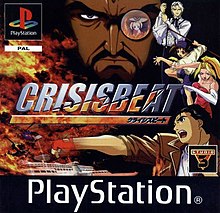
 Crisis Beat on PlayStation
 Capcom Beat 'Em Up Bundle on PS4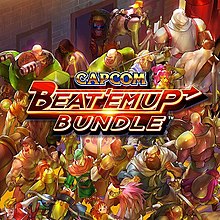










 Another SquareThought Site