

 Jul 2026
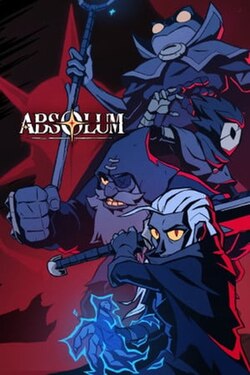

Absolum arrives on Nintendo Switch 2 as a cheeky hybrid: a side-scrolling beat'em-up flirting with roguelike structures and somehow managing to keep its heart on its sleeve while its fists do the talking. The game was born from a collaboration between Guard Crush Games and Supamonks and published by Dotemu, and its DNA carries the scars of old-school arcade brawlers while wearing the patchwork trimmings of modern run-based design. If you came for screen-filling combos and stayed for the lore, you're in luck: Absolum's greatest trick is turning repeated runs into meaningful, if occasionally melodramatic, character beats. This review focuses less on minute frame data and more on how the combat and narrative conspire to shape four distinct arcs - Galandra, Karl, Cider, and Brome - plus the shadowy figures who pull the strings, Uchawi, Azra, and the titular Absolum.
On paper Absolum is straightforward: four character classes, each with light and heavy attacks, plus dodges, sidesteps, combos, and a resource called mana to unleash 'Arcana' - big, satisfying moves that finish fights with style. In practice the combat is where character writing overlaps with gameplay design. Galandra, the elven swordswoman, feels like a tragic poem rendered in steel: her wide, committed slashes and sweeping sword arcs translate narratively to someone who fights in broad strokes for an ideal. You play her as a wide-reaching damage dealer; you learn that every room cleared is a small stanza in her insistence on cutting through Azra's order. Her Arcana lands like the final line of a sonnet - decisive and emotionally conclusive. Karl, the dwarf who shoots and punches, is a beautiful contradiction. Mechanically he mixes ranged bursts with up-close brutality, and that duality maps to his story as a dependable, blunt instrument. He rarely hesitates, and neither do his inputs: a reliable heavy attack lands like a shrug. The roguelike loop - equip Rituals at the start of a run, earn more as you progress, and lose them on death - mirrors Karl's repeated willingness to stand toe-to-toe with catastrophe even if every attempt wipes his temporary gains. Thematically, his arc is about endurance; mechanically, he rewards persistence. Cider is deliciously enigmatic: an assassin with mechanical limbs who dances between strikes with two daggers. The gameplay encourages quick, tight engagements and constant repositioning, which reads as a character who survives by never staying in one place. Their arc is told in the way runs reward risk: the more aggressive and precise you are, the more Ritual synergies favor Cider. The roguelike mechanics amplify the assassin myth - each failed run is a reminder of mortality, each successful arcana a whispered secret revealed. Brome, the frog wizard, is the oddball who owns the sky. With a scepter that lets him surf the air, his combat is vertical and slightly surreal, which fits the anthropomorphic, magical outsider archetype. His ability kit encourages clever uses of space and timing, and those inclinations inform his narrative beat: an eccentric figure who sees the world from above and whose arc is about reconciling mystic distance with real-world stakes. The 'Rituals' system is the game's emotional gearbox. They are passive modifiers that change how attacks function and stack into personal playstyles run-to-run. Losing Rituals on death is the emotional salt: it punishes hubris but also forces players to grow through repetition. Inspirations, unlocked by defeating bosses, give active combat tools that act like narrative revelations - new moves that change how a character confronts their demons. The choice-driven pathing (levels are not randomized but player-selected) doubles as a narrative map: are you taking the direct route for revenge, or the scenic detour that promises a side quest and a bit of exposition? Dodges and deflections are mechanically framed but narratively meaningful: timing a deflect leaves an enemy stunned, and doing so repeatedly makes every combat encounter feel like a conversation where you interrupt the other guy until they stop talking. That rhythm - interrupt, punish, progress - becomes a metaphor for the party's attempts to stop Azra and, later, the calamity Absolum represents. Where Absolum's storytelling earns its keep is in how play loops embody character progression. The world of Talamh and the tyrannical Sun King Azra are plot scaffolding, but Uchawi's twist - leader of the resistance, revealed to be Azra's wife and pregnant - reframes every earlier scene. Players who invested in the characters' micro-arcs feel the retroactive weight of that reveal: their fights were not just against an army, but against a system trying to contain something deeper. The final act - defeating Absolum and watching otherworldly beings take it away after Uchawi gives birth - is both anticlimactic and oddly poignant; it casts the party as salvagers rather than saviors, which sits well with the roguelike tone of repeated attempts to save a world that resists being fixed once and for all.
Supamonks' art and animation are the game's handshake: confident, detailed, and occasionally sly. The visual language leans into dark fantasy with a side order of arcade sheen; characters read instantly in silhouette, which is crucial for a combat-focused game. The game earned nominations for Best Visual Art at major awards, and that recognition is deserved - animations sell weight, arcs sell personality, and both studios clearly prioritized readable, expressive frames. On the Nintendo Switch 2 edition, the art pipeline and Supamonks' first major project status shine through: everything moves like it's drawn on the wrong side of a fever dream, in the best possible way. Backgrounds and character sprites balance clarity with flair so that fights never feel visually noisy, and moments of narrative reveal are given breathing room through staging and animation cues.
Absolum is a rare beat'em-up that asks you to care about the people behind the combos. Its roguelike scaffolding isn't a gimmick; it's a narrative amplifier that makes every loss and small victory feel like a page in a longer, incomplete epic. Galandra's righteous sweeps, Karl's stubborn bruises, Cider's clinical precision, and Brome's airborne oddness are more than kits; they are personalities written into inputs. The Uchawi/Azra twist reframes the resistance's struggle and gives emotional weight to the run-and-die loop. The game earned critical favor (strong Metacritic scores, nominations, and solid sales at launch) and for good reason: it marries accessible, punchy combat with a surprisingly tender approach to character arcs. For Switch 2 owners who like their brawlers with a side of heartbreak and repeatable progression, Absolum is a bruising, thoughtful delight - one that will have you coming back run after run, partly for the upgrades and partly to see how these four stubborn souls keep trying to rewrite their fate.
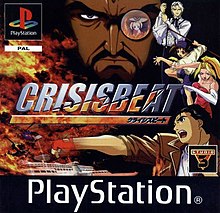
 Crisis Beat on PlayStation
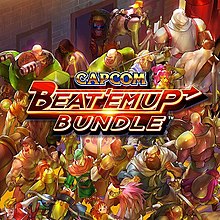
 Capcom Beat 'Em Up Bundle on PS4
 Absolum on Switch 2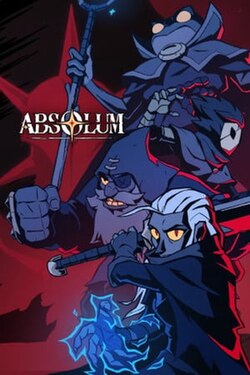










 Another SquareThought Site