

 Jun 2026
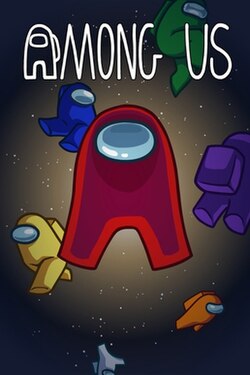

When a studio famous for turning backstabbery and panic into a global pastime announces a single-player spinoff, you sit up and take notes. Among Us Story: On Guard is Innersloth's attempt to take the franchise out of the lobby and into a focused, story-driven experience. Rather than relying on the feverish whispers and finger-pointing of multiplayer parlays, On Guard puts a single protagonist - a security guard - in the hot seat and asks them to prove their innocence by unpicking a murder mystery. The demo that masqueraded around Steam Next Fest in mid-June 2026 does not pretend to be a wholesale reinvention, but it does show Innersloth is willing to push the franchise toward a different breed of tension: slow, investigative, and occasionally earnest.
If you come to On Guard expecting the pinging immediacy of the original Among Us - the snap decisions, the frantic sabotages, the communal jokes - you will find yourself in unfamiliar territory. This is, plainly, a narrative adventure. The premise is simple and clever: you are a security guard accused of a crime you did not commit, and the device here is inquisitive rather than accusatory. Instead of voting someone off the ship, you examine them, interrogate them, and gather clues. The demo outlines the bones of that loop in a compact, tidy lesson. The game hands you a set of investigative tools that feel like a hybrid of point-and-click adventure staples and the task-driven minigames that made Among Us familiar. There are fixed puzzles that stand in for 'tasks' - wiring and data downloads are replaced by lockpicking, evidence cataloguing, and environmental puzzles that require careful observation. Conversations feel staged for deduction: NPCs respond with scripted lines, but the game gives you a notepad and a flow of testimonies to cross-reference. The jury is still the player; rather than convincing a room of humans, you must convince yourself and navigate a branching narrative where choices matter. The cleverest gambit is how On Guard translates social deduction into solitary gameplay. The demo occasionally simulates meetings: recorded logs, body placement, security camera footage, and a mechanized 'emergency meeting' sequence that forces you to weigh conflicting accounts. The tension lives in the spaces between scenes: discovering a hidden vent, spotting a mismatch in a character's alibi, or deciding whether to confront someone with incomplete evidence. There is a pleasing rhythm between quiet inspection and the adrenaline of discovery. That said, the game occasionally stumbles. The writing leans on the franchise's established quirks - suspicion, silliness, and the occasional meme - and while this provides comfort, it sometimes undercuts mood when the script opts for a gag where it should hold a beat. Puzzle difficulty is uneven; the demo's high points are investigative and observational, but some of the mechanical puzzles felt like filler grafted onto the spine of the mystery to increase runtime. If Innersloth can tune pacing so that each puzzle earns its place in the investigation, the structure will sing. As-is, On Guard demonstrates a promising core loop but needs a bit more refinement in how it parcels out clues and how it punishes (or forgives) mistakes. Another important aspect: player agency. The demo promises branching consequences - your decisions alter suspect behavior and unlock different lines of inquiry - which is exactly the right direction. However, the present build leans conservative with its branches. The biggest drama comes from the detective work, not from wildly divergent endings. For a franchise built on deception and improvisation, delivering payoff in long-form narrative will depend on how daring the final game is with its branches and red herrings. Finally, the conversion of multiplayer roles into single-player characters is respectful. Anyone expecting full-on impostor shapeshifting and mass paranoia will be disappointed; instead, On Guard borrows the idea of hidden agendas and transposes them into character motives. It's less about 'who killed' in abstract and more about why someone would want you out of the picture. For fans who enjoyed the social theatre of Among Us, that is a satisfying and grown-up pivot.
Innersloth's signature aesthetic - the cheerful, minimalist, jellybean astronauts - was always the game's secret weapon: disarming visuals masking uncomfortable truths. On Guard keeps that visual DNA but dresses it up for a narrative setting. Environments feel more detailed and atmospheric; lighting and camera work in the demo try for noirish angles rather than the flat top-down of party lobbies. The result is an agreeable middle ground: still cartoonish, still accessible, but with a modest cinematic tilt. Expect no photorealism. This isn't a platformer or an FPS trying to push polygons; it's an adventure title that favors readability and personality. Character portraits during interrogations carry expression and comedic timing, and the occasional use of security cam grain or scanline effects helps sell the investigative tone. Performance on the Switch 2 hardware should be fine - the team has historically prioritized smooth cross-platform play - and the demo ran without hiccups, which, considering Innersloth's history of scrambling servers during meteoric popularity, is reassuring. One quibble: the game's charm is anchored to its simplicity. If you want lavish set-pieces or glossy next-gen sheen, you'll be disappointed. But if you appreciated the uncluttered iconography of Among Us and hoped for a narrative that respects that design language, On Guard delivers visuals that feel appropriate and, in places, unexpectedly atmospheric.
Innersloth's leap from communal deception to solitary investigation is an intriguing exercise that mostly pays off. Among Us Story: On Guard is not a knockout; it's an intelligent remodel. The demo shows a team learning how to pace a story, grafting deduction onto puzzlecraft, and preserving the franchise's personality without devolving into fan service. Its strengths are in the observation-led gameplay and the comfort of the franchise aesthetic. Its weaknesses - a few filler puzzles, occasional tonal missteps, and conservative branching - are fixable, and the demo feels like a rehearsal rather than a final curtain. If you grew up reading strategy sections in 1990s magazines and learned to distrust every NPC dialogue box, you'll appreciate the deliberate pace. For younger players who discovered the original Among Us during the pandemic, this is a chance to see the little astronauts in a longer, stranger story. Score-wise, On Guard lands in the respectable range: a solid 7.5 out of 10 based on the demo. It's promising, and if Innersloth leans further into branching consequences and polishes puzzle integration, this could be one of the more interesting single-player experiments with social-deduction DNA in recent memory. Keep an eye on the release calendar; the full version is unannounced, but the path it hints at is worth following.
 Disney/Pixar Toy Story 3 on PS2
 Vagrant Story on PlayStation
 Tintin: Destination Adventure on PlayStation
 Twisted Metal on PS3
 One Piece Grand Adventure on PS2
 Gnosia on Xbox Series X/S










 Another SquareThought Site