

 Sep 2018
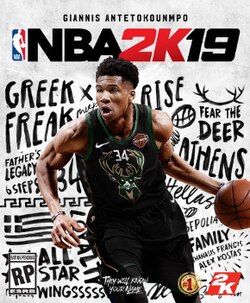

NBA 2K19 on Switch arrives wearing the familiar jersey of the long-running franchise: polished, confident, and smelling faintly of microtransactions. If you're coming in for a basketball sim, the game's mechanics and modes are largely intact - the core dribble moves, shot timing and team play feel like a living, breathing NBA sandbox. Where 2K19 tries to play emotional defense is in its MyCareer cinematic, titled "The Way Back," which stars a cast of recognisable faces: Anthony Mackie, Aldis Hodge, Haley Joel Osment, Ginger Gonzaga, Rob Huebel, Mo McRae, Ricky Whittle and Michael Rapaport. The Switch version trims some graphical fidelity, but it still delivers the narrative beats and mode variety that fans expect. This review will pry open those characters and their arcs like a suspiciously durable locker - equal parts earnest drama and product placement - while not forgetting the gameplay and the tiny, persistent voice in your head that says: buy more VC.
The Way Back dresses up your MyCareer as a small ensemble drama where your created player is the protagonist, and the celebrity cast populates the arc with mentors, antagonists and the occasional comic relief. Anthony Mackie plays the veteran presence who acts as a tether to real-universe aspirations: the film-star mentor who gives pep talks that feel less like coaching and more like motivational poster counseling. Aldis Hodge and Ricky Whittle, meanwhile, slip into roles that whisper 'rival' and 'mirror' - characters that reflect the player's insecurities and competitiveness. Haley Joel Osment and Ginger Gonzaga provide tonal counterpoints: awkward sincerity and comedic timing. Michael Rapaport appears in his usual curmudgeonly mode, the sports-podcast uncle who critiques and consoles in equal measure. As with any sports-turned-televisual narrative, arcs are compact and plotted to motivate the grind. The protagonist starts as hungry and under-equipped, navigates setbacks (injury scares, ego clashes, contract drama), and ascends by the power of practice, cutscenes and, if you're honest with yourself, grinding VC. Characters function as archetypes: mentor, antagonist, friend, foil. The development is efficient rather than revolutionary - you get emotional beats that align with basketball clichés (redemption, team chemistry, the trade-off between fame and focus) and the acting is solid enough to make the moments land. On Switch the cutscenes retain most of their punch; voice work and recognizable performances do a lot of the heavy lifting when the graphics do less. Gameplay outside of the cinematic focuses on MyTeam and the robust on-court simulation. MyTeam's card-collecting loop is deeper than ever: card tiers climb to an exclusive Galaxy Opal 99-rating, and new Heat Check cards dynamically shift value based on real-life performance. There's also the Unlimited mode - a competitive ladder with rewards and a real-world $250,000 tournament for elites - which gives your deck-building obsession a serious reason to exist. The core on-court mechanics feel weighty and responsive on Switch: pick-and-rolls, defensive rotations and hot-shooting are all present. The difference from other platforms is mostly cosmetic and performance-based, but the essence of the simulation is preserved. That said, the game's narrative and progression are often subverted by monetisation. The VC economy is pervasive: skill upgrades, cosmetic items and fast-tracked progress all wink at your wallet. If you want to experience the story arc fully and avoid the treadmill of grinding, you're constantly aware of microtransactions nudging at the plot. Critics were unanimous in noting the tension here: the story wants to be a satisfying rise-to-glory tale, but the systems around it funnel you into repetition or payment. If you treat the cast and the script as the main attraction and the VC as the obnoxious theme-park vendor who follows you, it's still possible to enjoy the ride - but the vendor is persistent.
On the Switch, NBA 2K19 wears a respectable outfit but not haute couture. Player models, animations and the flow of the game court-side are recognisable and occasionally impressive considering the hardware. Textures are softer, crowd detail is dialed down, and some lighting effects are subdued compared to PS4/Xbox One, but the animators' work - the way bodies pivot, the rhythm of a crossover, the sweat glint in a close-up - remains convincing. Cutscenes keep the performances intact, which is crucial because the story beats lean heavily on actor delivery rather than photorealism. Metacritic reflects this balance: the Switch version sits near the series' average for critics, suggesting that while it's not the prettiest 2K on the block, it's still coherent and playable. There are occasional framerate hiccups and downgraded crowd density that make the experience feel like a scaled-down screening of the same movie. These compromises are predictable on a portable platform and rarely break immersion; they're more like background extras who forget their lines than major antagonists. For players who prize mobility and narrative, the Switch package is a reasonable compromise: you lose a little spectacle but keep the story and the gameplay essentials.
If you're evaluating NBA 2K19 on Switch purely as a character-driven sports drama, it does a tidy job: the cast delivers, the arcs hit familiar but comforting beats, and the narrative scaffolding gives your MyCareer meaning beyond stat screens. The game is at its best when it lets those moments breathe - a pep talk after a tough loss, a rival's hollow victory, a mentor's quiet advice - because the voice actors make them work. The problem is systemic: the progression model and VC economy constantly tug at that narrative, turning certain arcs into pay-gates or grind fests unless you choose to invest hours or dollars. On the positive side, MyTeam's depth, the engaging on-court mechanics and the inclusion of modes like Unlimited add real replay value. For a Switch owner who wants the 2K experience on the go and can stomach the microtransaction noise, NBA 2K19 is worth a look. It's a competent, occasionally moving sports soap opera with satisfying gameplay, but it also wears its monetisation like a flashy blazer - stylish but distracting. Score-wise, it's a solid 7.5 out of 10: strong cast, decent arcs, solid basketball, and a nagging economic subplot that keeps you from loving it unreservedly. Bring headphones for the cutscenes, patience for the grind, and a healthy sense of irony about virtual currency. If you can accept those conditions, the Way Back is still a fun way forward.
 NBA Live 14 on Xbox One
 NBA 2K18 on Switch
 Accolade Sports Collection on Xbox Series X/S
 Deca Sports DS on DS
 Alan Hansen's Sports Challenge on PS2
 EA Sports MMA on PS3
 WWE 2K22 on Xbox Series X/S
 NBA 2K22 on PS5
 WWE 2K23 on PS5
 NBA 2K23 on PS5
 WWE 2K25 on Xbox Series X/S










 Another SquareThought Site