

 Sep 2022
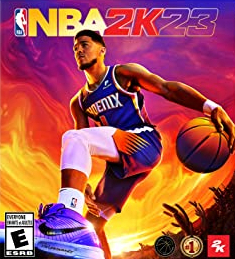

NBA 2K23 arrives on Switch with the swagger of a cover star walking onto the court. It is simultaneously a celebration of basketball history, a modern sandbox for custom legends, and a microtransaction-fueled villain quietly pickpocketing your wallet. This review treats the game's modes and marquee faces as characters in a sprawling ensemble drama, tracing their arcs, motivations, and the occasional tragic plot hole. The aim is to explain what the Switch player actually experiences when they boot up 2K23: where the storytelling is brilliant, where it fumbles, and where it simply charges you a fee to tie your shoes.
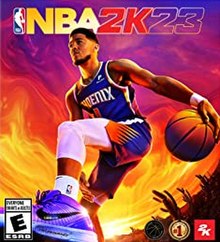
Protagonist: MyCareer MyCareer is the player-created protagonist, the classic origin story of a nobody with a dream and a stat bar. On Switch, the arc remains familiar: you grind, you level up, you chase badges like they are wish-fulfilling talismans. The emotional beats are there, but the road is long and designed to make you feel the sting of scarcity. That scarcity, however, has been narrated by another character: microtransactions. The community whispers that constructing a top-tier build could cost over 100 dollars in VC, and that whisper is a chilling antagonist. It undercuts the hero's journey by turning progress into a toll road. If your patience is heroic and your wallet is not, MyCareer still offers a meaningful climb and a convincing arc of improvement, but the presence of paywalls frequently drags the momentum down. The Mentor: Jordan Challenge Michael Jordan returns to the story as the old mentor, the legend you go back to when you need a reminder of why basketball can feel mythic. The Jordan Challenge is a welcome reprise of classic 2K nostalgia, dropping you into 80s and 90s court battles and letting you re-enact cinematic moments. On Switch the mechanics of the Challenge still land; the mode reads like a well-written flashback sequence in which every buzzer-beater teaches you timing, every defensive stop teaches you respect. For players who enjoy reverent reverie, this is a meaningful subplot that enriches the season. The Dynasty: MyNBA MyNBA is the sprawling political drama of the package, an entire TV series condensed into management menus. It now lets you launch your dynasty in several eras including 1983-84, 1991-92, and 2002-03, with authentic arenas, jerseys, and historic rosters. These era choices feel like choosing an alternate timeline in a multiverse show. There are also automatic team relocations and historical rule changes that act as plot twists - Kansas City Kings to Sacramento, Vancouver Grizzlies to Memphis, Seattle to Oklahoma City - and you can veto or accept these narrative forks. On Switch you can taste the grandeur of these eras, though the experience lacks some of the next-gen polish players have loudly demanded for the PS5 and Xbox Series X versions. The Collector: MyTeam MyTeam is the collectible antihero, a mode that rewards accumulation and strategic assembly. The developers eased one of its burdens by removing contracts, so players can use cards without worrying about constantly renewing permissions. That change improves the mode's pacing and reduces tedium, letting your assembled team behave like a fully salaried ensemble. There is also Triple Threat Online, a co-op scene where up to three players per side become an improv troupe on the court. This mode is the fun side-quest that offers social chemistry and quick thrills. Supporting Cast: Cover Stars and Cameos The cast list reads like a lineup card. Devin Booker is the modern cover athlete, strutting in as the present-day face of the franchise. Michael Jordan sits in as the elder statesman on premium editions. WNBA stars Sue Bird and Diana Taurasi headline the WNBA cover, underlining that 2K is broadening its narrative lens. J Cole appears as a cultural cameo for the Dreamer Edition, a celebrity who feels like an episodic guest star. Each of these figures brings flavor and legitimacy to the story, but none rewrites the arc of the Switch player's journey. Antagonists and Flaws The loudest antagonist in the story is monetization. Players have called it pay-to-win, and for many the suspicion is justified: progress can feel slanted toward those willing to pay. Technical issues are additional roadblocks; while the Wikipedia-sourced reception notes frame rate drops and lag primarily on PS5 and Xbox Series X, players on all platforms sometimes encounter performance blips. On Switch the gameplay remains intact and enjoyable, but the presentation and fluidity are not the next-gen dream experienced on high-end consoles. The result is a game whose narrative structure is rich but occasionally interrupted by external, game-of-resources mechanics.
Visuals cast as cinematography and set pieces: on Switch the arenas, jerseys, and character faces are still recognizable and convey the epic tournament feel, but they are not the glossy, next-gen broadcast spectacle seen on PS5 and Xbox Series X. The eras mode prides itself on era-appropriate broadcast filters and period-correct TV packages; these packages are evocative storytelling devices that make each era feel like its own mini-series. Be aware that reviewers and players noted graphical and performance advantages reserved for newer consoles, and some of that next-gen sheen is missing on Switch. Still, the Switch translates the essence of the look: hardwood gleam, crowd noise, and the dramatic slow-mo replay when a shot drops. It is not a visual blockbuster, but it is competent, readable, and often charming in a portable way.
NBA 2K23 on Switch is a league of two truths: an ambitious, content-rich title with multiple strong narrative modes, and a game that wrestles with monetization and cross-gen inequality. If you view the game as a serialized drama, MyNBA gives you epic worldbuilding, the Jordan Challenge supplies nostalgic flashbacks, MyCareer offers a classic underdog arc, and MyTeam provides the collector subplot. The antagonists are real: microtransactions and some performance unevenness sap energy from otherwise compelling arcs. For Switch players this translates into a package that delivers the story beats and core gameplay beautifully enough to be enjoyable on the go, but not without compromises. If you care primarily about portable, pick-up-and-play basketball with a deep set of modes, 2K23 on Switch is worth your attention. If you want the definitive, next-gen era-experience with all the visual flourishes and fewer paywall frustrations, the highest-tier consoles are where that story is unfolding. For most Switch owners, expect a worthwhile campaign and a few annoying commercial cameos. Score-wise, the Switch edition earns a solid 7 out of 10: a strong ensemble cast and a good script, sometimes tripped up by an intrusive villain wearing the face of microtransactions.
 NBA 2K23 on Xbox Series X/S
 WWE 2K23 on PS5
 NBA 2K23 on PS5
 Accolade Sports Collection on Xbox Series X/S
 Deca Sports DS on DS
 Alan Hansen's Sports Challenge on PS2
 EA Sports MMA on PS3
 WWE 2K22 on Xbox Series X/S
 NBA 2K22 on PS5
 WWE 2K25 on Xbox Series X/S










 Another SquareThought Site