

 Aug 2022
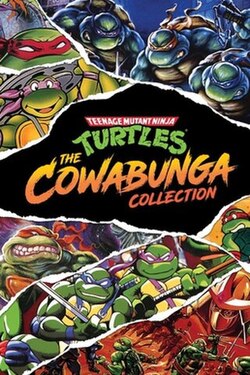

If you grew up thinking pizza is a food group and that four martial-arts-savvy reptiles could absolutely headline a multimedia empire, Teenage Mutant Ninja Turtles: The Cowabunga Collection is the warm nostalgia hug you didn't know you needed - with extra pepperoni. This Digital Eclipse compilation corrals 13 Konami TMNT titles from 1989-1994 onto one cart (or download), and on Switch it feels like carrying a museum and an arcade in your backpack. What makes The Cowabunga Collection more than a mere checklist of retro pixels is how it stitches together the franchise's playable portrayals: the turtles aren't just palettes and hitboxes here, they're a through-line of cartoonish character beats, leadership crises, bromantic tension, and a whole lot of comic relief. The collection is developerally humble but fan-obsessed: dozens of original ROM variants (Western and Japanese) where available, modern quality-of-life niceties like save states, rewind, and button mapping, plus online multiplayer added to select games. There's also an in-game museum brimming with sketches, design documents and promotional art - roughly the sort of archival candy that lets you peer into how the turtles were conceived, marketed, and occasionally mangled by hardware limitations. That museum is the emotional spine of this release: it lets you watch the characters' public arcs unfold in art and design notes while you bash Foot Clan goons into oblivion on-screen.
The Cowabunga Collection reads like a crash-course in how to tell a character story when the engine only supports 'move, attack, repeat' and maybe a rad special. Across the 13 games (NES, SNES, Genesis, arcade ports, and Game Boy oddities), the turtles become characters by the ways they move and the design decisions that define them. Leonardo, historically the responsible leader, is the 'safe' pick in many titles: balanced attacks, average range, and the quiet satisfaction of someone who bought actual training wheels as a teen. In side-scrolling brawlers like the arcade originals and Turtles in Time, Leo's measured moveset communicates leadership: reliable, unimposing, but the one you want if you're trying to muscle past a gauntlet of foot soldiers without dying in the first minute. Konami's approach to Leo across systems is consistent: he's competent and dependable, which in game design translates to a kit that helps players survive tight quarters. Donatello's arc is 'the brain gets the toys.' In the museum's design notes and promotional art - thoughtfully collected and translated by Konami and Digital Eclipse - he gradually shifts from a background comic panel techie to a reasoned problem-solver whose signature bo staff gives him reach in gameplay. That reach mirrors his franchise persona: tech-savvy, cerebral, and often tasked with solving the "how do we get past this cannon" problems the other turtles can't. On the Genesis and SNES brawlers his reach often makes him a strategic choice, and in the compilation you can appreciate how the devs tuned hitboxes to make Don's staff feel like a moral advantage. Michelangelo is the court jester with surprisingly tactical aerial moves. Across multiple entries he's the one with quick combos, unpredictable hops and a tendency to be the most entertaining on-screen. The museum's sketches highlight his evolution from pure goofball to an essential playstyle: nimble, evasion-focused, and rewarded by players who prefer style over straightforward damage numbers. If the turtles were a sitcom, Mikey's arcs inside these games are the episodes where hijinks accidentally save the day. Raphael gets the brooding, high-risk-high-reward treatment. He's often the glass-cannon: hard-hitting but less forgiving. That personality shows up in fighting games bundled within the collection, especially Tournament Fighters (Super NES version), where Raph's moveset reads like a temper tantrum set to punch. The compilation's multiple versions let you compare how delicate tweaks to his damage and speed alter the narrative: in a slower NES outing he's a slow-burn destructor, while in arcade-perfect ports he's pure rage and spectacle. Villains and supporting cast exist mostly in broad strokes, but the collection's museum softens them into proper antagonists. Shredder, the perennial big bad, functions across the games as a dramaturgical endpoint; he's not given deep motives in the code, but Konami's promotional art and the included development pages show multiple iterations of his visual menace - masks, capes, looming silhouettes - which retroactively gives his boss fights weight. Bebop and Rocksteady, Casey Jones, April O'Neil and Splinter are cameo-rich: they serve as catalysts for the turtles' onscreen arcs (rescue missions, motivation for revenge, or a morale-boosting conversation) rather than narrative anchors. However, the archival materials turn those cameos into a montage of franchise relationships: April's reporter silhouette appears on box art and manual sketches, Splinter's sage-mentor posture is present in concept art, and suddenly each skirmish feels like a scene in a larger sitcom-meets-comic-book universe. Mechanically speaking, the compilation's value is that it preserves the ways characters are 'written' with sprites and systems. The inclusion of Japanese and Western versions (where possible) is a storyteller's dream: you can compare palette swaps, balance changes, and even stage order to see how different markets shaped character presentation. The Cowabunga Collection's ability to let you swap versions and rewind mid-boss-fight makes it easy to treat gameplay as a director's cut commentary on how a character performs under different design philosophies. Co-op and online features also enrich arcs: local co-op was present 'back in the day' and remains here, but Digital Eclipse added online capabilities to select games. Playing TMNT as a quartet is intrinsically narrative: the four turtles bounce off each other, and the player-controlled personalities create improvised story moments - a Leo who hogs health pick-ups becomes a leader with questionable morals; a Mikey who performs only aerial combos reads like a prankster-turned-hero. These emergent arcs are charming and absurd, and the modern QoL additions (save states, rewind) let you curate those mini-arcs without rage-quitting your co-op buddy. Finally, the museum does the heavy lifting for anyone wanting the 'origin stories' of the video game incarnations. Digital Eclipse and Konami pulled thousands of pages of design documents and promotional art, and the result is a narrative atlas: early concept sketches show how the turtles' visual identities shifted badly and then beautifully, while internal notes reveal marketing debates that read like soap-opera drafts ("Should Michelangelo be more surfer or more punk?"). That context makes each sprite feel like a chapter in an ongoing character study.
From a visual standpoint the Cowabunga Collection is two things: a nostalgia slideshow, and an archival exhibit. The emulation quality is high; reviewers noted a 'tiny bit of input lag in some games,' but otherwise the titles run cleanly, with options to remove flicker and even update scanline filters for purists. Arcade ports carry the glossy, high-frame spectacle you remember, while NES and Game Boy entries lean into blocky constraints that, in the context of the museum, become deliberate creative choices rather than limitations. The gallery assets are where the collection really spoils you. Konami's archives produced about 2,000 pages of design documents and promotional art, scanned and translated for inclusion. On the Switch these images look crisp and are accompanied by captions that explain why a villain looked like a rejected heavy-metal album cover in one era and a Saturday-morning cartoon in another. The limited edition physical set went further: a Kevin Eastman-designed cloth poster and a 180-page artbook bring those visual evolutions off-screen and into the tangible world. Comparing Western vs Japanese versions visually is educational: color schemes, sprite details, and sometimes entire animations differ in ways that reflect regional tastes. The hyperactive palette of the arcade Turtles in Time contrasts with the muted, palette-limited look of early NES titles, and seeing those differences side-by-side is like watching a character's face change across snapshots - same person, different lighting. On Switch, performance is admirably steady. The interface that lets you flip between games and browse museum entries feels built by someone who once owned a Turtle shirt and took it very seriously. The inclusion of online play for certain titles modernizes what were purely couch-based experiences, although the online rollout is selective (not every game gains that feature). Still, the compilation's visual presentation - from the pixel fight scenes to the glossy museum scans - deeply complements the character readings the package encourages.
The Cowabunga Collection is something of a thesis on how to make characters live when your medium is tiny sprites and two-button controllers. Digital Eclipse and Konami didn't just remaster a set of games; they assembled a retrospective that lets you track how Leonardo, Donatello, Michelangelo and Raphael were staged, marketed, and mechanically implemented over half a decade of gaming. The collection's strengths are its archival reverence (the museum and scanned documents), its modern accessibility (save states, rewind, button mapping), and its ability to show character via mechanics: reach means brains, speed means prankster, power means tempered rage. If you're only interested in raw gameplay, there are idiosyncrasies: some titles are single-player relics, others are more fun in groups, and certain legacy quirks (balance issues, old-school difficulty spikes) still surface. Reviewers generally agreed the compilation is excellent - Metacritic scores hover in the 7-9 range across platforms, and it sold over a million copies by April 2023 - and those numbers make sense. For fans, historians, or anyone who loves watching four turtles grow up under the fluorescent light of 8- and 16-bit hardware, this is essential material. Playing The Cowabunga Collection is ultimately like watching a decade-long sketch show where the lead characters keep getting slightly rewritten between seasons: the core remains lovable, the tempo changes, and the guest stars (Shredder, Splinter, April) keep popping in to remind you what the stakes are. It's funny, it's punchy, and it's curiously human - even if the humans are quadruply-named turtles who eat pizza at 3am. For roughly 8.5 reasons out of 10, I recommend diving in: bring a friend for co-op, a sense of humor, and maybe an extra controller for Raph when he inevitably decides to carry the team with reckless aggression.
 ACA Neo Geo: Ninja Commando on Xbox One
 Naruto Shippuden: Ultimate Ninja Storm 2 on PS4
 Train Sim World 5 on PS5
 Warframe on Xbox Series X/S
 Boyfriend Dungeon on Switch
 Disney Magical World 2: Enchanted Edition on Switch
 Mortal Kombat: Legacy Kollection on PS4
 Tetris Forever on Xbox Series X/S
 Atari 50: The Anniversary Celebration on Xbox Series X/S
 The Making of Karateka on PS5
 Atari Anniversary Edition Redux on PlayStation










 Another SquareThought Site