

 Oct 2026
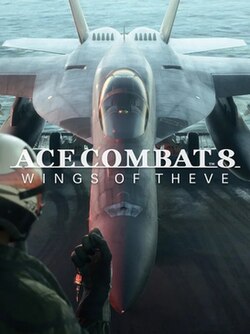

Ace Combat 8: Wings of Theve arrives like a sonic boom that smells faintly of nostalgia and jet fuel, and it makes an unusual promise for an aerial shooter: it wants you to care. Not just about your killstreak or loadout, but about the ragged people strapped into the cockpits next to you. Set in Strangereal's Usean Continent in 2029, the game hands you a call sign with baggage - you start as the weapon systems officer under the myth Jan "Rex" Cope, watch the myth die, then inherit the mantle and the mess. The devs lean into human stories without becoming a melodrama airshow; writer Sunao Katabuchi and director Kazutoki Kono are clearly aiming for that tightrope between heroic spectacle and quiet, messy grief. This review focuses on the characters and their arcs, and how the game's systems - from first-person storytelling to the way squadmates live and die based on your flying and choices - support (and sometimes undercut) what feels like the game's beating heart.
Mechanically Ace Combat 8 is familiar franchise territory: you pilot jets, choose loadouts, dogfight, and carpet-bomb superweapons. But the way those mechanics tie into the human drama is where the game tries to get interesting. You begin as the WSO to Jan "Rex" Cope, whose internet-enhanced legend "Wings of Theve" becomes both inspiration and albatross. When Rex is killed, the transition of the call sign to your character is more than a UI change - it's a narrative handoff. The player is not a blank slate hero; you inherit expectations and the emotional labor of living up to them. Squadron composition matters. Joker Squadron - William "Noise" Coster, Tasha Seversky, and Ellington "Professor" Baxter - each arrive as archetypes with personality hooks. Noise is the soundtrack to reckless bravery, Tasha the pragmatic foil, Professor the brain who keeps the band together. Their arcs are partly scripted and partly emergent: the game's systems affect who survives, who continues to joke at the bar in cutscenes, and who gets a melancholic farewell shrouded in contrail. Player performance influences these outcomes, and the 'minor narrative decisions' you make between sorties can pivot a scene from triumphant to tragic. This structure rewards players who invest in the squad beyond switching planes in the hangar. The decision to tell story scenes in first-person - a carryover of lessons from Ace Combat 7's VR mode - pays dividends when it comes to immediacy. Listening to a teammate confess fears while staring out of a carrier porthole on the Endurance hits differently than a distant cinematic. It's intimate and occasionally uncomfortable in a good way; you feel the claustrophobia of living in a floating deathtrap turned sanctuary. The Endurance itself functions almost like a character: its corridors, the barstools, the maintenance decks all host small beats that deepen relationships. Combat changes also support the narrative beats. Enemy aircraft can be damaged anywhere now; they don't need to be biscuit-targeted into exploding crit spots. That makes engagements feel messier and more cinematic - sometimes in expected heroic ways, sometimes in ways that underline the chaos and cost of aerial warfare. Destroyed aircraft can take out ground targets on the way down, which produces incidental story moments: a friendly who begged for vengeance might finally get one, at the cost of collateral grief. The ability to order squadmates around echoes Ace Combat 5, and these commands can determine whether a teammate lives to deliver the next emotional line, making decisions feel weighty in a way that stat sheets alone rarely do. Accessibility isn't an afterthought. The game contains robust tutorials and training modes to keep the experience welcoming, which matters because the survival and role mechanics depend on understanding your tools. Multiplayer promises to be the franchise's largest online mode, and while that's understandably attractive to players who want to put their call signs on leaderboards, the single-player character drama remains the central selling point for those of us who like to cry into our flight helmets by mission three.
Technically, Wings of Theve is built on Unreal Engine 5 and looks like it thumbed through every modern graphics textbook before breakfast. The team's three pillars - photorealistic sky rendering, aerial combat fidelity, and a heroic narrative theme - are visible at all times. The new "Cloudly" technology gives clouds tactical heft: you can read contrails and engine smoke to make split-second tactical choices, which doubles as a narrative device. A gray, angry cloudbank can be the stage for a teammate's last stand or a quiet interlude where two pilots trade doubts about the campaign. The game's 1:1 scaling of real-world objects makes swooping over cities and carriers feel grounded; it's hard to feel like a papier-mâché ace when the carrier below looks like it could actually sink your emotional bar tab. Environmental fidelity helps with characterization. Rain-slick decks, the way sunlight blinds you during a climb, and the way exhaust hangs in a golden afternoon - these details support the story's quieter beats as much as its bombastic ones. First-person cutscenes are enhanced by these visuals, so a moment where a teammate looks you in the eye before taking off becomes a cinematic and a gameplay cue. On Xbox Series X/S, framerate and visual clarity generally hold up, and the sense of scale is consistent: this is a game that wants your jaw to drop and your throat to tighten in the same mission. There are occasional rough edges in animations and some mission-specific framing that feels like it's still learning to balance spectacle with intimacy, but those are more like burrs on an otherwise elegant fuselage.
Wings of Theve dares to be an Ace Combat that cares about its people as much as its missiles. The player's transition from WSO to the titular "Wings of Theve" is both a gameplay beat and a character arc: it asks who you want to be when someone hands you a legend wrapped in loss. Joker Squadron's personalities - Noise, Tasha, and Professor - are familiar archetypes, but the game's systems let them move beyond cliches into effective, sometimes heartbreaking, arcs that react to your competence and choices. First-person storytelling, the Endurance's lived-in spaces, and weather tech like Cloudly all conspire to make each farewell meaningful. If you're buying Ace Combat for pure, unfiltered dogfighting, you'll get that and more: cleaner hit detection, a satisfying damage model, and a generous aircraft roster. If you're buying it because you secretly want a squad drama that can turn on a dime, this is the Ace Combat for you. It's not flawless - a few mechanical and pacing choices sometimes dilute emotional moments - but it's a brave, polished attempt at turning a flight sim into a small human epic. For fans of the series and newcomers who appreciate character-driven military stories, Wings of Theve earns its wing insignia. Score: 8.5/10.
 Star Ocean: The Last Hope on PS4
 Neverway on Switch
 Arcade Archives 2: Air Combat 22 on Xbox Series X/S
 Orphen: Scion of Sorcery on PS2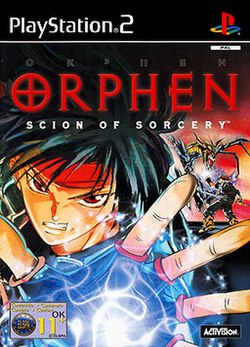










 Another SquareThought Site