

 May 2023
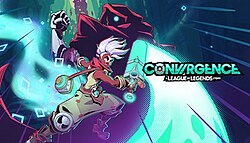

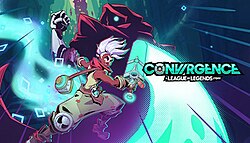
It is the mid-1990s in spirit even though the calendar stubbornly insists on 2023: Convergence arrives as a tight, deliberately old-school Metroidvania wrapped in modern sheen. You play Ekko, an inventor from Zaun - League of Legends' grime-and-gear metropolis - and you are armed not with a blade or a blaster but with the uncanny ability to shape time. Developer Double Stallion (Montreal) and publisher Riot Forge have produced a single-player romp that wears its influences like a well-thumbed strategy guide: exploration and backtracking rewarded with new abilities, precision platforming, and combat that occasionally demands the reflexes of a seasoned arcade cabinet veteran. The game is built in Unity and finds its footing across a host of formats; this appraisal examines the Xbox Series X/S incarnation, which benefits from the performance headroom of modern hardware. This review will approach Convergence as a serious 1990s-style critic who still believes a good game should earn the player's time and respect - and yet allow for one or two dry quips when the designer's ego gets in the way. The Metroidvania template is familiar ground, but Ekko's time toys give the map breathing room: they allow for inventive level design, forgiving recovery, and the occasional 'what did I just do?' moment when you undo a leap or unmake a mistake. The end result is a compact, well-made adventure that is both accessible to newcomers and satisfying for genre veterans.
At the mechanical core, Convergence is faithful to the Metroidvania creed: a side-scrolling world that encourages exploration through environmental puzzles, gated progression, and incremental upgrades. Ekko's toolkit, however, is where the game stakes its claim to originality. He can reverse time to undo a missed jump or negate incoming damage, slow time to thread the needle through hazards, teleport short distances for navigation and combat, remotely flip switches, and attack at range. These abilities function like the mid-to-late '90s power-ups that changed how you think about the same few corridors; they do not simply add numbers to a health bar, they fundamentally change the way obstacles are approached. Combat is serviceable and occasionally sprightly. Enemies present a range of behaviors - some telegraph, some rush - and the player is encouraged to mix Ekko's gadgets with more conventional platforming to stay alive. The reverse-time mechanic is a kind of safety net that keeps frustration in check: instead of reloading checkpoints, you can rewind a short span, which keeps momentum up and reduces the number of times you'll be staring resentfully at a death screen. It's a modern answer to an old problem, and it mostly works. Boss encounters vary in scope and serve as tests of timing rather than tests of endurance. They are designed to be overcome by learning patterns and then applying the right combination of Ekko's abilities. Exploration is where Convergence shines. The map unfolds with satisfying purpose; discovering a new gadget or a hidden passage feels rewarding because it opens previously inaccessible nooks and sweetens the return trips with shortcuts and secrets. The pacing is judicious - the designers let you catch your breath between significant navigational upgrades while still prodding you forward with worthwhile finds. For players unfamiliar with League of Legends lore, the game remains approachable. Siliconera's assessment that it will appeal to non-players of League is apt: while Ekko and Zaun's backdrop add color, the game does not require encyclopedic knowledge of Riot's MOBA to be enjoyed. Where Convergence occasionally falters is in the depth of its combat systems and the occasional repetition of enemy types. A sharper weapon variety or deeper upgrade trees would have given the mid-game more teeth. Nevertheless, the title compensates with a steady hand on level design and a core mechanic that keeps platforming fresh. Polygon's note that this is "a great adventure" so long as you're not expecting an Arcane-level retread is fair: Convergence is not a narrative juggernaut; it's an exploration and mechanics-driven experience. If you want a game that prioritizes clever movement and puzzle-combat interplay, you will find much to like.
Graphically Convergence opts for a slightly stylized, somewhat cartoonish aesthetic that favors readable silhouettes and atmospheric backdrops over hyperreal polish. GamesRadar's observation that the dystopian setting "is only held back by its slightly cartoonish graphics" is not an indictment so much as a description: the game looks purposeful rather than photoreal. This choice complements the side-scrolling perspective and makes hazards and enemies visually distinct, which is essential in a game that hinges on split-second decisions. The art team - led in part by Eric Angelillo and Etienne Marie - delivers layered environments that suggest a sprawling, grimy Zaun without trying to exhaust the lore. Animations are crisp, and Ekko's gadget effects are satisfyingly tactile; you can feel the weight of a time-reversal in the visual feedback. On the Xbox Series X/S, the Unity engine provides smooth framerates and rapid level transitions that preserve momentum - a key factor in a platformer where timing is everything. There are minor moments where background detail sacrifices clarity, but the overall visual language is coherent and functional. In short, Convergence's visuals may not win awards for realism, but they do their job admirably: they look distinct, they make gameplay readable, and they have personality.
Convergence: A League of Legends Story is a competent, sometimes delightful Metroidvania that wears its inspirations with pride while introducing a tidy innovation in Ekko's time-bending arsenal. Double Stallion and Riot Forge have produced a concise single-player package that rewards curiosity, precision, and repeated runs through cleverly designed spaces. Critics' consensus - reflected in Metacritic and OpenCritic scores hovering around the eight-out-of-ten mark - is unsurprising: this is a strong, if not revolutionary, entry in the genre. If you are a Metroidvania fan looking for a title that blends forgiving modern conveniences with the satisfying loop of discovery and ability-driven progression, Convergence is worth your time. Players seeking deep narrative complexity or radical combat systems may find it lacking, but those expectations would be missing the point. This is a game meant to be played, learned, and enjoyed for the clean pleasures of movement and experimentation. In the spirit of a 1990s reviewer's closing: it does what it sets out to do with craftsmanship and occasional flashes of ingenuity - and that, ultimately, is a respectable thing to achieve.
 Vagrant Story on PlayStation
 Disney/Pixar Toy Story 3 on PS2
 Toy Story Racer on PlayStation
 Record of Lodoss War: Deedlit in Wonder Labyrinth on PS4
 The Mummy Demastered on Switch
 Timespinner on Switch
 Timespinner on PS4










 Another SquareThought Site