

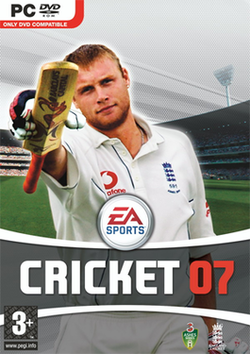

Cricket 07 on PS2 arrived like that slightly overenthusiastic cousin who insists you can master a straight drive in five minutes, then proceeds to teach you how much patience actually matters. Developed by EA Canada and HB Studios and published by EA Sports, the game packs in the big ticket items: Tests, ODIs, Twenty20, county seasons, state leagues, and even a full-on Ashes package with historical scenarios. For folks who grew up playing cricket in parks and arguing about LBWs, this is the console experience that feels familiar and occasionally infuriating in equal measure. The PS2 release got decent reception (about 70% on GameRankings, and a 7.3/10 from GameSpot), and for a reason: it's challenging in the right places and a bit forgiving in others, which makes it a satisfying playground for anyone who wants their digital cricket to demand some actual thinking.
If you're after a casual arcade smash-and-run, Cricket 07 will gently point you to the bowling machine out back and insist you spend a few hours learning timing. The core of the game's challenge comes from a deceptively simple premise: cricket is a game of decisions that pile up into a mountain of consequences. Every match type - 50, 20, 10 or even 5-over limited games, 4-day first-class matches, and full-blown 5-day Tests - changes the calculus of those decisions, and the game forces you to adapt. Batting is where your brain and thumb coordination are tested most. The 'improved player control and easy stroke play' that EA touted means you have access to a broader palette of shots, but the effective use of each requires timing, placement, and reading the pitch. Unlike button-mash rhythm games, here you'll be punished for trying to muscle every ball into the stands. Timing windows are strict enough that a late or early press will result in an edge, a top-edge, or a punch straight to the fielder. Shot selection matters: driving on a turning pitch or lofting a short ball into a packed outfield will teach you humility fast. The game rewards classical cricketing instincts - watch the bowler's length, pick your deliveries, and rotate the strike rather than hunting boundaries every over. Bowling and fielding are where Cricket 07 turns into a slow-burning test of craft. The bowling controls give you control over line, length, and pace, and mastering the seam, swing, and spin options is essential if you want to consistently trouble good batsmen. Bowling effectively in this game is not just about hitting the perfect spot; it's about setting a plan and executing it for multiple overs. If you bowl a peach of a delivery and it gets smashed, the game doesn't punish you with randomness - it reminds you that bowling is a strategy game where consistent pressure creates wickets. Spinners require patience and reading of the pitch; on turning wickets like at Eden Gardens, the margins for error are tiny and misjudging flight or length sees you carted around the ropes. Field placement and captaincy decisions are subtly challenging in Cricket 07. You can manually set fields and the AI will react differently depending on the match type, but the strategic layer benefits players who pay attention to batsmen tendencies, bowling plans, and game situation. Bowling in one-dayers is a different sport to setting traps in Test cricket. Managing bowlers' workloads, switching tactics between sessions, and choosing when to be aggressive or defensive are all part of the mental workout the game offers. If you enjoy micro-managing decisions and watching them pan out over long sessions, this game rewards the slow-burn thinker. Weather and pitch selection add another dimension of challenge. The game allows you to change pitches and weather conditions at venues like Lord's and Eden Gardens, and the differences are meaningful: a damp, overcast day invites swing; a dry, sunshine-soaked pitch offers turn and variable bounce. Learning how your plans must change with these variables is one of the most satisfying parts of playing. Experienced players will find themselves flipping their approach for the same bowler across two different venues, and that kind of situational adaptation is where the game separates the casual from the committed. The variety of game modes - World Championship, World Series, Knockout Cup, Test Series, and Tours (including detailed tours like the Long Australia Tour and Sub-Continent Tour) - force you to manage resources across longer campaigns. This is less about reflexes and more about campaign-level strategy: which bowlers to rest, when to push for promotion in county seasons or when to play conservatively to preserve a series lead. The Australian State and English County modes add league-style grit; over a season your choices compound, and small mistakes show up as lost trophies or missed finals. If you dream of being a national coach who can balance T20 fireworks with Test stability, you'll get a satisfying sandbox here. The Ashes content deserves a special mention for players who want challenge in scenario form. The 2005 Ashes scenarios let you replay tense moments and learn to win out of tight spots, while full recreations of the 2005 and 2006-07 series put you through the emotional wringer of multi-format tours. These scenarios are brilliant for skill-focused practice: they isolate critical moments and demand clutch decision-making - a perfect training ground for learning how to close out a Test match or save one under pressure. Multiplayer adds another flavor of difficulty because humans are gloriously unpredictable. Versus friends, your polished tactical plans will be ripped to shreds by unconventional shots and unexpected field settings. AI difficulty on PS2 is reasonable - challenging but not sadistic - which makes single-player progression satisfying. The PC version, by contrast, had a rougher reception, but on PS2 the controls, AI, and interface are tuned well enough to provide that classic console pick-up-and-grind appeal. Two caveats temper the experience: licensing and polish. EA lost licensing on many teams, so only Australia, England, South Africa and New Zealand have official player names and kits. This can break immersion for the pedants among you, but the team management editor and community-created rosters/patches mean you can fix it if you care enough to download them. The broader issue is that Cricket 07 is the end of an era - the last cricket title EA published - and the community has kept it alive with patches and rosters because its core gameplay is still rewarding. In short, the skills that Cricket 07 demands are: timing and shot selection for batting; plan-based bowling and adaptation for bowling; tactical awareness and long-term resource management for captaincy and seasons; and the ability to read pitch and weather for situational adjustments. If you enjoy learning systems and seeing improvement over time, the challenge curve here is a slow, fulfilling climb.
Graphically Cricket 07 wears its PS2 origins with a kind of rugged pride. The player models aren't going to win awards for photorealism, but animations for shot execution and bowling actions are serviceable and convey enough detail that you can tell when a shot was executed poorly versus played with panache. The stadiums - like Eden Gardens and Lord's - capture the atmosphere more through scale and crowd reactions than texture quality. Pitch wear and tear in multi-day matches is represented in a way that matters to gameplay, which is where it counts: seeing the surface start to scuff and knowing spin will become a bigger factor is both visually informative and practically important. Commentary by Richie Benaud and Mark Nicholas adds a layer of immersion; the lines repeat, but they punctuate the action nicely. If you're looking for modern bells and whistles, this isn't it, but the visuals support the challenge rather than distract from it.
Cricket 07 on PS2 is a satisfying old-school cricket sim that rewards patience, tactical thought, and skill practice. It isn't flashy, and licensing gaps mean you might need community patches for full immersion, but as a pure test of cricketing ability it holds up. The game demands more than twitch reactions: it asks you to read the game, adapt plans across formats, and manage resources over long campaigns. For anyone who likes their sports games to feel like learning an instrument rather than banging pots, Cricket 07 offers a worthwhile challenge. Pop in the disc, put on your captain's hat, and get ready to learn a sport where the scoreboard is only the final boss.
 International Cricket 2010 on PS3
 Cricket Through the Ages on Switch
 Accolade Sports Collection on Xbox Series X/S
 Deca Sports DS on DS
 Pure Pool on PS4
 Alan Hansen's Sports Challenge on PS2













 Another SquareThought Site