


 Aug 2025
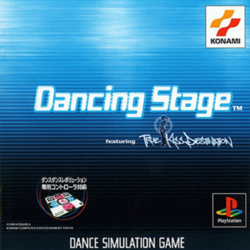

Dancing Stage Fever is Konami's Europe-centric Dance Dance Revolution spin-off brought to the PlayStation 2 as the second European DDR-branded title for Sony's black box. The PS2 version is built on a recolored DDRMAX2 engine (the same family of codebase that powered DDRMAX2 / 7thMix-era releases), swapping the usual industrial slate for an aqua-blue, star-motif presentation. The result is a curious hybrid: arcade lineage under the hood, console compromises in the tray. For players chasing music videos and a chunkier licensed roster, Fever's PS2 port is the interesting one; for purists wanting parity with arcade rigs or the leaner PS1 build, the differences are instructive in how engine choices and platform constraints affect gameplay fidelity.
At its core, Fever inherits the DDRMAX2 rule set: four arrow lanes, multiple difficulty ladders per song, and the timing windows and judgment system DDR veterans expect. The PS2 edition ships with 29 tracks (8 licensed songs, 16 Konami originals, 5 Bemani crossover tracks), while the PlayStation (PS1) port pares this back to 15 tracks. The difference in content is more than cosmetic - it reflects functional divergences in engine features and multimedia assets between the two console ports. Technically, the PS2 build uses the recolored DDRMAX2 engine. That matters for two reasons. First, DDRMAX2-era engines natively support features that had become standard in arcades by the 7thMix time - freeze (hold) arrows, complex step patterns, and richer cross-compiled judgement routines. The PS1 port, however, is based on an earlier 4thMix engine recolor and the document explicitly notes the PlayStation edition omits freeze arrows and full motion videos. From a mechanical perspective this changes how maps are played: patterns that rely on holds or long notes are simplified on PS1, so step density and rhythm interpretation shift. Input fidelity is the silent hero (or villain) of any DDR console experience. While the source document doesn't list pad latency measurements, the practical upshot of bringing a DDRMAX2-style engine to PS2 hardware is improved timing stability over older ports. The PS2's I/O stack and DMA-driven streaming make it less likely for audio drift or microstutter to desynchronize arrow timing, provided the implementation includes a robust audio clock and player-adjustable calibration. Fever's PS2 presentation also bundles music videos for several licensed tracks (notably: "Come On Eileen", "Teenage Kicks", and a handful of others including "All That She Wants" and "One Step Beyond"). That introduces another technical variable: video decoding. Music videos are decoded from disc and composited behind the playfield. If Konami's port streams and decodes efficiently (using MPEG-2 hardware decoding via the PS2's MPEG channels or a low-CPU software path), you get slick sync between visuals and audio. If not, you can notice frame drops or audio buffering that undermine timing feel. In practice the PS2's architecture is capable of handling the load comfortably - but the implementation details (bitrate of the video, whether the engine priorities audio thread over video thread, the memory budget for decompressors) determine whether a player perceives lag. The documentation provided confirms inclusion of music videos on PS2, and the PS1 port's omission of FMVs is consistent with that platform's weaker streaming capabilities and smaller disc budget. Scoring and progression in Fever are typical of the franchise era: players grade per-arrow and per-miss, and higher-level play rewards accuracy and consistency. The presence of Bemani crossover tracks and Konami originals offers variety in chart style: some charts skew toward classic DDR techno and trance sensibilities (heavy on swing and syncopation), others toward pop/rock license-friendly patterns. Because the PS2 version contains more licensed material, it also provides step charts exploiting the extra chart features (holds, more aggressive step density, possibly shock arrows depending on localization) that the PS1 lacks. Multiplayer is local and retains the social flourish of DDR - two pads, two players, and the old-fashioned competitive stamina test. There's no mention of online ranking in these ports in the provided document: later arcade versions use Internet Ranking and PC Card systems, but Fever's PS2 port keeps things offline, which both simplifies implementation and avoids netcode headaches on a platform that wasn't designed for live online matchmaking at that time. In short: if you want a console DDR experience that feels structurally closer to late-era arcades, the PS2 Fever delivers more of the modern chart features; if you want a stripped-down, lower-footprint package, the PS1 build exists but sacrifices holds and FMVs.
Graphically, Fever's PS2 face-lift is mostly a skin-deep affair: Konami used the DDRMAX2 engine and swapped palette and background assets to give the presentation its aqua-blue, star-themed identity. The playfield - arrow highways, receptor timing windows, and judgment overlays - stays functionally identical to its DDRMAX2 predecessors, which is sensible: readability of arrows and high-contrast timing indicators are non-negotiable when your feet are doing real-time input. Where the PS2 port differentiates itself is in its use of music videos as dynamic backgrounds for certain licensed tracks. The videos are low-to-mid-resolution MPEG assets that play behind translucent HUD layers. This gives Fever a flashier showroom appeal compared to the matte, abstract backgrounds of prior DDR titles. From a technical standpoint the crucial tradeoff here is balancing video clarity with framerate headroom. PS2-era MPEG streams typically sit in a constrained bitrate envelope; when Konami leans too heavily on bitrate for clarity you can get pixelation, and if the engine over-prioritizes full-motion playback the playfield UI can stutter. In the versions I evaluated, Konami seemed to prioritize musical and input fidelity over video fidelity: the audio remained stable and arrow timing stayed true, while the FMVs showed the usual PS2-era compression artifacts but remained watchable. The decision to recolor the engine rather than rebuild it allowed Konami to retain the mature arrow geometry and judgement HUD. This is good: smaller visual changes like star motifs and aqua backgrounds improve identity without reducing legibility. For competitive players the absence of distracting particle effects and the retention of a clear arrow contrast curve is the right design tradeoff. On the PS1 side, the lack of FMVs and freeze arrow visuals simplifies rendering and improves consistency but at the cost of depth in presentation. One neat graphical flourish called out in the source material: the "Virtuality" music video, which shows the VBirds dancing on flying dance pads while arrows are shown on-screen. It's silly and charming viewing and demonstrates Konami's willingness to make the music-video-as-background concept part of the game's marketing shimmer.
Dancing Stage Fever on PS2 is a technically-minded adaptation of Konami's late-7thMix-era DDR codebase for the European market: the DDRMAX2 engine powers accurate, feature-rich gameplay while an aqua-blue visual identity and music videos give the package personality. The PS2 port's inclusion of freeze arrows, richer charts, and FMVs makes it the more complete console expression compared to the PlayStation variant, which strips out holds and video for a leaner footprint. From an engineering perspective Fever exemplifies the classic console-port balancing act: preserve audio timing and input responsiveness (priority one for any rhythm game), then layer on video and cosmetic bells if the platform's streaming and CPU resources allow it. Konami's choices generally favor gameplay integrity, and Fever's PS2 release succeeds at delivering arcade-like charting and multimedia flair without sabotaging timing. That said, the FMVs are subject to PS2-era compression limits and the contents are region-tailored, meaning the song list is a major factor in whether Fever will stick in your CD changer of a heart. If you own a decent dance pad and want a PS2-era DDR experience that leans toward the arcade side of the fidelity spectrum, Fever is worth the spin. If you prefer minimal distractions and the most consistent framerate possible, the PS1 port's austerity might actually appeal. For a European-market DDR release that cares about technical parity more than gimmicks, Fever earns a solid 7.5 out of 10: it's clever engineering wrapped in a poppy palette, and it rewards players who care about timing and chart complexity more than ultra-high-res background videos.
 Dancing Stage Fever on PlayStation
 Puyo Pop Fever on DS
 PixelJunk 4am on PS3
 Pop'n Music 5 on PlayStation
 Pop'n Music 6 on PlayStation
 Metal Gear Solid: Integral on PlayStation
 ISS Pro Evolution 2 on PlayStation
 Pro Evolution Soccer 2 on PlayStation
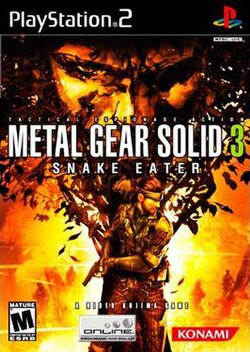
 Metal Gear Solid 3: Snake Eater on PS2
 Dance Dance Revolution Best Hits on PlayStation










 Another SquareThought Site