

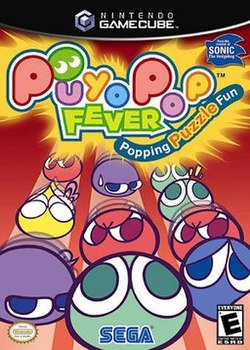

Puyo Pop Fever on the Nintendo DS dresses itself in candy-colored fluff and chirpy music, then quietly smacks you with more plot twists and personality than many AAA action epics. On the surface it's a tidy tile-matching puzzle game: stack puyos, make chains, send garbage to your opponent, and trigger the glorious Fever mode. But Sonic Team's 2003 reboot - which the DS version brings to a portable, multiplayer-friendly audience - sneaks in a tiny magic school melodrama, populated by students, a mysterious teacher, and a handful of characters whose short in-game arcs manage to be both charming and oddly resonant. This review zeroes in on those characters and what the game's storylines actually say about identity, memory, and the peculiar responsibilities of losing magical canes.
Before I get to the character business, the DS Puyo Pop Fever fundamentals you need to know are refreshingly simple: a 6x12 playfield, falling pairs of puyo, four-in-a-row pops and chain reactions. Where Fever flips the switch is the fever meter: counter incoming trash by chaining, fill the bar, and you get a pre-built puzzle that, if you can find the right trigger point, detonates into ridiculously satisfying cascades. The DS build adds one very important social wrinkle - multiplayer for 2 to 8 players - turning what would otherwise be a concentrative one-on-one duel into a small chaos economy where timing, reading opponents, and occasionally blaming someone for being too good at finding triggers becomes the point. But the mechanics and the melodrama interact in ways that deserve attention. The game's plot premise-Ms. Accord, the Primp Magic School teacher, has 'lost' her flying cane-acts like the classical MacGuffin. It's comedic shorthand that propels the protagonists across colorful stages and into battles against various "wacky characters." On paper the story is basic quest fare, and yet the game uses that setup to give very different narrative lenses depending on whose shoes you're in: Amitie or Raffine. Amitie is the default protagonist: bubbly, earnest, and, for lack of a better word, reliably optimistic. Her arc is a classic student-hero path. She hears about the lost cane, believes in Ms. Accord's mystery and reward, and sets off to help. The gameplay mirrors her arc - when you play Amitie, the difficulty curve and the encounters are tuned to underline learning and progression. You start small, build chains, learn to counter trash, and your Fever activations feel like the narrative equivalent of a student finally finding her favorite spell's incantation. Amitie's ending, where she and friends congratulate one another, is the payoff of a story about community and collective achievement. In the same way a big chain in Fever mode clears the field, Amitie's plot clears away doubt and reaffirms friendship. Raffine is where things get deliciously weird. The game explicitly positions her route as the trickier, more complicated alternative: more difficult encounters, altered character matchups, and an ending that complicates the neatness of the Amitie path. Raffine's arc lurches into ethically ambiguous territory. She suspects Ms. Accord of lying about the cane and conspires with Popoi on a plan to reveal the supposed deception. That plan fails spectacularly - Raffine is knocked unconscious by Ms. Accord and loses her memory of the entire incident, waking up to the same congratulations and relief the Amitie route enjoyed. This divergence does two clever things. First, it gives the player a taste of narrative agency: choosing Raffine is an implicit choice to pursue skepticism and curiosity over naive goodness. Difficulty ramps up accordingly. Second, Raffine's arc thematically intertwines with the game's mechanics: Fever mode's pre-set puzzles act like preordained plots, tempting you to trigger a chain without fully understanding the structure beneath. Raffine tries to unpack and expose an adult's lie, but instead gets reset - much like a poorly placed chain that triggers too early and clears promising setups before they can blossom. The game, intentionally or not, toys with the idea that some mysteries are less about uncovering and more about whether you can stand the consequences of pulling the thread. Ms. Accord, the ostensible MacGuffin's owner, is the axis on which both arcs pivot. She is a teacher, a figure of authority, and the worker behind the lost-cane rumor. The reveal that she never actually lost the cane reframes the entire campaign from a simple treasure hunt to an examination of trust and social performance. For Amitie, Accord is a benevolent authority whose motives are ultimately forgivable - the school, safety, friendship beat out any sense of deception. For Raffine, Accord's untruth is a betrayal. But the game's choice to have Raffine forget the incident undermines a tidy moral verdict: the student who questions authority is silenced (or at least sidelined) not by punishment but by amnesia. It's unnerving for a kid-targeted puzzle game, and that dissonance is its best narrative move. Popoi is a smaller but notable presence: an ally in Raffine's plot to reveal Accord. Popoi's involvement hints at the social networks in the school - conspiracies are not hatched in solitude. If Amitie's arc is about teamwork, Popoi's role in Raffine's arc is about the slippery ethics of groupthink and how a confidant can either embolden or mislead you. The game never fully leans into a detailed betrayal read; instead it leaves you with the comic image of two students conspiring and then being verbally (and physically) rebuked by the teacher. The rest of the supporting cast is described in-game as 'wacky characters,' and that label is fair: the encounters are designed to be short, weird, and to feed the larger puzzle loop rather than produce full-blown character studies. Still, those one-off fights are well used as beat pieces to develop the protagonists. Each opponent feels like an exam: the puzzle is the test, the opponent is the examiner, and Fever mode is your cheat sheet - only, if you rely on it too much you miss the skill growth that wins the harder fights. The DS's endless mode and practice options encourage treating these encounters as training sessions, and that's narratively on-brand: the students of Primp Magic School improve through repetition and small victories. Playing the DS version, particularly in multiplayer, changes how you experience these arcs. Fighting real people turns Ms. Accord's mystery into background color; the important stuff becomes bluffing, timing Fever activation to punish an opponent, and social trash talk. Yet, even in that chaos, the characters' personalities - earnest Amitie vs. scheming Raffine - influence how players role-play their matches. Someone channeling Raffine will always be looking for opportunities to surprise; an Amitie-style player will aim for clean, reliable chains. This emergent player behavior is where Puyo Pop Fever's narrative design quietly shines: character identity leaks into competitive style.
On the DS, Puyo Pop Fever keeps itself cute and readable. Unlike the GameCube and PS2 builds that use 3D models for the puyos, the DS sticks closer to the sprite-based presentation that suits its modest hardware. That choice is sensible: clarity is king in a game where milliseconds and pixel positions determine whether you make a multi-stage chain or panic-spam the board into a glorious, game-losing mess. The character portraits and animations are intentionally bubbly - they sell emotion economically, which is perfect when your protagonist's entire arc must be conveyed through a few dialogue boxes between matches. Color palettes are saccharine without being cloying. The DS's dual-screen setup is used well: one screen for the action and the other for meters, portraits and the occasional quip. The visual language of the Fever meter, warning bars for incoming garbage, and the pre-built Fever puzzles is unambiguous, which is essential when you're trying to coordinate a chain mid-chaos. If you want photorealism, this is not the game; if you want personality, readability, and visuals that support game flow and the characters' cartoonish arcs, it delivers.
Puyo Pop Fever on Nintendo DS is a puzzle game that doubles as a lean, winking school drama. It does not try to be a novelistic chronicle of identity, but within its short scenes and alternating story routes it offers genuine narrative texture: Amitie's earnest growth, Raffine's thornier skepticism and forget-me-not ending, Popoi's conspiratorial sidekick role, and Ms. Accord's dubious authority all contribute to a surprisingly rich mini-ecosystem of motives. Mechanically, Fever mode remains a highlight - the way pre-built puzzles reward pattern recognition and heat-of-the-moment creativity makes every successful trigger feel like an earned narrative beat. The DS build is especially fun for multiplayer, where the characters' tendencies bleed into playstyles and matches become interpersonal theater. Critics rated the DS version around the mid-to-high 70s on aggregator sites, which is fair: the game is not a genre-redefining masterpiece, but it is polished, approachable, and carries more heart (and amnesia-based plot shenanigans) than you might expect from a falling-block puzzler. If you want a portable game that combines quick, addictive logic tests with a cast of bright, if brief, character arcs, this one is worth slotting into your DS lineup. It's proof that even in a world of popping blobs, a good story - even a candy-colored one about lost canes - can make chains feel meaningful.
 Puyo Puyo Champions on PS4
 Puyo Puyo Fever 2 on DS
 Pop'n Pop on PlayStation
 Puzzle by Nikoli 4: on PS4
 Professor Layton and the Last Specter on DS
 Puzzle Kingdoms on DS
 Puzzle de Harvest Moon on DS
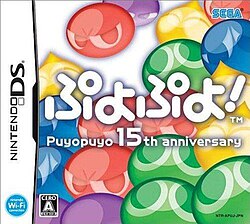
 Puyo Puyo! 15th Anniversary on DS
 Sonic Frontiers on PS5
 Sonic Frontiers on Xbox Series X/S
 Sonic X Shadow Generations on PS5
 Sonic Racing: CrossWorlds on Switch 2












 Another SquareThought Site