

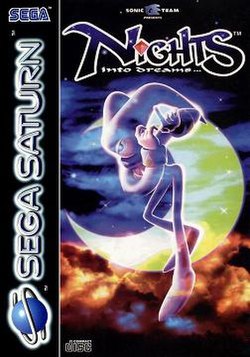

Nights into Dreams is one of those games that reads like a design lab notebook scribbled by dreamy engineers who fell asleep on their SGI workstations and woke up with better ideas. Originally a 1996 Sega Saturn experiment, Sonic Team reissued the package for PlayStation 2 in 2008 in Japan, bringing a faithful port plus PS2-era niceties (16:9 support, galleries and a toggle to 'classic Saturn graphics'). The PS2 version is not a total overhaul - it is a preservation with a few modern conveniences - and as such invites an analysis that is less about new bells and whistles and more about how an unusual, technically ambitious design from the mid-90s translates to a later-generation console. For people who care about control fidelity, rendering tricks, audio engines and the little compromises that make or break a game's feel, NiGHTS rewards scrutiny. For everyone else it remains, magically, fun to fly.
At its core NiGHTS is deceptively simple: you guide a flying avatar (Nights) along pre-authored routes through a dreamscape, score points by chaining actions and return stolen Ideyas to a palace before a clock (or an angry alarm) wakes the dreamer. That sentence, though short, hides several deliberately engineered systems worth unpacking. First, the flight model. Sonic Team wanted the sensation of free flight, but full 6DoF freedom in early 3D playtests proved disorienting and nearly unplayable. The team's practical solution was elegant: render the world in 3D but constrain the player's motion to invisible 2D tracks. This yields a hybrid gameplay space - visually 3D but mechanically 2.5D - which preserves the lateral complexity of space while keeping controls deterministic and readable. From a technical standpoint it's a classic design tradeoff: give up absolute spatial freedom in exchange for predictable input-to-motion mapping, which preserves a crisp sense of momentum and enables high-skill chaining (the game's 'Linking' combo system). Controls were another deliberate engineering path. The original Saturn's standard pad was judged inadequate, so Sonic Team developed the Saturn 3D controller with an analogue stick and analogue triggers. The PS2 remake benefits from an established analogue standard (DualShock 2), so the tactile argument is moot for PS2 players - but it's worth noting how much of NiGHTS' identity depended on analogue precision. Drill Dashes (a speed burst and enemy-clear) and paraloops (a circular maneuver that attracts items) rely on nuanced stick input. The game's grading system (A-F for each Mare) and score multipliers reinforce this: the engine rewards precision and temporal sequencing. The boss architecture adds another technical layer - fights occur in Nightmare, have their own timers, and multiply the Nightopia score by a boss-performance factor. It's an early example of compositional scoring architecture where different subsystems (flight, capture, boss combat) remain discrete but commutable to a single final metric. A few systemic quirks are worth noting for the hardware-minded. Collisions subtract fixed time chunks (five seconds), not health points; the game is fundamentally about time budgets and score throughput rather than survivability. Power-ups are encoded as ring sequences and bonus barrel flags, which makes the level data deterministic and streamlines the runtime cost of power-up state. The 'A-Life' subsystem - a simulated ecology of Nightopians - is an unusual technical flourish: it tracks inhabitants, their moods, mating (to produce hybrids), and even feeds back to an adaptive music engine where tempo, pitch and melody vary with A-Life state. On the Saturn this ran off the console's internal clock and used saved state to evolve the environment; the PS2 remake restored the core behavior but ran on a different hardware baseline, so timing semantics and how persistent states map across platforms required careful porting considerations. The PS2 remake is judicious: it preserves the invisible-track flight model, the combo 'Linking' math, and the Mare/Nightmare split. It layers on widescreen and cosmetic toggles instead of reworking the core loop, which is the right call mechanically but inevitably leaves choices about input responsiveness and rendering budget to the porting team's skill. Players used to modern direct-flight sims might find the map 'rushes by' - a common contemporary complaint - but that rush is a byproduct of deliberately high traversal velocity combined with tightly authored route geometry designed around paraloops and ring timing.
Graphically, NiGHTS is a study in relative ambition and neat optimisations for its original era. The original Saturn release was praised for fluid animation, vibrant textures and a dreamlike palette that masked polygonal limitations. That said, a handful of issues were repeatedly noted even back in 1996: geometry clipping, occasional image warping and pop-in were visible under certain camera/velocity combinations. These aren't bugs in the design so much as artifacts of the Saturn's peculiar dual-processor architecture and the aggressive streaming budget Sonic Team pushed to achieve large, colorful vistas. From a technical point of view, two design choices matter: use of custom libraries and pre-authored camera/track systems. Sonic Team eschewed the Sega Graphics Library for much of the project, building custom rendering code tailored to their needs. On Saturn that meant squeezing higher-quality textures and smoother animation out of limited VRAM at the cost of extra engineering time. On PS2, the port had a relatively easier job: PS2's graphics pipeline and memory layout reduce some of the clipping/warping pressure, and widescreen support lets you see more of the dreamscapes. The PS2 remake offers a 'classic Saturn graphics' toggle - a smart move for purists - and also includes an illustration gallery and small UI enhancements. The visual design choices also double as gameplay signposting. Rings, Ideya palaces, bonus barrels and enemy placement are all visually prioritized so that the player's 0.5-second glance decisions during high-speed sequences remain reliable. The paraloop's star-trail and the way objects are attracted to a looped area are implemented with particle trails and simple attraction vectors; uncomplicated, performant, and effective. Where the original sometimes relied on the Saturn's internal clock for A-Life-driven cosmetic changes (seasonal elements like Christmas Nights), the port needed to emulate or map those semantics to PS2's clock model - a minor but nontrivial porting challenge. Audio is another area where NiGHTS technically punches above its weight. Its adaptive music system linked tempo and melody to in-game A-Life state, creating a dynamic soundscape that responded to play and in-game festivals. On PS2 the soundtrack and audio fidelity benefit from the platform's stronger CD audio handling, but the core compositional system remains the game's most interesting audio engineering accomplishment: an early, in-production example of music that isn't just layered loops but an engine that mutates musical parameters to reflect systemic state.
Nights into Dreams on PS2 is not a reimagining; it's a careful conservation of a technically adventurous title. For a player interested in the nuts and bolts of game design, the title is a compact masterclass: bespoke flight mechanics constrained by invisible 2D rails; analogue-first control design; a scoring architecture that rewards temporal combos; an A-Life + adaptive music pipeline; and sensible porting choices that keep the original's feel while adding widescreen and presentation upgrades. Where it shows its age are the same places reviewers always point to: occasionally aggressive pop-in, the persistent sensation that the camera and scene composition were authored for a narrower field of view, and the fact that the running speed can make levels feel like they evaporate before you fully soak them in. If your metric is innovation-per-byte, NiGHTS is excellent. If your metric is new content per dollar in a 2008 retail environment you might grumble about the small extra feature set. On technical merits alone, however, it earns high marks: it's an elegantly constrained experiment that turned hardware limitations into design strengths. Scorewise I give the PS2 remake a 9/10: it preserves a uniquely engineered experience in a way that still plays and feels coherent on newer hardware, without trying to polish away the idiosyncrasies that made the original remarkable. If you care about how games are put together - control vs camera tradeoffs, adaptive audio pipelines, deterministic scoring systems - NiGHTS is essential research material wrapped in the best possible childhood dream you can borrow from someone else's memory.
 One Piece: Pirates' Carnival on PS2
 Tchia on Switch
 Pain on PS3
 Onimusha: Dawn of Dreams on PS2
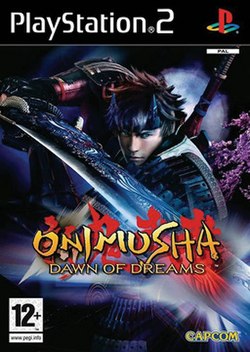 Action Man: Operation Extreme on PlayStation
 Door Kickers: Action Squad on Switch
 Combat Elite: WWII Paratroopers on PS2
 Sonic X Shadow Generations on Xbox Series X/S
 Sonic Frontiers on PS5
 Sonic Frontiers on Xbox Series X/S
 Sonic X Shadow Generations on PS5
 Sonic Racing: CrossWorlds on Switch 2












 Another SquareThought Site