

 Jun 2024
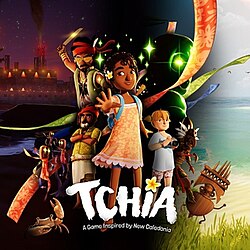

Tchia arrives on Switch like a postcard from a childhood you wish you'd had: sun-baked, slightly magical, and full of secrets you can only find if you stop sprinting and start listening. At its core Tchia is an action-adventure game built on a deceptively simple promise - you can possess animals and objects with a power called soul jumping, and the map is an archipelago inspired by New Caledonia that smells of salt, wood smoke, and parental melodrama. The game opens like a story told to a new arrival at an orphanage, which is a neat framing device because it reminds you all the time that this is a tale - one you follow both for the sandbox joy of gliding over waves and for the less fun, but more meaningful, business of people changing each other. This review focuses less on whether the glider handles like a dream and more on how the cast evolves. Tchia the character, her parents, her lovers, mentors, and villains - all of them have arcs that play out over exploration, side quests, and more than a few ukulele songs. The result is a game that's as much about becoming as it is about platforming: Tchia starts as a curious kid with a nascent, folkloric power and, through grief, betrayal, and community, grows into someone who can hold a people together. It helps that the world itself acts like a character too - islands with personalities, towns with grudges, and factories that smell vaguely of capitalist dread. If your idea of an open-world hook is less about needlepoint quests and more about watching characters change, Tchia will sit comfortably on your Switch and not call you names for playing it in handheld mode while you eat cereal.
If you want to describe Tchia with one mechanical sentence it would be this: explore, possess, improvise. The soul-jumping mechanic is the narrative and mechanical spine. At first it feels like a clever novelty. You jump into a dog to dig up treasure, into a bird to cross a canyon, or into an outboard motor because you are that extra curious child who does not read instructions. Over the course of the story the mechanic stops being merely useful and starts being expressive. Possession becomes a way of trying on other lives. That perfectly mirrors Tchia the protagonist, who spends the game learning how to inhabit roles - daughter, friend, revolutionary, lover - and then using those roles to stitch a community back together. The open-archipelago design helps deliver this. Tchia is acrobatic: she climbs, slides, glides, and hops from tree catapult to canopy like a teenager auditioning for a pirate musical. More importantly, the world is built so that character beats and mechanical beats collide. Want to reach Ga Ngazo and confront the secretary to get into Meavora's palace? You will need favors, to craft gifts, to learn carving from the Hunahmi chief, to accept matriarchal rites in Weliwele, and possibly to distract someone by possessing a passing goat. These are not arbitrary fetch quests; they are social steps that push the story forward and give you time to watch people change their minds about each other. When Tchia helps a village, it's rarely just about unlocking a gate - often it's about resolving grief, settling a feud, or learning a melody that will call an animal to your aid. Tchia herself is fun to control, but more interesting is how the game stages her emotional arc through interactions and losses. Early on she is introduced as curious and a bit naive - the documentary voice in development documents is accurate. The abduction of her father Joxu is the engine that forces her into growth. That traumatic event is not treated like a flimsy motivation. Instead, it shapes how the world responds to her. Some people help, some exploit, and some reveal darker truths: Meavora, the child-eating demon, and Pwi Dua, the man who engineered a coup, are not cartoon villains; they are tragedies on legs. Their cruelty is contrasted with acts of surprising tenderness - Tre's loyalty, Kavere's ancient knowledge, Heia's masked violence. Heia, the masked warrior, is a standout because her arc flips from violent myth to domestic anchor. For much of the game she is a terrifying guardian figure who appears like a deus ex machina to save Tchia. Later revelations make her the missing mother, whose training under Kavere converted her into both a weapon and a protector. That transformation mirrors Tchia's own: the daughter learns to be the kind of person who can ask for help and accept imperfection. Heia's arc is also the game's meditation on revenge and motherhood. She arrives as vengeance, and she becomes a builder of things, including an orphanage. Watching Heia refuse to be only violence is one of the game's quiet pleasures. Pwi Dua's arc is less about redemption and more about the corrosive effect of fear. He fears the soul-jumping lineage, turns the island against the royal family, and initiates a chain of betrayals that culminates in family trauma. The coup reveals how paranoia can become policy. Meavora, who eats children, is the monstrous embodiment of a society that consumes its innocence in polite, industrial ways - the game lampshades this with Meavora's transformation back into a worm. That grotesque reversal is both myth and allegory: devourers can be humbled, but not without cost. Romance in Tchia is not a side note. The relationship between Tchia and Louise grows in a believable way: small moments, shared tasks, and a grief that both softens and hardens them. Louise as an arc is a quiet counterpoint to Heia. Where Heia's chapters deal with identity and duty, Louise's arc is about family and chosen ties. The post-credits reveal that Louise is the narrator of the story gives the whole romance a sweet seal: it is not a throwaway plotline but the thread that ties the storytelling frame back to the present. Side characters like Tre, Kavere, Gaby, and the Hunahmi chief are not just color. Tre's sacrifice and healing reveal complexity: he saves Makanu at the cost of his own life, and that willingness to trade ends up saving a family. Kavere, the island guardian, is the quiet mentor archetype who both reveals lore and refuses to be simple exposition. Their arcs are short but meaningful, and the game rewards curiosity with emotional payoffs. The net effect is that gameplay - collecting gifts, learning melodies, solving puzzles - feels like social work. You are literally using ukulele songs to call forth animals and weather, but narratively you are picking apart tensions and knitting communities back together. It is wholesome, but it never strains for sentiment; most of the time it earns the moments by letting them breathe.
Tchia on Switch looks like an illustrated atlas brought to life. The art direction leans into a stylized warmth rather than photoreal ambition, and that choice serves a character-centered narrative perfectly. The archipelago is painted with saturated blues, greens, and ochres that feel like a warm memory more than a strict geography lesson. The team traveled to Lifou in New Caledonia while developing the game, and those field trips show up in the textures and cultural details: clothing, carvings, and the presence of Drehu and French in the spoken lines. Those cultural specifics elevate the visuals from pretty to lived-in. Characters are expressive without being grotesquely detailed, which matters because the story rests on small facial moments and mannered movement. Heia's masked entrances are cinematic, Joxu's absent presence haunts certain islands through abandoned tools and carved totems, and the children that Meavora consumes are evoked through physical absence and ruined places rather than gratuitous shock. Meavora itself is effectively designed as a demon that feels mythic on a small budget: grotesque, unnerving, but also narratively symbolic. Performance on Switch is competent. The port keeps most of the charm and scale of the original releases, though texture pop-in and lowered draw distances appear in handheld mode if you look for them. That said, the world design is clever enough that those compromises rarely spoil the feeling of exploration. Animations for the animals you soul-jump into are endearing - dogs dig with scrappy enthusiasm, birds flit in believable patterns, and random object possessions are surprisingly hilarious. The ukulele sequences are a visual treat too: when Tchia strums a Soul-Melody, the screen becomes a momentary storybook vignette, and it's pure joy to watch the world rearrange itself to your tune. Audio deserves a shoutout here. Composer John Robert Matz crafts themes that feel like they grew on the islands. The soundtrack won several accolades and the game picked up awards for game audio, and it shows. Music and localized language choices - Drehu as well as French snippets - make the islands feel like places with histories, not just quest hubs. All of this supports the character arcs: leitmotifs return at crucial emotional beats, and Louise's elder narration gives the entire visual experience a soft, reflective filter.
Tchia is less a checklist of open-world mechanics and more a novella you can play. If you are the sort of player who measures games by whether they let you experiment with systems, there is joy in soul-jumping and in the physics-driven hijinks of a sandbox sea. If you care about character work, though, Tchia's real achievement is how it ties gameplay and story together to let characters change in believable, moving ways. Tchia the protagonist grows from curiosity into stewardship; Heia shifts from avenger to caregiver; Pwi Dua decays under his own fear; and Louise becomes the older narrator who turns private memory into public care. Even secondary figures like Tre and Kavere have sacrificial, mentor, or healing beats that land because the game gives them room. There are flaws. Combat can feel repetitive, and on Switch you will notice visual compromises if you are pixel-obsessed. But those are quibbles next to a game that trusts you to stop and watch, that rewards curiosity with narrative weight, and that treats local culture with genuine affection rather than tokenism. Tchia invites you to possess a seagull, drive a raft into the sunset, and then sit through a funeral where everyone who mattered gets remembered. It might make you cry, it will definitely make you smile, and it will leave you a little calmer than you arrived. For an indie that began as Project Caillou and grew into an award-winning island fable, Tchia on Switch is a warm, slightly magic, and thoroughly human hourglass you can stick in your pocket and carry home.
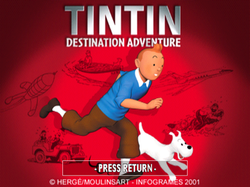
 Tintin: Destination Adventure on PlayStation
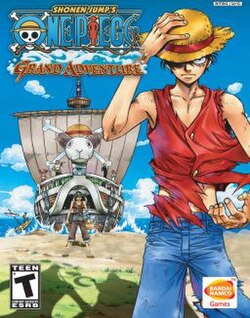
 One Piece Grand Adventure on PS2
 Taiko no Tatsujin: Dokodon! Mystery Adventure on Switch
 Onimusha: Dawn of Dreams on PS2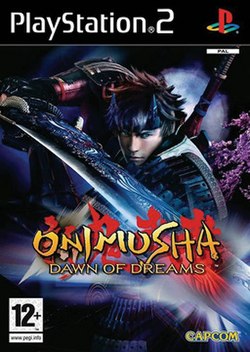










 Another SquareThought Site