

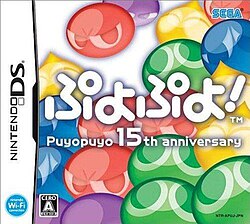

Puyo Puyo! 15th Anniversary arrives on the Nintendo DS like a pocket-sized teacher who yells at you in adorable monster-speak until you stop making dumb moves. It's a celebration of a long-running series, packaged with modes lifted from Puyo classics (original Puyo Puyo, Puyo Puyo 2) and the Fever era, plus a few silly rule-bending modes that keep the formula fresh. The DS version is Japan-only, so unless you enjoy navigating menus in a language you can't read or loading up a fan translation, you'll be doing your chain-building with a side of cultural mystery. This isn't a game that pats you on the head for stacking four-and-done combos and calling it a day. It's a puzzle title with a high skill ceiling and an even higher chaos ceiling; it rewards forward thinking, pattern recognition, and a willingness to let go of the comforting illusion of immediate control. If you like games where you can improve dramatically with deliberate practice, Puyo Puyo! 15th Anniversary is the kind of rude-but-honest tutor that will make your brain stronger and your thumbs slightly more aggressive. The rest of this review zeroes in on the challenge aspects - what skills this game asks of you, how modes alter the demands, and why even a casual tussle against a competent player can feel like a chess match played at breakneck Tetris speed.
At its core, Puyo Puyo is elegant: pieces (Puyos) fall in pairs, and you orient and stack them so that matching colors of four or more touching Puyos vanish. The kicker - and the entire source of the game's competitive fire - is chaining: clearing one set can trigger others to fall into place and clear in succession, sending nuisance Puyos to your opponent. Puyo Puyo! 15th Anniversary gives you several rule-sets to play with (classic Puyo Puyo, the more combo-centric Puyo Puyo 2, and Fever-style systems), each of which shifts which skills are prioritized. Planning and pattern recognition are the foundation. The difference between a novice and someone who looks like they have Puyo DNA in their veins is not reflex speed so much as the ability to visualize three or four drops ahead. You build 'stairs,' 'ladders,' and 'offsets' to create guaranteed follow-up clears, but chaining is a spatial puzzle where one misplaced Puyo turns tidy architecture into a collapsing house of regret. The DS's smaller screen rewards economy: there's less room to hide mistakes, so your baseline stability has to be higher. Players who can scan the field, spot potential chain triggers, and mentally rotate upcoming pieces will outclass raw drop speed every time. Speed and decision-making under pressure become crucial in head-to-head games. When your opponent lands a multi-chain, your board gets littered with nuisance Puyos; you need to decide whether to survive, counter, or go all-in - often in a fraction of a second. This is where adaptive thinking pays dividends. Good players keep a mental toolkit of escape patterns and rapid chain setups that function as contingency plans. The DS's control scheme is forgiving: you can rotate and move with precision, but competitive play still feels like a sprinted exam: think fast, commit, and accept consequences. Pattern knowledge and memorization are where Puyo reaches its geeky majesty. Puyo Puyo 2-style garbage and offset mechanics allow for counterplay in ways the original system doesn't, meaning that to excel you must not only know how to build big chains but also how to build chains that are resilient to opponent interference. Fever mode simplifies some of this chaos by offering preset chains you can drop into, teaching you the rhythm of combo creation and giving you a ladder to learn the basics of timing and flow. Mastery, however, comes when you can reliably convert messy drops into clean chains - an ability that blends improvisational skill with trained patterns. The variety of modes in 15th Anniversary ramps the difficulty curve in clever ways. Some modes literally change the physical size of the Puyos - twice-as-large Puyos alter spacing and forces a rethink of conventional layouts. Rule tweaking lets you turn garbage into a more punishing hazard or soften it into a teaching tool. If you love experimentation, the mode variety becomes a sandbox for targeted skill training: use the classic rules to sharpen raw chain-building, switch to Puyo 2 rules to learn offsetting and counter-techniques, then hop into Fever to practice timing and sequence memorization. Multiplayer is where the game's challenge philosophy meets reality. Locally, the DS supports download play so even a friend without a cart can jump in - a small mercy for testy evenings. Online multiplayer exists but in 2006 DS fashion: the friend-code system makes it fiddly to set up, so expect fewer random matches and more pre-arranged sparring. This impacts the learning curve; it's harder to find a steady stream of opponents at your level compared to modern matchmaking. If you do find a regular opponent group, you'll experience the best classroom available: repeated matches against a small pool of players accelerate skill growth more than any single-player tutorial ever will. AI and Story battles keep things interesting off-line. The story hurls boss characters (including Madou Monogatari cameos) at you, which is mostly cosmetic, but the real advantage is practice in escalating difficulty and weird scenarios. The DS release had a save bug on early carts (data wouldn't save past 255 times), which Sega patched with a 1.1 revision - a reminder that even puzzle games have patch notes drama. Because the title was never officially localized, English-speakers often rely on fan translations; that quirky step won't harm your chain-building, but it can make navigating modes and rule tweaks feel like a mild archaeology dig. So what skills will you actually improve? Spatial planning, rapid pattern recognition, split-second decision-making, and emotional resilience against dramatic garbage dumps. Puyo teaches you to approach problems with a layered strategy: stabilize, set up, bait, and then execute. Every successful counter or multi-stage chain feels like solving a rubik's cube while someone tosses new colored blocks at you. If you enjoy games that turn small incremental improvements into visible competitive advantages, Puyo Puyo! 15th Anniversary is a satisfying, sometimes merciless, playground.
Graphically, the DS version is cheerful and utilitarian. The Puyos themselves are brilliantly simple - little jelly blobs with personalities - and the board presentation prioritizes clarity over flash. That clarity is crucial when the stakes are a multi-chain or a faceplant into nuisance Puyo; you need to see color, adjacency, and upcoming pieces without distraction. Character art for story modes and menus leans toward classic anime-cute, which works as a mood enhancer rather than a distraction. The DS hardware limits mean there's no eye-searing effects or over-the-top particle storms when you chain, but that's an advantage for challenge-focused play. When you're learning to build four- and five-step chains, fewer visual flourishes equals less sensory clutter and more time to think. Animations are crisp enough to celebrate big combos without interrupting the flow, and the soundtrack (courtesy of Hideki Abe) provides peppy motifs that keep your pulse up when the game does all the thing-that-makes-you-swear-quietly: ruin your carefully stacked board with an opponent's monster chain. If you crave high-fidelity visuals, the DS release won't satisfy. If you want ergonomic, readable visuals that support serious puzzle training, it does the job expertly.
Puyo Puyo! 15th Anniversary is a deliciously compact lesson in how a simple rule-set can produce deep and varied challenge. The DS version packages multiple rule-sets, each shifting the skill priorities in a way that makes the title a fantastic training ground: classic rules for pattern work, Puyo 2 for advanced offsetting and mind games, and Fever for timing and sequence memory. The modes that change Puyo size or tweak rules add a playful laboratory feeling - useful for both practice and turning matches into joyful chaos. If your idea of fun involves slowly but visibly getting better at something that matters - like turning a random pile of blobs into a beautiful, crushing chain - Puyo Puyo! 15th Anniversary will reward your time. Multiplayer rewards preparation and adaptability; this isn't a game where raw reflexes consistently beat smart setups. The DS's limitations are mostly irrelevant to the gameplay priorities here: the visuals are clear, the controls responsive, and the variety of modes keeps the meta fresh. The barriers are mainly logistical: the Japan-only release and the DS-era online quirks (friend codes and sparse matchmaking) make it slightly inconvenient for import players seeking a bustling online scene. Early cartridges had a save glitch, but Sega patched it with a 1.1 revision, and passionate fans have produced translations for those who need them. These are bumps rather than roadblocks. For players who crave a competitive puzzle game that emphasizes planning, pattern recognition, and clever counterplay, Puyo Puyo! 15th Anniversary on the DS is a compact masterclass. It's charming, unforgiving in the right ways, and staggeringly rewarding when your practice converts into elegant, soul-crushing chains. Train your eyes, steady your hands, and prepare to have your smug little stacks regularly humbled by someone who spent their weekend learning an offset technique. You'll be mad, then immediately try it again.
 Puyo Puyo!! 20th Anniversary on DS
 Puyo Puyo Champions on PS4
 Puzzle by Nikoli 4: on PS4
 Professor Layton and the Last Specter on DS
 Puzzle Kingdoms on DS
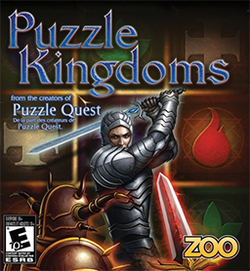 Puzzle de Harvest Moon on DS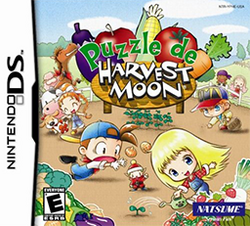
 Sonic X Shadow Generations on Xbox Series X/S
 Sonic Frontiers on PS5
 Sonic Frontiers on Xbox Series X/S
 Sonic X Shadow Generations on PS5
 Sonic Racing: CrossWorlds on Switch 2












 Another SquareThought Site