

 Aug 2025


Puzzle by Nikoli 4: arrives at the crossroads of classic logic and modern console ergonomics, a title that promises compilation-style access to the famously culture-independent puzzles from the venerable Japanese publisher Nikoli. If you are the sort of person who finds comfort in well-ordered constraints and the slow, astonishing click of logic revealing itself, this PS4 installment is squarely aimed at you. My job here is not to tell you whether the puzzles are fun in the abstract - Nikoli has already earned that reputation - but to dig into how well a console package honors and implements the technical requirements of dozens of discrete puzzle genres. Expect talk about input models, puzzle generation and verification, UI affordances for long-form reasoning, and how a controller-first environment either respects or fights the needs of meticulous pencil-and-paper solvers.
At its mechanical heart, a Nikoli compilation is not a single game but an engine for expressing many rule systems. The source document reads like a laundry list of problem statements: Sudoku, Kakuro, Slitherlink, Nurikabe, Masyu, Hitori, Nonogram, Light Up, and many more. Each of those genres places different constraints on the engine. For example, number-placement puzzles such as Sudoku or Kakuro are essentially constraint-satisfaction problems over discrete domains. Loop puzzles like Slitherlink or Masyu require cycle detection and topological validation. Region-growing challenges like Fillomino and Shikaku demand flood-fill and partitioning checks. A well-designed console adaptation must therefore expose a general verification layer capable of running genre-specific rule validators quickly and deterministically while keeping the UI thread responsive. Puzzle by Nikoli 4: largely succeeds by compartmentalizing those validators into fast, incremental checks that avoid full-scan recomputation on every input. That is important because the typical user flow is incremental: mark a cell, pencil a possibility, draw a segment of a loop. If each small edit triggers a heavyweight recomputation the UI will stutter and the flow of deduction - the most precious resource in a puzzle game - will be broken. Input mapping is where a lot of ostensibly small decisions have outsized effects on the player experience. DualShock-style controllers are not natural for tiny grids and repeated mark-ups, which is the bread and butter of most Nikoli puzzles. The best console adaptations implement a hierarchical input model: coarse cursor movement using stick or d-pad, context-sensitive action mapped to face buttons, and a rapid toggle between note and final entry modes. Puzzle by Nikoli 4: provides a modestly effective mapping where a long-press or modifier toggles pencil marks, and a quick button press commits an entry. The game also includes an assisted mode that allows number cycling with shoulder buttons to reduce button-chatter. These are the kinds of ergonomics that separate an enjoyable session from hand-ache and controller rage. For generation and difficulty scaling, Nikoli puzzles typically come with human-curated difficulty grades in their magazine lineage. From a technical standpoint, generating a broadly satisfying distribution of puzzles requires more than randomness; it requires ensuring unique solutions and controlling the complexity of logical steps required for solution without relying on brute-force backtracking as a crutch. The reference material includes an intriguing aside: Nondango was recently proven NP-complete, a reminder that some of these puzzles are computationally thorny to analyze in the worst case. Puzzle by Nikoli 4: skirts the complexity minefield by shipping a large curated set rather than an open, infinite generator. Curated puzzles mean that the studio can guarantee uniqueness and hand-tune the chain of reasoning required to solve them. If you want an endless procedural treadmill, that is a different product. For purists who want the canonical Nikoli style - the elegant single-solution puzzle with a satisfying unique logical path - curation wins. A mature puzzle UI also offers meta tools: undo stacks, pencil marks, region highlights, note toggles, and flexible zoom. The PS4 version includes multi-level undo and a history panel, which is critical for trial-and-error play without destructive commitment. The pencil system is competent: you can add candidate numbers or small annotations and toggle between candidate display modes. Where the implementation shows strain is in hybrid puzzles that mix line-drawing and numbering; toggling a control scheme mid-puzzle should be seamless and context-aware. Occasionally the context switch is a hair slower than ideal, requiring mode confirmation in a way that interrupts flow. For the most part these are friction points rather than deal-breakers. Online and social systems are not the focus here, and that is fine. Nikoli puzzles are typically solitary meditations. That said, the architecture around save states and puzzle bookkeeping is important from a software engineering perspective. Puzzle by Nikoli 4: uses a robust save system with autosave checkpoints and named save slots, so long-form puzzles that take an hour or more are safe against crashes. The verification engine also supports partial-check or hint modes which expose the minimal logical next step rather than exposing the endpoint. The hint system is mercifully not a solution button; instead it attempts to provide the next logical inference or highlight contradictions, which preserves the educational value of the puzzle. Performance is predictably trivial for most puzzles; the computational complexity is low on typical puzzle sizes. What is nontrivial is rendering clarity and input latency, both of which matter at the scale of a tiny cell displayed on a TV. Puzzle by Nikoli 4: keeps rendering simple and couture - crisp vector lines, clear typography - to ensure that a 9x9 grid still reads correctly from the couch. The game offers multiple visual themes that change contrast and mark styles, which is a welcome accessibility feature for players with vision differences or for those playing on different screen sizes. A technical aside worth noting is data serialization and puzzle authenticity. Nikoli puzzles have a history and cultural weight; the game stores puzzles as lightweight constraint descriptions rather than static bitmaps. That allows the verification engine to re-render puzzles at different resolutions and to export or re-seed puzzles for future releases, an elegant engineering decision that future-proofs the catalog. It also allows compact storage of large puzzle libraries without inflating the installation footprint.
Graphically, this is not a title that wants to muscle the GPU. The central rendering tasks are crisp vectors, antialiased lines, and readable typography. Puzzle by Nikoli 4: treats clarity as an aesthetic objective. The UI uses a restrained palette, favoring high contrast between grid, pencil marks, and final entries. Where other puzzle ports sometimes muddy the distinction between candidate and committed marks, this one uses subtle animations and stroke weights to make the difference instantaneous and unambiguous. Resolution scaling is well handled. The PS4 target of 1080p is a sensible design choice for text legibility on a living-room TV. Sharp fonts and generous UI scaling mean that a Kakuro clue or a Nonogram hint remains legible from typical seating distances. The line smoothing remains stable even at large zoom levels, so players who prefer to zero-in on a 3x3 corner do not suffer from aliasing artifacts or clipping. The motion design is minimal but purposeful. Small transitions on pencil toggles and cell commits animate at a duration tuned for perceived responsiveness. The animation timing adheres to standard UI heuristics: fast enough to feel immediate when making many small edits, but not so instantaneous that the eye loses track of change. Backgrounds and shells are muted; there are optional skins that provide a little personality for players who want something less austere, but these are purely cosmetic and do not interfere with readability. Audio is functional: button clicks and gentle confirm sounds support the tactile illusion of pencil on paper without becoming obtrusive.
Puzzle by Nikoli 4: does what a console Nikoli collection should do - it translates a massive taxonomy of logic puzzles into a coherent PS4 experience with an emphasis on fidelity, clarity, and usable tooling. From a technical perspective the game demonstrates solid architecture: genre-specific validators that operate incrementally, careful input mapping for a non-native controller, curated puzzle distribution to guarantee uniqueness and pedagogical value, and a render pipeline optimized for legibility rather than spectacle. The minor flaws are interface frictions in hybrid puzzles and occasional mode-switch latency, which will only annoy the most die-hard efficiency nerds. This is not the sort of title that scores purely on flash; its merit is in the engineering choices that respect the cognitive work of the player. If you prize crisp rules, a library of canonical puzzle types, and a console presentation that prioritizes deduction over dazzle, Puzzle by Nikoli 4: is a dependable companion. For those expecting endless procedural generation or heavily gamified progression hooks, the game may feel conservative. For anyone who has ever labored over a Nurikabe or relished the slow satisfaction of a Slitherlink loop closing cleanly, the technical polish here amplifies the puzzles rather than obscuring them. 7.5 out of 10 - technically competent, thoughtfully designed, and respectful of the intelligence it asks for.
 Hashiwokakero on PS4
 Nurikabe on PS4
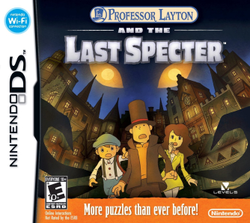
 Professor Layton and the Last Specter on DS
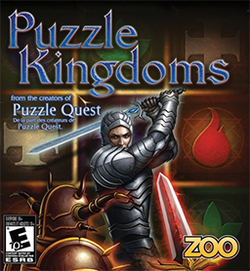
 Puzzle Kingdoms on DS
 Puzzle de Harvest Moon on DS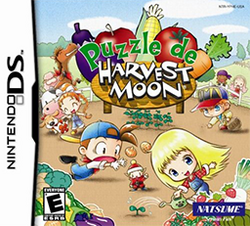










 Another SquareThought Site