

 Aug 2025


Nurikabe is a logic puzzle that has somehow made the long jump from pencil-and-paper tradition into the very modern arena of PlayStation 4 downloadable shops. The premise is beautifully grim: paint a grid so that numbered islands of white cells sit peacefully in a single, brooding black sea that must never form a 2×2 pool. It sounds like coastal management, except without the soothing waves and with significantly more algebraic bitterness. Nikoli, the venerable Japanese puzzle house that birthed Nurikabe in 1991, gets credit for both the concept and the trademark smug confidence that a set of rules concise enough to fit on a sticky note will nevertheless ruin your evening. The PS4 adaptation keeps those rules as gospel and wraps them in a calm, minimal interface that feels like the board-game equivalent of wearing a turtleneck while solving crimes with chalk lines.
Gameplay is faithful to the original rules: cells are binary - black or white - and numbered cells are the seeds of islands which must be exactly the size indicated. Each island contains exactly one number. The remainder of the grid becomes the sea, which must be a single connected body and must not contain 2×2 blocks of black. The game assumes you enjoy micro-political arguments between squares. If you enjoy marking possibilities with dots in the margins of physical puzzles, the PS4 version lets you do the equivalent with a patient and slightly smug cursor. Controls are intentionally unflashy: face buttons place marks, the left stick moves the cursor, and the touchpad (if you bother) toggles note modes. There is an undo. There is also a hint system that, in keeping with the spirit of the puzzle, will never hand you the whole aquarium; it nudges you toward a forced black or white cell and then watches you accept the suggestion like someone who had been told there was cake in the fridge that turned out to be an elaborate metaphor for self-control. The hint system is configurable: you can ask for "gentle" hints that point out basic strategies like completing islands of '1' or "firm" hints that point out advanced implications. There is also a "solve step" replay that shows the logic behind a hinted step, which is nice if you prefer your humiliation educational. Levels range from tidy 5×5 warm-ups to sprawling 20×20 grids that look like a metropolitan planning exam. Puzzle packs are organized by difficulty and designer (Nikoli-branded puzzles sit next to fan submissions), and the game goes out of its way to preserve the solitary craft of paper puzzle construction: most puzzles have a unique solution and the game flags any that don't, which is useful when a human designer had an argument with combinatorics and lost. The PS4 adaptation encourages the same back-and-forth thinking taught in the original: don't merely paint cells black; paint them with intent. Most puzzles insist you oscillate between filling island interiors and knitting the sea together, because isolating either concept tends to leave you staring at a grid that scowls back. Basic strategies are implemented into the tutorial with patient deadpan examples: completing '1' islands, marking cells adjacent to two numbers as black because islands can only touch diagonally, recognizing the elbow pattern of three blacks that forces a white in the bend, and identifying unreachables - cells that can't possibly join any numbered island and hence must be black. Advanced strategies also get attention. The game nudges you to consider implications such as: if two unknown cells can form a 2×2 black square unless one stays white, and one can only reach a number through the other, then you must keep one white; or that when an island of size N already has N−1 cells, corner-adjacent options force remote cells to be black. If this sounds like a lot of combinatorial etiquette for squares, that's because it is. And it's satisfying when you crack it. The PS4 version includes a logic-trace feature that will walk you through these deductions after you finish a puzzle, which doubles as both a teaching aid and a slow-motion trophy of your own patience. Difficulty ramps not by adding arbitrary traps but by encouraging more complex chains of deduction. Some puzzles require identifying 'unreachables' or forcing long, single-route connections in the sea to keep it connected. Others create subtle traps: several islands placed to tempt you into painting a connecting corridor black that would create an unreachable white region or a 2×2 pool somewhere else. The challenge is an etiquette of inevitability: once you know the rules you can see many consequences coming, but the fun is in proving you were right without resorting to brute-force guesses. The game permits trial-and-error, of course, but prides itself on rewarding logic rather than lucky pixel placement. Multiplayer is minimal and pleasant. There are leaderboards for fast solves, a daily puzzle shared globally, and a 'pass-and-play' mode for two people that turns the grid into a duel of polite sarcasm as each player carefully tries not to create a pool. There's no frantic competitive mode with power-ups because Nurikabe's main export is the subtle humiliation of having your neatly planned sea cut off by a thought you didn't think through. If thrill is what you're after, the PS4's timed events offer mild terror: a ticking clock that converts careful reasoning into sweatier careful reasoning. There are quality-of-life features that show the developers respect the puzzle's heritage: you can toggle pencil-mode notes, auto-detect contradictions (the game will warn if you create a 2×2 black), and export puzzles as printable PDFs should you still be into the tactile thing where you scribble in the margin and apologize to the paper. The only real gameplay sin is that some fan-submitted puzzles occasionally slip through with ambiguous solutions, which is a reminder that while humans invented Nurikabe, they are not always fit to author it. The PS4 controls are a little slow if you prefer frantic tapping - which is to say, the interface expects deliberation. This is not an insult, just observation. The game rewards slow, considered cursor work and places a small social cost on reckless button mashing: you will make mistakes and the undo stack is finite unless you pay attention, which is essentially verbalizing to your controller that you should have been more mature about your black squares.
Visually, Nurikabe on PS4 is minimalism pretending to be a luxury brand. The grid is clean, the numbers are readable, and the black cells render with a satisfying matte firmness. There's no attempt at photorealism and no neon gimmicks; instead the aesthetic follows the puzzle's paper roots with tasteful typefaces, muted backgrounds, and a color palette that reads as 'calm coffee shop at 10:00 a.m.' The islands, when completed, get a little particle flourish and a soft auditory chime that is disproportionately satisfying - the kind of small dopamine reward that says 'yes, you were right' without actually praising you socially. Animations are functional rather than flashy. Filling a cell produces a small ripple, and the hint arrows animate with the solemnity of a museum placard. The UI is readable even on a living-room television, which is important because puzzle games die on consoles when fonts look like tiny existential crises across a 55" screen. Sound design is gentle: ambient piano, a little electronic buoy that shows up on achievements, and the occasional, very dry voiceover that announces panel completions in a tone that is clinically approving. If the graphics have a flaw it is the lack of personality beyond restraint. The themed packs (sea, night, industrial) offer some visual variety, but the core experience is intentionally plain. That's part of the charm; it's a PS4 game that behaves like a notebook and refuses to be anything else.
Nurikabe on PS4 is an exercise in disciplined pleasure. It converts the classic Nikoli puzzle into a console experience that neither tries to dress up the logic in gimmicks nor punishes players for thinking too hard. The game honors the original rules - islands must contain one number, the sea must be connected and pool-free, and every puzzle should have a unique solution - and adds modern conveniences like undo, hints, step replays, and tutorials that actually teach rather than mollycoddle. It is not for the person who needs constant visual stimulation or for someone who wants a match-three sugar rush. It is for people who find satisfaction in inevitability and enjoy gently proving to a grid that they, and only they, are competent caretakers of a coastline of squares. The occasional ambiguous fan puzzle and the conservative multiplayer options keep it from perfection, but those are small offenses next to the pleasure of a well-made grid solved using only logic. Score: 8/10. If you like puzzles that are patient, polite, and mildly unforgiving, Nurikabe on PS4 will repay your attention with the quiet triumph of a cleanly completed island. If you want fireworks, grab something louder. If you want to feel clever while watching a chime congratulate you in a voice that sounds mildly surprised you got it right, this is the game for you.
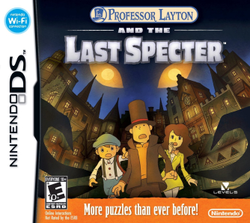
 Professor Layton and the Last Specter on DS
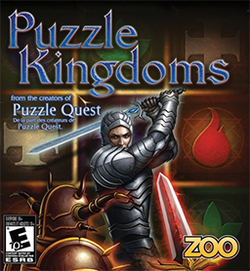
 Puzzle Kingdoms on DS
 Puzzle de Harvest Moon on DS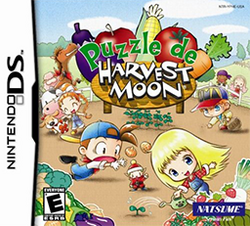










 Another SquareThought Site