

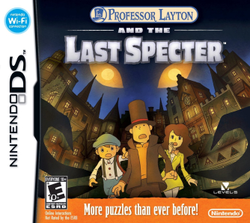

Professor Layton and the Last Specter (also marketed in Europe as Professor Layton and the Spectre's Call) is Level-5's fourth Layton outing and a prequel that doubles as a technical exercise in how to squeeze a filmic, orchestral-feeling adventure out of the humble Nintendo DS. On paper it's an unabashedly conservative entry: same point-and-click/puzzle loop, same dapper protagonist, same river-town setting and cutscene-driven narrative. Under the hood, however, Last Specter demonstrates a curious attention to user-interface ergonomics and content scaffolding - more puzzles (over 170), a multi-layered hint economy, and a bonus RPG titled Professor Layton's London Life bundled into some regional releases. It isn't a revolution for the series, but if you care about how a handheld can be made to feel like a cozy, tactile puzzle-box, this title is a case study worth inspecting. This review is written with a focus on the technical and mechanical: the interface choices that shape player behavior, how the game balances challenge with assistance (the hint coin system), the structure of its puzzle economy (Picarats and bonuses), and how effectively Level-5 uses the DS's dual-screen/touch input constraints to deliver cinematic pacing. Expect nitpicking about UI affordances, input modality, and the little engineering decisions that make or break player flow - and yes, occasional sarcasm about frogs-in-a-row puzzles being reincarnated as other livestock.
Navigation and interaction are the game's baseline systems, but they're more thoughtfully implemented than you might expect for a DS title. Movement around Misthallery is a tap-to-move affair: you press the shoe icon in the bottom-right of the touch screen, then select arrowed paths. This keeps locomotion deliberately modal, which is important because exploratory taps on the bottom screen are the primary affordance for discovery. Tap anywhere to investigate and the engine surfaces dialogue, collectibles, hint coins, and - crucible of the whole experience - puzzles. Non-player characters present as touchable objects; tapping initiates conversation and often branches directly into a puzzle encounter. The design constrains the player to discovery-by-touch rather than free-walking, which suits the DS's limited input and keeps the loop compact: explore, tap, puzzle, advance. Puzzles are the meat. Every puzzle begins with a short metadata screen that states its name, number, Picarat value and a difficulty estimate. Picarats are essentially meta-score currency: they don't gate story progression but unlock bonuses from the menu - a tidy separation that lets the narrative keep moving while still rewarding completionist impulses. There are over 170 puzzles spanning brain teasers, sliding puzzles, logic problems and peg solitaire variants. Akira Tago, the venerable puzzle author, supplied the puzzles, which explains the consistent, bookish logic many of them share. The puzzle UI is textbook dual-screen optimization. The top screen delivers instructions and fixed reference material; the bottom touch screen is the interactive canvas. This split reduces context switching and keeps the top screen as a static spec while the bottom becomes the mutable workspace. Input modalities vary: typed numeric or textual answers using an on-screen keyboard, freeform circling/tapping, drag-and-drop, and environmental interaction where the correct sequence of touches triggers success. There's also a memo pad for scribbling, which is a small but crucial usability feature: on-screen note-taking removes a lot of friction for multi-step reasoning tasks. Time is never a pressure mechanic. Puzzles give infinite time and an explicit "Quit" button to bail without penalty, aligning with the game's brain-teasing ethos. Mistakes, however, are mechanically consequential: submitting incorrect answers trims the maximum Picarat reward for that puzzle. Restarting resets the puzzle board but not the Picarat penalties or spent hints, which is a smart design choice to deter brute-force trial while still permitting iterative experimentation. The hint system is where the game's economy shows its teeth. Each puzzle has three purchasable hints for one hint coin each, and a fourth "Super Hint" that costs two coins. Players start with ten hint coins and can find more by thorough investigation of the village. Hints are deliberately finite, so players face a microeconomic decision: hoard coins for hard story-pivotal puzzles or spend to maintain momentum. Hint scarcity fosters planning and keeps the challenge meaningful without resorting to artificial difficulty. Puzzles downloaded via the bonus weekly content used to come with free hints a week after their release; sadly, the Wi-Fi service was terminated in 2014, so that pipeline is closed. Keats the Cat acts as a repository for puzzles you miss: if you progress past an access point for a puzzle, Keats collects it and you can retrieve it later. This is an elegant recovery mechanic that prevents permanent soft-locking of completionists behind story triggers. Completed puzzles are indexed in the Puzzle Index for replay, and the game grants small items for minigame use after certain puzzles. Bonuses and minigames are unlocked by Picarat thresholds and minigame progress, creating multiple cross-dependencies between the core puzzle loop and side content. Minigames present interesting technical variations on input. The Toy Train minigame asks you to lay track on a grid under fuel constraints - a limited-path planning problem that turns track placement into a constrained optimization puzzle. The Fish minigame is trickier: the fish moves diagonally and you place bubbles to reflect its path, which is essentially a 2D reflection and vector redirection problem - deterministic, but unforgiving. Puppet Theater converts semantic context into mechanics: choose words that make a coherent script, or face abrupt halts. Mouse Alley is the only real-time minigame and functions as a timed reflex test: tap mice while avoiding the player's pet. The minigames are tightly bound to the touch input pedigree of the DS and act as short-form mechanical palate cleansers between heavier logical tasks. Region-specific content is a noteworthy mechanical caveat. London Life, a 100+ hour RPG-esque sandbox developed with Brownie Brown, is bundled in North American and Australian releases (and accessible from the start in those versions), but omitted from European copies due to localization time constraints. The inclusion or exclusion of London Life materially changes the game's value proposition and mechanical breadth: with it, Last Specter becomes a hybrid that rewards long-term engagement beyond puzzles; without it, you have a more focused, puzzle-centered experience. On the difficulty frontier some puzzles feel recycled - reviewers noticed iterations of the same mechanics re-flavored across problems - and the difficulty curve can be inconsistent. Several puzzles trend toward vague phrasing that demands lateral leaps rather than algorithmic deduction, which is a stylistic choice that benefits some players and frustrates others. That said, the balance between optional and mandatory puzzles means players can modulate challenge intensity by choosing how many side puzzles to tackle.
Level-5 leans into painterly 2D art and sprightly animated cutscenes to give the DS an outsized sense of production value. The engine uses static, richly rendered backgrounds for exploration nodes and reserves its animation budget for short, high-impact cutscenes. Reviewers compared some cutscenes to Studio Ghibli in terms of composition and charm - which is hyperbolic, but the DS stunt here is clear: ambitious key-frame animation paired with layered background art produces a 'storybook' aesthetic that belies the handheld's modest specs. The art direction prioritizes readability over graphical fidelity, and that's the right tradeoff. Puzzle interfaces keep icons, touch targets, and buttons unambiguous; the shoe icon for movement and the clear "Input Answer/Submit/Restart/Quit" layout minimize UI ambiguity. Top-screen instructions remain textual and non-animated, providing a stable frame of reference while the bottom screen hosts the interactive elements. This separation reduces cognitive load and works well for puzzles that require careful inspection. The sprite and cutscene pipeline also recycles assets where appropriate - music from earlier series entries reappears, and backgrounds sometimes echo motifs from previous Layton games - but the orchestral arrangements and soundtrack production elevate the perceived polish. The Japanese soundtrack release and critical praise for orchestral tracks underline how audio production compensates for graphical limits: lush strings and thematic motifs make scenes feel cinematic even when on-screen motion is limited. Technically, the DS's dual-screen layout is exploited efficiently. The game avoids awkward UI choices like forcing players to alternate screens mid-action; instead, it uses the top screen for static direction and the bottom for active manipulation. Touch responsiveness is solid for a first-party-styled DS title: draggable elements behave predictably and tap detection tolerates small finger misplacements, which is essential for sliding puzzles and the Toy Train's track placement. There are no notable framerate or load-time issues reported in the text sources; Level-5 appears to have tuned scene transitions and cutscenes so that the game feels snappy on cartridge-based hardware. The one graphical gripe is content parity across regions: London Life's omission from European editions was felt not only as missing content but as a visual and mechanical downgrade. Where included, London Life adds a persistent 2D city with item and avatar systems that expand the game's visual language; where excluded, the package feels slimmer despite identical core visuals.
Professor Layton and the Last Specter is less about reinventing the wheel and more about engineering that wheel to feel buttery under your thumb. Its design is conservative but accomplished: a robust puzzle economy built around Picarats, a tight hint-coin scarcity model that forces player decisions, and a UI that exploits the DS's dual screens and touch input with intelligence. The game's biggest technical wins are its polish - nearly cinematic cutscenes, an orchestral-leaning soundtrack that punches above the DS's weight class, and a low-friction puzzle interface that keeps cognitive overhead where it belongs: on the brainteaser. Weaknesses are mostly a form of diminishing returns. Puzzle variety sometimes treads familiar ground, phrasing can be opaque, and regional content differences (the inclusion/exclusion of London Life) create inconsistent value propositions. The shutdown of Nintendo WFC also means a chunk of the game's weekly bonus pipeline is gone, which is a practical, unfortunate consequence outside of Level-5's control. If you care about technical craft - how input modalities, economy systems, and dual-screen layouts combine to make puzzles feel fair and tactile - Last Specter is a masterclass in DS-era design pragmatism. If you're chasing novelty, you'll find the series' formula largely intact. For players who like their handheld games to behave like well-built mechanical puzzles, with a soundtrack that wants to be an orchestra and UI decisions that respect your time, this is a very good buy. Metacritic's aggregate sits in the low-80s for a reason: the game is polished, occasionally repetitive, warmly presented, and mechanically considerate. In short: if the idea of solving logic problems with a stylus while being treated to miniature animated set-pieces sounds like bliss, Level-5 delivered exactly that - and they did it with technical finesse.
 Crash Bandicoot: The Wrath of Cortex on PS2
 MLB The Show 22 on Switch
 Ōkami on PS2
 Tintin: Destination Adventure on PlayStation
 One Piece Grand Adventure on PS2
 Puzzle by Nikoli 4: on PS4
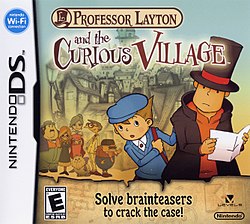
 Professor Layton and the Curious Village on DS
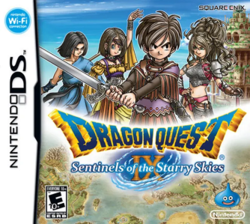
 Dragon Quest IX: Sentinels of the Starry Skies on DS
 Fantasy Life i: The Girl Who Steals Time on PS4
 Professor Layton and The New World of Steam on Switch 2
 Fantasy Life i: The Girl Who Steals Time – Nintendo Switch 2 Edition on Switch 2












 Another SquareThought Site