



Ōkami arrives in the PS2 era wearing a sumi-e kimono and wielding a paintbrush like a bazooka. On paper it is an action-adventure game inspired by The Legend of Zelda-on the console it is a technical love letter and a counterexample to the 'realistic = better' dogma. Hideki Kamiya and Clover Studio started with an ambition to build on a photorealistic engine but found the PlayStation 2's GPU and memory budget pushing back. The team's pivot from a heavy, realistic renderer to a purpose-built, cel-shaded/sumi-e visual pipeline is the single most consequential engineering choice behind the finished product. That choice didn't just change the game's look; it unlocked mechanics (the Celestial Brush), constrained memory/pipeline costs, and reshaped design decisions across animation, asset production, and runtime systems. This review digs into how Ōkami's technical architecture and input design informed the player experience, where the PS2 hardware dictated compromises, and why the game still reads as a technical masterclass nearly two console generations later-done with a smirk and a wolf who thinks in florid brushstrokes.
At its core Ōkami is an action-adventure with platforming, exploration, and puzzle elements, stitched together with an unusual input model: the Celestial Brush. From a systems perspective the game is a tight interaction between three main subsystems-character movement & combat, the Brush gesture interpreter, and a resource/upgrade economy (Praise/ink/ink wells). Combat is arena-like and deterministic: enemies spawn or engage within defined encounter zones where the engine can focus collision, animation blending, and physics approximations. The PS2-era optimization shows here-collision geometry is modest, hitboxes are forgiving, and enemy AI uses state-driven behaviors rather than expensive decision trees. The rewards model (yen and Demon Fangs) feeds incremental upgrades and unlocks; Praise is an experience-like currency used to raise health and brush capacities. That separation keeps the combat loop from spiraling into complex RPG arithmetic and lets the player focus on technique. The Celestial Brush is the feature that turns Ōkami from a competent action game into a technical conversation piece. Instead of treating 'drawing' as a purely cosmetic affordance, Clover Studio paused the action and brought up a canvas overlay, then let the player sketch with an analog stick (DualShock) or later motion/touch inputs on other platforms. On PS2 the analog-stick-pointer tradeoff was a deliberate constraint: no stylus, but precise enough for line and loop recognition. Internally the game implements a gesture recognizer that tolerates variance-stroke direction, start/end jitter, and speed-mapping a set of canonical patterns to actions (e.g., loop = wind, line = slash, circle = inferno). This recognizer needed to be robust against noisy analog input and limited sampling rates; the design choices baked in hysteresis and fuzzy matching thresholds so the engine could choose a closest match. The ink well resource throttles the Brush use to prevent it from trivializing combat or puzzle solutions; ink replenishment is timed, so the game needs relatively simple timers rather than expensive per-frame resource recalculations. Camera and movement reflect PS2-era constraints with pragmatic design. The camera is mostly third-person follow with scripted framing for key set pieces. Draw-distance issues and pop-in are visible if you hunt for them-textures and distant props are streamed in and culled aggressively to fit memory budgets. The art style (cel/sumi-e) helps mask LOD transitions and pop-in; stylized textures, hand-written brush strokes, and strong silhouette work mean that low-detail assets still read well. Pathfinding for NPCs and basic AI is intentionally simple to conserve CPU cycles, but the game compensates with strong scripting and trigger volumes to convey 'smart' behavior. Puzzles and exploration often use the Brush in ways that make the gesture recognizer a gameplay gate. Clever designers arranged puzzles so the required patterns are large-scale and distinct, reducing false negatives from poor analog precision. A single exception was one early puzzle that relied on kanji-stroke order knowledge in the Japanese release; localization teams reworked it for western audiences. Speaking of localization, Ōkami's dialogue and conditional conversations are numerous-the localization team translated some 1,500 pages of text and had to introduce ways to express personality that Japanese grammar had provided naturally. That localization overhead is reflected in the game's installation of dialogue triggers and state machines-conditional flags and branching conversation trees were implemented with scale in mind. On the subject of ports and control schemes: the PS2 control model is serviceable but constrained; motion and touch input on later platforms (Wii, DS, Switch, Move, PC mouse) enhanced the Brush dramatically. Ready at Dawn's Wii port had to re-engineer large chunks of code because original assets and optimizations were unavailable; they effectively reverse-engineered the game, reimplemented platform-specific render paths, and added motion-friendly brush inputs. This is where the robustness of the gesture recognizer and the modularity of the Brush subsystem paid dividends for reusability. Combat on Wii, however, illustrates how input re-mapping affects core loops: motion-based attacks can introduce latency and precision issues in fast fights, and reviewers noted combat occasionally felt weaker there. On PC and HD remasters, mouse input for Brush gestures yields arguably the best balance of precision and speed.
Ōkami's visual pipeline is the headline technical pivot. The team initially targeted a photorealistic engine inspired by the Resident Evil remake work but ran into PS2 throughput limits-vertex transforms, fill rate, and memory footprint. The switch to a sumi-e/ukiyo-e aesthetic was not merely artistic; it was a performance optimisation writ large. Cel-shaded rendering reduces reliance on high-resolution diffuse textures and complex shader algebra. Instead of per-pixel lighting and heavy normal mapping (which the PS2 struggled to accelerate well), the engine leans on hand-painted textures, stylized rim lighting, and compositing techniques to simulate depth and brush strokes. The result is a small, fixed-function-friendly set of GPU passes: base color, ink outlines, and simple lighting layers. Those passes fit within the PS2's limited shader-like capabilities and allowed better use of the console's fill rate. Asset production was adapted accordingly. Characters and environments were drawn in brush-like textures and composited into 3D space; relatively low-poly geometry could still read as detailed because the textures carried the perceived fidelity. Animation blending and IK were applied where necessary, but the team avoided expensive skeletal complexity; expressive key-frame animation and particle systems did the heavy lifting for bloom, petals, and bloom trails. The game's 'paper-parchment' screen filter is a full-screen post-process that adds paper grain; it contributes to the aesthetic but also masks compression artifacts and reduces the perceptual cost of lower-resolution assets. In the PS2 release this parchment filter is prominent; the Wii iteration toned it down because different TVs and resolutions produced different visual results. The HD remasters are interesting technical case studies. Uprez to 1080p and 4K (on modern consoles/PC) largely help because the art style scales cleanly-vector-like brush textures and re-sampled assets benefit from higher-res output without needing new artwork. However, some limitations persist: draw distance and pop-in were design limitations tied to how the world was streamed and culled on the PS2. The remasters addressed resolution and UI, but did not fully remove original streaming constraints; reviewers noted pop-in at distance remains in HD editions. Frame rate is another deliberate choice: many modern versions lock at 30 fps in order to preserve animation timing and physics that were tuned for the PS2 era. This is a trade-off-higher resolution at consistent timing versus an unlocked frame rate that might break input-to-action feel. The HD ports also allowed modern input APIs (mouse, touch, Move, Joy-Con motion), and those enhanced the Brush interaction, especially on PC where mouse gestures created a near-perfect mapping from artist intent to in-game action. Audio design shows similar clever engineering: orchestration inspired by classical Japanese music, implemented as interactive tracks that can be unlocked and reshuffled in a jukebox. Voice lines were not fully voiced; instead, the team used scrambled voice samples to create emotional vocalizations without a full voice-track budget-an economical approach that still preserved emotional cues without the file-size hit of extensive voice acting.
Ōkami on PS2 is a product of disciplined technical design married to a daring aesthetic decision. Clover Studio faced platform constraints and responded by rethinking the rendering pipeline; the resulting sumi-e approach was simultaneously cheaper to render and richer to play with. The Celestial Brush is not just a gimmick: it is an input/UX innovation made possible by robust gesture recognition tuned for imperfect analog hardware, and it reshaped puzzles, combat, and level design. Ports and remasters validated the architecture-the gesture subsystem, resource throttles, and stylized assets ported well to new inputs and higher resolutions, even if legacy streaming and draw-distance behaviors remained. Criticisms (uneven difficulty, occasional Brush recognition misses on analog inputs, and visible pop-in) are real but are technical wrinkles in an otherwise carefully engineered experience. If you're evaluating Ōkami as a systems design study, it's a must-play: it shows how a hard technical constraint (PS2 performance) can become the seed of creative mechanics (the Brush) and a timeless art direction. If you're playing it purely for the joy of the game, it's a gorgeous, thoughtful adventure with a unique control twist. Either way, the PS2 version stands as an example of engineering meeting art and producing something that still looks like a painting that bites back-elegant, efficient, and occasionally ferocious in combat. Recommended for players who appreciate games that are clever under the hood as much as they are charming on the surface.
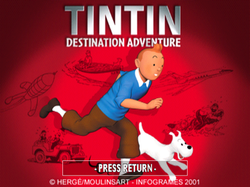
 Tintin: Destination Adventure on PlayStation
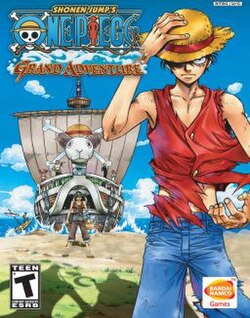
 One Piece Grand Adventure on PS2
 Taiko no Tatsujin: Dokodon! Mystery Adventure on Switch
 Onimusha: Dawn of Dreams on PS2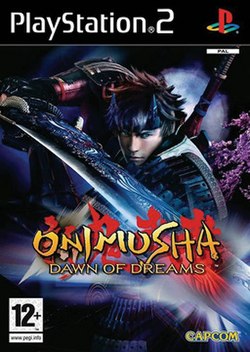












 Another SquareThought Site