

 Apr 2022
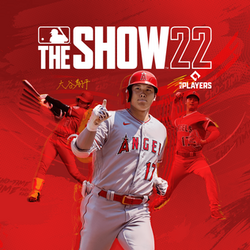

Imagine a soap opera where instead of backstabbing heirs and secret twins, you get leather, lumber, and the slow burn of a season. MLB The Show 22 arrives on Switch like a charismatic new actor joining a long-running series. It is both familiar and awkwardly exciting, because this is the first time the franchise actually walked onto Nintendo's stage. Its marquee star is Shohei Ohtani, the two-way wunderkind plastered on the cover and dressed up in manga glam for the deluxe editions, but the full cast list contains a few surprising additions, a couple of technically shaky understudies, and one or two characters who get the kind of plot development you only usually see in streaming shows between seasons. This review treats the game's modes and systems as characters and follows their story arcs, so if you have ever wanted a character study of a baseball sim, buckle up.
The Protagonist: Core Gameplay The core gameplay is the series lead and it remains a comforting protagonist. On Switch it plays the role of the reliable franchise star who still hits his marks night after night. Controls feel refined, batting and pitching retain the tactile feedback long-time players expect, and the simulation remains impressively comprehensive for a portable outing. Many critics noted that the fundamental experience is still a high bar for sports games, and you can feel why: the hitting window, pitch variety, fielding decisions and base running are all written with nuance. Play it long enough and the little moments show up, like a perfectly timed slider freezing a slugger or a relay throw that threads a runner out by millimeters. Those are the scenes that make the protagonist sympathetic and worth rooting for. The Supporting Cast: Modes and Their Arcs March to October arrives in season two of its arc. Previously a one-and-done, this mode grows into a recurring character with the ability to evolve across multiple seasons. It now has longer-term stakes and that elongation makes it feel like a true campaign rather than a weekend fling. Franchise and Road to the Show continue as stalwart supporting actors. Road to the Show remains the personal coming-of-age subplot, letting you nurture a rookie from obscurity to stardom, though on Switch it feels more like an interstitial chapter rather than a full narrative reboot. The stadium creator was teased as getting a dynamic makeover, but it is one of those characters given an interesting backstory only on newer generation consoles. On Switch the stadium creator is present but lacks the dynamic polish of its next-gen counterpart, so its arc is truncated compared to what it could have been. Co-op mode is the young, eager character who tries to charm the audience but trips over its lines. The idea of playing cooperatively through game modes is delightful on paper and adds genuine social juice, yet at launch the implementation felt like a not-quite-ready side quest. Critics and players praised the concept, but stability and polish issues prevented it from fully graduating from awkward teenager to confident leading man. Online stability as a trait weakens this character further, with reviewers pointing out shaky online performance in the days after launch. The Antagonist: Technical Issues and Repetition No drama succeeds without conflict, and for MLB The Show 22 those conflicts are mostly technical and editorial. On Switch, the antagonist shows up as framerate stutters, graphical flickering, and occasional audio repetition. Commentary, meant to spice scenes, sometimes becomes the equivalent of a villainous monologue delivered on loop. Reviewers flagged repetitive lines and stale commentary as both immersion killers and a reminder that even long-running protagonists can get comfortable to a fault. The game also showed bugs and more than the usual share of hiccups on launch, which felt like the antagonist whispering that the series may be getting a little complacent. The Cameos: Cover Star, Commentators and Art Shohei Ohtani is the modern celebrity cameo, and his presence matters. He is the cover star and a symbol more than a character in the game itself, but the marketing and special art by Takashi Okazaki give him a storybook quality. The manga-styled deluxe editions add a visual subplot that is equal parts stylish and slightly ridiculous in the best possible way. The new broadcast team of Jon Sciambi and Chris Singleton arrives as the fresh-faced duo hired to jazz up the play-by-play. Their addition is a welcome character beat; voice work improves authenticity, but since commentary can loop, their lines feel like a great actor stuck in a theater that repeats the same scene. Pacing and Progression The pacing of the game mimics a long season with peaks and troughs. There is the opening excitement when you boot the game on Switch and realize you can take a full MLB sim on a plane or to a friend's couch. There are mid-season grinding stretches as you manage rosters, play through March to October seasons, or unlock items in Diamond Dynasty. And there are end-of-season crescendos where everything clicks and you feel the payoff of good management and clutch performances. Where the pacing falters is when repetition and technical issues intrude upon those crescendos. When a clutch play is punctuated by a stutter or a commentator recycling a line, the emotional beat loses some of its power. Balance and Accessibility The game is mostly balanced in terms of accessibility. Newcomers can jump into simpler difficulties and enjoy arcade-adjacent thrills, while veterans can chase simulation purity. This makes the protagonist an approachable lead with crossover appeal. On Switch, though, the accessibility is marred by occasional performance compromises. Still, the breadth of modes and the depth of control keep the gameplay compelling, and some reviewers argued that even with scaled back visuals the Switch version remains playable and fun. That says a lot about the strength of the underlying systems.
Visual Design and Switch Translation If the game were a TV series, the graphics would be the cinematography. On PlayStation and Xbox the shot is polished and cinematic; on Switch the same scenes are being filmed with a less powerful camera and varying light. The port to Nintendo's hardware is admirable because it brings the full roster and features to a platform that previously did not get the series. For many players, that novelty and convenience outweigh visual cutbacks. Review outlets noted the Switch version as suffering from framerate stuttering and significant graphical flickering, and these technical strains sometimes undermine immersion. Stadium Creator and Next-gen Exclusives The Stadium Creator was given a promised dynamic evolution in the wider release, but the dynamic elements are missing on 8th generation hardware, including Switch. This is a clear example of a subplot truncated by platform constraints. On more powerful systems the creator is a living set piece that can evolve; on Switch it is serviceable but lacks the bells and whistles. The trade-off is understandable given the hardware, but it does mean Switch players receive a slightly leaner visual experience. Art Direction and Presentation Where the visuals still shine is in the art direction, the uniforms, the player likenesses, and the overall presentation rhythm. Crowd behavior and stadium atmosphere are still convincing enough to sell the big moments. The Takashi Okazaki manga cover art for the MVP and Digital Deluxe editions is a delightful stylistic flourish that elevates the game's marketing and gives the title some extra personality. Presentation choices like the new commentators and updated audio work mostly in the game's favor, even if repetition dulls their long-term impact. Technical Stability and Online Play The game's online stability plays the villainous role in the visual and audio package. Reviewers flagged shaky online performance at launch and continued concerns about stability. On Switch, those problems are compounded by frame pacing and occasional audio-sync issues. That said, the fact that the Switch version plays at all with nearly all the content of the bigger consoles is an achievement, and many reviewers acknowledged that despite its flaws the portable version manages to pull off the core experience. Reception and Accolades Critics delivered generally favorable reviews, and Metacritic gave the Switch version an aggregate that places it comfortably within the good-to-great range. Publications praised the gameplay and the expansion of modes like March to October while lamenting a lack of broader innovation and persistent technical issues. The game even scored a nomination for Sports Game of the Year at the D I C E Awards, which is a sign that the industry sees real merit in the title despite the rough edges.
MLB The Show 22 on Switch is a compelling character study in portability and compromise. It wears the heart of a sim giant but dresses it in the baggy clothes of a less powerful platform. The core gameplay remains the franchise's beating heart, and modes like March to October evolving into multi-season commitments give the narrative real weight. New voices in the booth and deluxe edition art add memorable cameos, and inclusion on Xbox Game Pass for other platforms still hints at the series expanding its audience. But no good drama is without flaws. Repetitive commentary, launch bugs, and Switch-specific graphical and framerate issues act as antagonists that too often interrupt the momentum of otherwise satisfying innings. If you are a Switch owner who has been starving for a full MLB sim, The Show 22 is a pilgrimage worth making. If you are a longtime series fan on current-gen hardware, you will find comfort in the familiar playbook, even if you might wish for bolder innovation. Viewing the game as a cast of characters helps: the lead performs admirably, the supporting modes grow, the new additions show promise, and the villains are mostly technical rather than creative. It is not a flawless season, but it is a season with memorable plays, and it earns its place in the dugout. For portability and pure baseball joy, this is still one of the best players in the league, even if it occasionally strikes out under the bright lights of Switch hardware limitations.
 MLB The Show 24 on Switch
 The Price Is Right on DS
 Press Your Luck on PS3
 Accolade Sports Collection on Xbox Series X/S
 Deca Sports DS on DS
 Alan Hansen's Sports Challenge on PS2
 EA Sports MMA on PS3
 MLB The Show 23 on PS4
 MLB The Show 25 on PS5
 MLB The Show 24 on Xbox One
 MLB The Show 19 on PS4










 Another SquareThought Site