



There are video games that wear their TV pedigree like a tuxedo and games that look like a sketchy second cousin of the show they claim to be. Ludia's adaptation of The Price Is Right for the Nintendo DS is squarely the former in intent and, regrettably, the latter in execution. Based on the long-running CBS game show that premiered in 1972 and has since become a television institution, this handheld outing tries-honestly and sometimes scrappily-to capture the carnivalish bustle of Contestants' Row, the tense arithmetic of the Showcase Showdown and the guilty-pleasure comfort of watching ordinary people guess the price of a vacuum cleaner while a studio audience loses its mind. If you grew up watching Bob Barker, or grew into the Drew Carey era etiquette of showbiz, you know the rituals: One Bid to get onstage, six pricing games per hour, a Big Wheel spin with its thrilling risk calculus, and a final two-player Showcase where fortunes can be made or merely rearranged. The DS version, released alongside ports for PC and Wii, arrives with precisely that rulebook in mind. The question for anyone picking up a cartridge (or sliding a DS game card into the slot) in the late 2000s is whether these rites translate to two small screens, a stylus and a limited audio palette. The short answer: sometimes, but not often enough to be recommended without caveats.
Readers of a 1990s review will want facts first: The Price Is Right on DS attempts to reproduce the TV show's four-act structure-One Bid, Pricing Games, the Showcase Showdown (Big Wheel) and the final Showcase-and it does so by parceling each element into a series of mini-games. If you are familiar with the televised format, the digital rules are faithful in spirit. One Bid puts four contestants behind lecterns; you type (or tap) bids and hope your guess is the nearest without going over. The winner advances to a pricing game, and after a handful of these, the wheel gets spun and the winners move to the Showcase. These are the bones of the experience and they are intact. Where the DS adaptation shines is in its competence as a collection of mini-games. Classics like Plinko, Cliff Hangers, and Punch-a-Bunch are present in recognizable if simplified forms. Plinko, the perennial crowd favorite, translates into a satisfyingly tactile experience-chips drop, pegs scatter, and the DS's dual screens give you the sense of watching the chip negotiate gravity. Cliff Hangers turns into a casual arithmetic exercise, and games that hinge on set-piece timing or guessing are condensed to fit the portable format. Where the game stumbles is in depth and pacing. The television show breathes because of its live-audience tension, the host's patter and the ritual of contestants being plucked from the crowd. The game substitutes AI and canned voice-overs. Ludia's adaptation uses menus, preset pricing ranges and a predictable AI that tries to mimic contestants' mistakes but often behaves either too timidly or with the uncanny accuracy of someone who peeked at the price list. The consequence is an ebb-and-flow that occasionally approximates the show's drama but more often feels mechanical. Controls are mixed. The DS stylus is a natural choice for input: tapping to bid, dragging to select digits, and flicking for the occasional spin. In practice, the game leans on both touchscreen and face buttons so players with different control preferences are accommodated. The stylus flick to simulate a wheel spin, for instance, is an inspired touch, and when the physics behave, it's thrilling. But the wheel's outcome often feels governed by invisible thresholds rather than honest physics; a half-hearted flick will sometimes produce a perfectly calibrated spin and vice versa. For a game based on luck and the glamour of chance, the illusion of randomness must feel fair-and here it sometimes does not. Modes and longevity are underbaked. There is a single-player campaign that sequences you through successive shows and occasional themed episodes, and a passable practice mode to warm up on specific pricing games. Multiplayer, when present, is local only; the DS release predates the ubiquity of online play and expects you to pass the handheld or to gather friends with cartridges and consoles. There is enjoyment in this communal, 'bring your own stylus' approach, but modern players buying the DS version in 2008 might have expected more robust connectivity features. Replay value exists largely because of the show's inherent randomness and the collectible thrill of winning cars or a double Showcase, but if you are the sort who wants unlock trees, additional cosmetic prizes, or long-form progression, you will leave disappointed. A final note about the licensing: Ludia leaned into authenticity where it counted. The game's menus and models often reference the TV show's long history: pricing games are true to their source, and the virtual set (seen in the PC/Wii build and mirrored in the DS's sprite work) borrows from the show's Season 31-34 aesthetic. For fans of the franchise, those little details-models posing with prizes, the structure of One Bid, the $500 exact-bid bonus-are the game's chief charms. For everyone else, the loop eventually rings thin.
In a world where reviewers of the 1990s spoke glowingly about pixel art and the evocative charm of limited palettes, the DS version of The Price Is Right earns a modest compliment: it looks like a handheld celebration of the show rather than a photorealistic facsimile. The DS hardware is modest by modern standards, and Ludia's artists understood their constraints. The virtual set is rendered in bright, cheerful sprite work; models are caricatures rather than likenesses; and the prize displays are drawn with just enough detail to make you want them without breaking the system. Animations are serviceable. Plinko chips bounce with predictable, if slightly robotic, arcs. The Big Wheel is a graphical highlight: despite the small canvas, the wheel rotation, the announcer's buildup and the cutaway to close-ups are staged to maximize tension. The trade-off is resolution-fine print on prizes is often unreadable without zooming and the DS's dual-screen layout sometimes forces awkward UI choices. Visual flairs such as confetti and flash frames are used liberally, which helps the handheld feel like a show, but they occasionally obscure what you need to see. In short: the game looks like a 2008 licensed handheld title that respects its source but is limited by a cartridge's worth of pixels. Sound design is a mixed bag. The show's iconic jingles and the announcer's bell-like cadence would have been the grown-up icing on the cake, and Ludia includes cues that recall the television program. However, compressed samples and the DS's tiny speakers reduce those cues to a tinny approximation. The announcer's lines-recorded in other versions by Rich Fields for the PC release-feel clipped on the DS build and lack the presence that makes the real show theatrical. Still, the audio complements the graphics well enough to maintain immersion during short play sessions, which is the DS's strong suit.
The Price Is Right on Nintendo DS is a respectful, intermittently fun digital shrine to a television format that has endured for decades. Ludia and Ubisoft succeeded in transplanting the bones of the CBS program-the One Bid ritual, a rotation of pricing games, the Showcase Showdown and the final Showcase-into a portable package. For die-hard fans who want a pocket-sized dose of nostalgia and the occasional satisfying Plinko win, it scratches the itch. But the game is not without its blemishes. The DS is not an ideal medium for a show whose best moments depend on live audience energy, host charisma and the slow, delicious burn of reality-based tension. The AI contestants, the occasionally dubious physics, the compressed audio and the shortfall in multiplayer features keep the experience from being more than a competent licensed curiosity. In the language of a 1990s review: it is not a catastrophe, but it is not a classic. It is, fittingly, priced and packaged like a consolation prize-pleasant to have around, enjoyable in small doses, but not something you will put on honorable display. Score: 6 out of 10. Buy it if you want a portable take on a beloved show and you enjoy quick mini-games; trade it in if you expected the full studio spectacle in your palm.
 Madden NFL 22 on PS5
 Edge of Eternity on Switch
 Press Your Luck on PS3
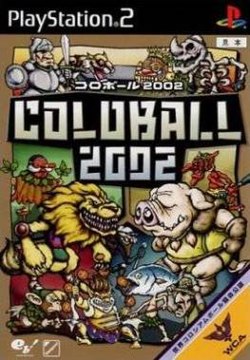
 Coloball 2002 on PS2
 TV Show King on PS3
 Trivial Pursuit on PS3













 Another SquareThought Site