

 Dec 2014


If you spent any portion of the Eighties swearing that your coffee-stained copy of Trivial Pursuit would outlast the Soviet Union, then Ubisoft's Trivial Pursuit: Live! for PlayStation 3 will read like a familiar, slightly remixed joke. This is a straight-up digital port and party show take on the venerable board game that conquered living rooms and made socially acceptable what had previously been called "flaunting obscure facts at the dinner table." The board game's origins-two Canadian newspapermen in 1979 jerry-rigging a quiz out of Scrabble pieces and stubbornness-are the stuff of game-industry legend. By 1986 it had sold millions; by the time it hit consoles under Ubisoft's banner in the 2010s, Trivial Pursuit had become a cultural institution. Approaching this review with the seriousness of a 1990s video game critic, but with the benefit of hindsight, the task is simple: judge whether the PS3 version captures the tension of the wedge hunt, the bite of a good question, and the party-show dazzle without turning the experience into a soulless quiz machine. Ubisoft promises a TV-game aesthetic-think game-show lights, a hosted feel and party-friendly modes-so the question is whether that presentation is enough to justify sitting in front of a television instead of gathering around an actual board with real wedges and real smug victory faces.
Trivial Pursuit's core conceit is stubbornly elegant and, crucially, thoroughly preserved in the PS3 release. The goal remains the same: move your token around a wheel-shaped board, answer correctly to keep your turn alive, collect six color-coded wedges from the "category headquarters" at the end of the spokes, then return to the center hub and answer a final question chosen by your opponents. If you remember the satisfying clack of plastic wedges fitting into the pie token, you'll be relieved to find the same incremental gratification available here, albeit represented by pixels and on-screen sound cues. Questions are divided into six categories-geography, entertainment, history, arts & literature, science & nature, sports & leisure-each with their lacquered color and predictable bragging rights. The PlayStation version offers multiple play modes intended for both short bursts and longer sessions. The "Classic" mode attempts to mimic the tabletop ritual: roll (or its digital equivalent), land on color-coded spaces, answer text or multiple-choice questions, and earn wedges on the headquarters spaces. Party modes tweak the rules to speed things up: some rounds award wedges for each correct answer to avoid the glacial pace of watching one master of trivia run a ring and crush everyone else, while others borrow the buzzer-frantic energy of quiz shows and make the fastest, not the calmest, player the winner. Ubisoft leans on an arcade-quiz pedigree here. If you played similar titles in the Buzz! series, expect familiar bones: a host (or host-like presence), bright interstitial graphics, and rounds designed to keep players engaged through timers, buzz-ins and sudden-death tiebreakers. The PS3 release also includes online matchmaking in its Live! incarnation, so your opponents can be strangers with shaky Wikipedian knowledge rather than your aunt who insists the Columbo first name being "Philip" is both a trivia point and a sin. Historically, the series and the board game have faced criticism on two fronts that matter here: pacing and question quality. Classic board reviews have noted long waits between turns-this is the same issue in console form if you play with a full complement of players locally; the digital version trims some delays with buzzer rounds and simultaneous-answer segments, but when the game reverts to single-turn question-answer flow, the air in the room can thin. On the question front, Trivial Pursuit has a long, complicated pedigree. Its Genus edition was once at the center of a lawsuit over whether questions were lifted from trivia books; courts decided facts aren't copyrightable, but the controversy left a mark. Later editions faced complaints of "dumbing down," skewing toward celebrities and surface-level pop culture. Ubisoft's PS3 package tries to walk the line: there are general-knowledge staples, some curveball historical items, and a fair sprinkling of entertainment and modern pop culture questions to keep millennials and boomers from plotting hostile takeovers. Options let you choose answering methods-multiple choice being the practical standard for consoles-and tightening time limits helps keep party energy up. Mechanically, the game respects the board game's small strategic flourishes: you can choose your path along spokes, you cannot backtrack, and landing on "Roll Again" spaces still exists in spirit as bonus-turn mechanics. The classic need to get an exact count to reach the hub for the final question is preserved, a merciless little rule that has felled more trivia champions than bad pronunciation. Variants exist that curtail runaway victories by ending a player's turn upon earning a wedge, a useful balancing rule to keep one encyclopedic friend from monopolizing an entire evening. For solo players, the game offers AI opponents and online competitions. For groups, the party-friendly modes-especially the buzzer rounds-are where the PS3 version shines, turning what can be a woolly board game session into a crackling, TV-game simulacrum.
Graphically, don't expect a photorealistic recreation of plastic wedges; what you get is a lean, neon-lit presentation that wears its game-show aspirations on its sleeve. Menus are functional and fast-no agonizing navigation, no obtuse settings labyrinths-just the sort of slick interface that made late-90s console reviewers nod approvingly when a developer "got the UI right." The wheel-shaped board is rendered with bright, readable colors and tidy animations when wedges drop into place. There's a host-of-sorts guiding the proceedings: more voiceover and personality than an empty menu, less spectacle than a full-motion-video extravaganza. Ubisoft clearly modeled the feel on party quiz shows such as Buzz!, so the camera cuts, graphical flourishes and celebratory fanfares will be familiar to anyone who's played that series. On the negative side, the PS3 version's visuals are conservative. This is a game about questions and people, not polygons and lighting engines; the art direction aims to be serviceable rather than showy. Avatars and character models (if you customize them at all) exist, but they're props-useful for identifying who's doing the embarrassing screaming when an answer is missed, but not something you'll spend time admiring. Animations are competent, and wedge-filling is satisfyingly audible and visible, but there are no jaw-dropping visual moments that leverage the PlayStation 3's horsepower. For a trivia title, that's acceptable; for a console release, some might have expected more pizzazz from a publisher with Ubisoft's resources. Sound design is similarly pragmatic. The game supplies a jaunty, game-show soundtrack, clear announcer voiceovers and punchy effects when you earn wedges. The audio cues do the job of keeping energy high without becoming grating background noise. In party settings, the audio and graphics combine to produce a convivial atmosphere; alone, they at least prevent the screen from feeling like a sterile quiz terminal.
Trivial Pursuit on PS3 is not an act of audiovisual bravado; it's a careful adaptation of a board-game classic into a living-room-friendly format. Ubisoft's Live! edition understands where the fun lives: in the wedge, in the humbling exact-roll to the hub, and in the communal hiss and cheer of a correct or devastatingly wrong answer. The package succeeds best as a party game. When you pair it with friends or strangers who bring enthusiasm and buzzer fingers, it transforms from a series of questions into a warm, competitive evening. If you're a purist who adores the tactile joy of plastic wedges and the satisfaction of physically fitting them into a token, this digital version will not entirely replace the original board game. If you're the kind of person who prefers quicker rounds, buzzer drama and online play, this is a sensible way to enjoy Trivial Pursuit without setting a table and cleaning up crumbs afterward. The PS3 release improves pacing in places, offers the safety net of multiple modes to suit different groups, and generally respects the source material. It loses points for occasional pacing slumps in classic-mode play, conservative visual ambition, and the unavoidable problem of trivia curation: some question sets will feel easier or more fad-oriented to different players. For a modern console audience, the game's strengths-faithful mechanics, party-oriented modes, and polished, if restrained, presentation-outweigh its shortcomings. It earns a solid 7 out of 10: a dependable party title, an entertaining social tool, and a respectable digital footnote in the long history of a game that started as a cheeky late-night project and grew into a trivia empire. If you want to watch someone fail spectacularly at naming capitals, do it in the PS3 version with a bowl of chips and a ruthless timer on the buzzer. You'll laugh. You'll learn a dubious fact. And at the end of the night someone will still claim they "always" win at Trivial Pursuit.
 Punch Club on PS4
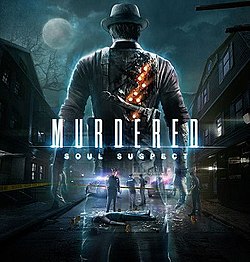
 Murdered: Soul Suspect on PS4
 Press Your Luck on PS3
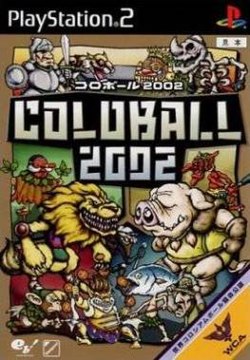
 Coloball 2002 on PS2
 One Piece: Pirates' Carnival on PS2
 Assassin's Creed II on PS3
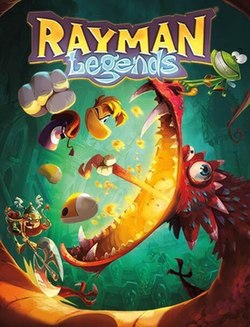
 Rayman Legends on PS3
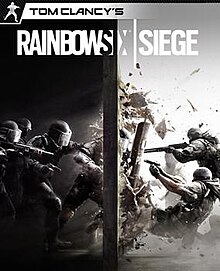
 Tom Clancy's Rainbow Six Siege on PS5
 Far Cry 3 Classic on PS4
 Tom Clancy's Rainbow Six Siege on Xbox Series X/S










 Another SquareThought Site