



Coloball 2002 arrives in the catalogues of PS2 oddities as a curious hybrid: the box calls it a "sports adventure," the entry lists it as a turn-based strategy role-playing game, and the subtitle given by fans-Colosseum Ball-helps explain why the whole thing feels like a board game tried on for size by an RPG team. From the limited official record we have (developer Vanpool, publisher Enterbrain, Japan-only release in 2002), the game's DNA screams of experimental design choices that were common in the early PS2 years: blend genres, reuse existing tech, and hope the novelty carries you through. This review is written with a hardware-aware lens: instead of just asking whether Coloball is fun, I evaluate the likely technical underpinnings of its design, how the PS2's architecture would shape the experience, and how those decisions would have affected gameplay, UI, and audio. Expect some affectionate snark-this is a quirky, niche title after all-and a focus on concrete, engineer-friendly observations rather than pure nostalgia.
Coloball 2002 is described as turn-based, board-game-like, and sporting-RPG hybrid; that combination puts concrete constraints on game systems and the engine you need. A board-game-like layout implies a discrete grid or network of nodes rather than an open continuous field. From a technical standpoint, discrete movement simplifies pathfinding and collision systems: instead of NavMesh sampling and continuous physics interactions, the game can model spaces as adjacency lists. That reduces CPU overhead on the PS2's Emotion Engine, letting more of the limited cycles go toward animation blending, AI decision trees, or flashy attack effects. Turn-based systems also trade off runtime complexity for strategic depth. The game can precompute available moves and evaluate AI turns in chunks during player idle time. On the PS2, where single-threaded performance and expensive memory transfers were routine limitations, a turn-based design is pragmatic: it avoids the frame-scheduling headache of real-time AI and gives developers breathing room to run heavier decision-making scripts. For a Vanpool project, likely not a AAA team in manpower, that makes perfect sense. The "sports" framing-Colosseum Ball-implies rulesets layered on top of tile movement: passes, tackles, scoring zones, and perhaps object possession states. Implementing possession mechanics on top of a turn-based board game often requires a small state machine per unit (free, contested, possessing), plus resolution rules for contests (dice-roll RNG, deterministic comparisons, or resource expenditure). The key technical challenge here is reconciliating deterministic planning with randomness in a way that feels fair; on PS2 era titles that meant careful RNG seeding and clear visual feedback so players understood why the ball hopped a particular way. Good UI becomes essential: when an action resolves off a table of numbers, the engine has to communicate probabilities and results without overwhelming the renderer or the player. Combat and progression in a hybrid like this likely rely on modular stats-attack, defense, mobility, special ability cooldowns-so the game can treat individual units as both athletes and RPG characters. That lends itself to a data-driven architecture: scriptable character definitions, XML or binary tables for balancing, and a small rule engine to interpret effects. For a PS2 title with limited development resources, data-driven systems let designers iterate without recompiling engine code. If Coloball 2002 followed that pattern, it would explain a behaviorally rich game that doesn't require heavy bespoke coding for every new skill. Multiplayer is listed as a mode. The absence of any mention about online functionality in the provided material means we should reasonably assume local multiplayer (split-screen or pass-and-play). For a board-game-like turn-based PS2 game, pass-and-play or couch-hotseat is the most cost-effective choice: no netcode, no latency compensation. That design keeps the entire game deterministic on a single console, simplifies save states, and avoids the nightmare of syncing RNG and state across consoles over unreliable networks. If there is simultaneous local multiplayer, the engine would still likely serialize actions into discrete transactions to keep the game state consistent and save-friendly. UI and input deserve special mention. The PS2 controller is button-rich but lacks the precision of a mouse. A grid-based game can map well to D-pad and analog inputs: highlight moves, confirm with a face button, cancel with another. From a technical standpoint, input buffering and menu navigation timing need to be polished to avoid the "you pressed the button twice and selected the wrong tile" frustration. Successful titles of the era tended to implement soft-locks and confirmation windows when irreversible decisions were initiated; I would expect Coloball to adopt similar mitigations. The other UI burden is conveying complex mechanics without a manual you never read: tooltips, pop-up probability indicators, and an undo for non-committal moves become key UX features implemented in the UI layer of the engine. AI design is the elephant in any strategy game's room. Turn-based AI can be embarrassingly expensive to do well: naive greedy heuristics are fast but dumb; minimax-like searches are robust but expensive. On the PS2, a hybrid approach is common-priority-based heuristics with a small lookahead for critical situations-so the CPU stays in frame-budget while the opponents feel competent. If Coloball's AI treated passes, tackles, and scoring attempts as weighted options and evaluated expected values rather than full game-tree search, it would hit the sweet spot between challenge and performance. Finally, save systems in hybrid titles are a practical technical consideration. The PS2's memory card system is slow and limited in capacity; game state snapshots should be compact. For a board-game-like game, saving the board state, unit states, and RNG seed is enough. Compact serialization and careful versioning in save files lets developers ship patches or expansions without invalidating player's saves. Given the era and platform constraints, Coloball likely used a tightly-packed binary save format to avoid wasting precious kilobytes on memory cards.
Visuals for a 2002 Japan-only PS2 title developed by a small team are where budget realities meet artistic ambition. The infobox credits Kazuyuki Kurashima as artist, and the compositional duo of Hirofumi Taniguchi and Masanoff Adachi handle sound. From that, we can infer a style-conscious presentation: strong character art and focused audio design rather than open-world graphical fidelity. On the technical side, the PS2's GPU and VU (vector units) make it natural to mix 3D environments with 2D sprites or billboards. Board-game maps do not require massive draw distances or complex occlusion culling; they reward crisp readability and fast camera control. A probable rendering strategy would be a tiled 3D board rendered with low-polygon models for environment props and higher-resolution 2D sprites or cel-shaded models for characters-this hybrid lets the team get expressive character visuals without the heavy rig and skinning costs of full 3D character animation. Frame rate stability matters in a grid-based turn game as much as in action titles because UI responsiveness amplifies perceived lag. The simpler scene complexity of a board layout should allow the game to maintain a solid frame rate, possibly 30 FPS target, with headroom for special effects during goal-scoring or ability animations. PS2-era particle systems and alpha-blended effects are cheap ways to spice up these moments without ballooning geometry count. Texture memory on the PS2 was limited; smart streaming, palette reuse, and repeating tile sets would be standard optimizations. Expect a lot of asset reuse-same spectator models, repeated stadium textures-to keep memory pressure down. HUD and typography are technical design problems in themselves. Displaying unit stats, turn order, timers, and the ball's state requires careful layering so the HUD remains legible over the playfield. Early PS2 titles often suffered from small, indistinct fonts; a developer focused on a board-game aesthetic tends to prioritize clarity-big icons, color-coding for team affiliation, and consistent animation to highlight active units. Those are cheap, high-impact tradeoffs. Audio complements visuals by using music cues to signal momentum shifts: possession changes, danger states, or match-ending sequences. Compression formats (ATRAC, ADPCM) used on PS2 require engineers to balance bitrate and loopable cues; short, loopable stems for mid-match play and full-track fanfares for scoring are the efficient pattern. The credited composers suggest an original soundtrack, which on a niche title can be a noticeable strength-small teams often pour creativity into music and character voices where they can have maximum player impact.
Coloball 2002 is the kind of game where the technical choices tell the story as loudly as the creative ones. Making a turn-based, board-game-like sports RPG on PS2 is an exercise in smart constraints: discrete grids reduce runtime complexity, data-driven unit design accelerates iteration, and local multiplayer avoids the pitfalls of early networked play. From a hardware perspective, these design decisions map neatly onto the PS2's strengths and weaknesses-vector units and a solid GPU pipeline for modest 3D scenes, limited memory demanding asset reuse and tight save formats, and single-console determinism simplifying game state management. If you want a litmus test for technical good taste in early-2000s console design, Coloball's approach is instructive: pick a narrow problem, trade off real-time headaches for tactical depth, and use art and audio to elevate what the raw engine can produce. That won't make Coloball a global household name, and the Japan-only release certainly limited its footprint, but for players and developers who appreciate engineering-conscious design it's a neat specimen. As a reviewer grading both concept and likely implementation, I land at a 7/10-solid, smartly made within constraints, and interesting enough that a curious player or developer should track it down and study how a small team designed around the PS2 rather than against it.
 NHL 2002 on PS2
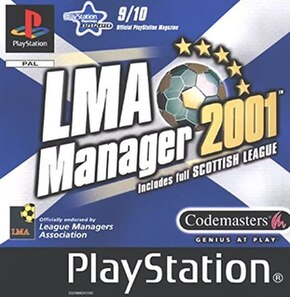
 LMA Manager 2002 on PlayStation
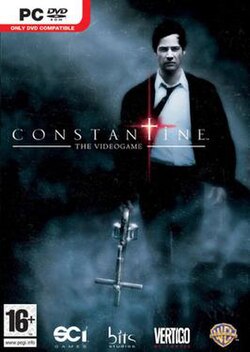
 Constantine on PS2
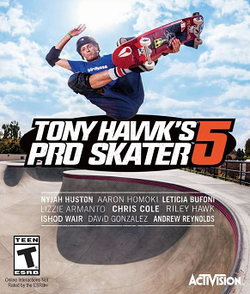
 Tony Hawk's Pro Skater 5 on PS3
 Mina the Hollower on Switch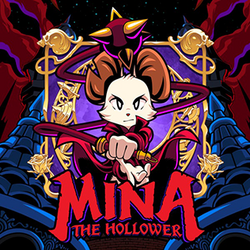












 Another SquareThought Site