

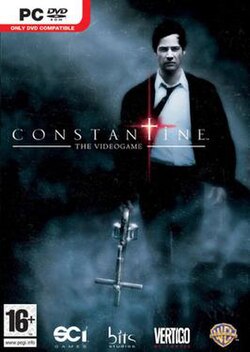

The 2005 tie-in game Constantine arrives like a cup of bitter espresso poured over the noir-stained trench coat of the film's antihero. Based on the movie (and the Vertigo Hellblazer comics that inspired it), Bits Studios' console effort straps John Constantine into a third-person action-adventure that wants to be gritty occult detective story and pulpy shooter at the same time. On paper that sounds like a classy date night between tarot cards and buckshot; in practice it's a slightly awkward ménage à trois. Starring the grizzled cynic from the film-complete with a few of the original cast members reprising their roles-the game's story follows Constantine from routine exorcisms to gruesome field trips into Hell. The plot structure alternates between real-world investigation scenes and spurts of infernal combat, with the weak line between Earth and Hell as both a plot engine and a metaphor for Johns mental state. That duality gives the material a lot of potential to dig into characters and their arcs, which is what this review focuses on: how the game uses (and sometimes squanders) its cast to push a narrative about guilt, responsibility, and sardonic survival tactics. This is not a frame-by-frame retelling of the movie, nor does it pretend to be an encyclopedic Hellblazer adaptation. Instead it throws John into a few set-piece Hell sequences and exorcisms, and asks you to stomp demons, assemble the Holy Shotgun, and shout mantras at the right time. Its equal parts action loop and occult vignettes. The result is a game that occasionally captures the mood of the source material, but often reads like a character study in bullet holes.
Gameplay on Constantine is a hybrid affair: picture an RPG-lite inventory system (collect ammo, tote an item to heal), married to third-person shooting with dynamic camera angles and dramatic cutscenes that flip a level into a boss encounter. John can arm himself with run-of-the-mill firearms, but the game teases higher stakes with set pieces like the Witch's Curse and the Holy Shotgun, whose collect-the-parts arc is treated like Johns personal MacGuffin quest. The mechanical rhythm is familiar: explore, shoot, collect, then occasionally mash sequences of keys to cast a spell. Those spells are where the game tries to lean into Johns identity as an occultist rather than a straight shooter. He can call down lightning storms, conjure swarms of flies, expel demons, and sow confusion among foes. Each spell is enacted by hitting a short sequence of keys in time, with Constantine chanting at each press. The idea is clever: a quick reflex mini-game that makes you feel like the cocktail of ritual and muscle memory is part of the system. In execution the spells rarely alter the loop significantly. Critics were right to call them underwhelming: they feel like seasoning rather than a main ingredient, nice in a stew but not the reason you keep eating. Johns arc in gameplay is tied directly to equipment and environment. Early chapters introduce the player to the grimy, morally questionable work of exorcisms: save a little girl from a demon in a hotel, then get a call to look into more systemic problems. This is where Beeman, Constantine's associate, functions as a narrative fulcrum. He hands John the problems, sets the missions, and is the offscreen bureaucratic voice that nudges the action forward. Beemans presence is small but narratively efficient: he keeps John busy. Developers use him as the classic "get out there and do it" catalyst, and while he doesn't undergo much transformation, he exists to reveal Johns-sometimes begrudging-sense of duty. Father Hennessy is the game's most interesting attempt at a dualistic foil. He provides spiritual support and the Storm Crow spell, acting as both priestly sidekick and thematic anchor. Where Beeman is practical and terse, Hennessy is the believer who still somehow understands the worlds rot. The interplay between John and Hennessy gives the game its emotional compass: Constantine's sardonic nihilism screams against Hennessy's stubborn faith. In the scenes where Hennessy aids John, the player is given more than a new ability; they're given a reminder that Johns cynical lens isn't the only moral optic in the world. Hennessy doesn't get a huge personal arc in the games runtime, but his function is critical: he humanizes the stakes, and offers the player a rare moment to feel like the protagonist isn't the only one carrying the metaphysical weight. John's personal arc is a compact one. He starts as the effective, weary exorcist doing his job: pull out the demon, patch the human, move on. The inciting oddity is the "weakened line between Hell and Earth." That gives him a mission with teeth: demons aren't just hiding in human bodies; they're freely crossing over. The game forces Constantine into Hell physically (through puddles, incantations, artifacts like the water ampoule), which translates to his internal journey: facing the horrors he usually only reads about. The Hell sequences operate as both a gameplay environment and as psychological trial. He roams through visions of chased souls and bird-like demons, grabs gun parts like the Witch's Curse and the Holy Shotgun pieces, gets yanked about by hellish creatures, and keeps moving. Each recovered weapon piece is a milestone in a survival arc: John is not becoming holier, but is arming himself to put a stop to the breach. Supporting characters from the film are sprinkled in to lend authenticity. Tilda Swinton, Gavin Rossdale and Max Baker are credited as reprising roles, which gives the game's cast a veneer of continuity with the movie. Their inclusion is a clever, if cosmetic, narrative trick: it convinces you that the games events are part of the same cinematic universe. That continuity helps with character motivation; when a familiar face shows up, Johns reactions feel anchored rather than invented. Yet the game's pacing and format limit how deeply those side players can change; most remain fixtures who clarify the stakes and then recede. Standing back, the game's story arc is essentially: John receives a perturbation in his work, investigates, is dragged into Hell a few times, gathers the Holy Shotgun, and tries to stem the tide. It's a tidy arc that maps well onto a videogame structure because it offers exploration and power ramps. The emotional dimension-guilt, nihilism, reluctant responsibility-is present, especially through Johns quips and the gloomy environments. However the game rarely allows complex growth; Constantine remains Constantine: wry, haunted, competent. If you wanted a sweeping redemption tale, this isn't it. If you wanted to play as a prickly exorcist who occasionally gets poetic about damnation while assembling shotgun parts, this delivers.
Visually, Constantine leans into chiaroscuro and urban decay. The Hell sequences are the game's showpieces: grotesque enough to be memorable, but not lavishly detailed by 2005 standards. Developers used the contrast between the drab, rain-slicked real world and the lurid, distorted perspective of Hell to underline the thematic gap between the two realms. Seeing souls hunted and demons in flight is more effective for atmosphere than for technical bravado; the PS2-era engines simply couldn't render modern bloom and particle effects the way today's engines do, but they still sell the mood. Cutscenes are used as transitions and mission triggers, and the camera work tries to be cinematic-sometimes successfully, sometimes leading to awkward angles during firefights. The game swaps camera perspectives during boss battles to create spectacle, which works about as often as you'd expect from a licensed movie tie-in. Animations for demons and some boss encounters have charmingly gross designs (in a 'body horror you can walk away from' sense), but the spell effects-lightning, flies, confusion-are modest in impact. That mirrors the gameplay critique: the spells look and feel like supporting acts, not headline-grabbing cinematic abilities. Character models take advantage of licensed likenesses enough to make the casting feel like a selling point. The game's environments-hotel rooms for exorcisms, a generator room turned wet and eerie, and liminal areas that move John between the worlds-are serviceable and often moody. There's a clear aesthetic intention: make the world feel heavy, damp, and morally complicated. They nailed the tone if not the technical spectacle.
Constantine for PS2 is a mood-first, mechanics-second adaptation. Its strongest card is its protagonist: John Constantine remains a splendidly written curmudgeon who drags players through exorcisms, infernal landscapes, and quick-fire mantras with barely suppressed sarcasm. The game gives you enough of his world to appreciate his worldview and the people around him-Beeman the taskmaster, Father Hennessy the faith-tinged ally, and the occasional film face that reminds you this story shares a universe with an actual movie. Where Constantine trips is in balancing tone with mechanical excitement. The spells are clever on concept but tepid in practice; the shooter elements are competent but not exceptional; and the narrative arcs of the supporting cast are more functional than transformative. Playing the game feels like reading the directors notes of a darker, richer occult thriller: there are clear hints of thematic depth, but the format restricts how much that depth can bloom. If you're an 18-year-old who loves moody antiheroes, Hell-tinged atmospheres, and scavenger-hunt weapon quests, Constantine offers a compact, occasionally satisfying ride. If you want polished combat systems or deeply evolving character drama, look elsewhere. For what it sets out to bea gritty, PG-13-for-the-soul video-game riff on a film noir exorcistit mostly succeeds in style even when the substance feels slightly undercooked. That leaves us with a middling but enjoyable licensed game: an imperfect portal into Hell with a fantastic lead actor and a soundtrack of bone-rattling metaphors. Play it for John's lines, the odd Hell vistas, and the charm of assembling a Holy Shotgun; don't expect it to rewrite the rules of action-adventure design.
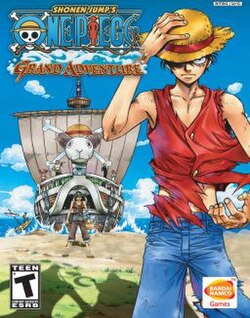
 One Piece Grand Adventure on PS2
 Taiko no Tatsujin: Dokodon! Mystery Adventure on Switch
 Onimusha: Dawn of Dreams on PS2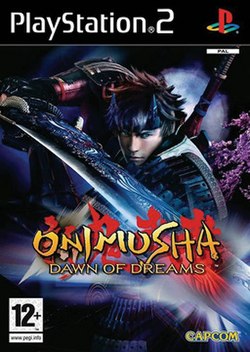












 Another SquareThought Site