



The Price Is Right 2010 on Nintendo DS is one of those tie-in titles designed to translate a decades-old televised format - all the carnival-barker energy, short-form pricing games and the Big Wheel spectacle - into a handheld package. Ludia, which produced the PC/Wii/DS game series tied to the show, had the benefit of a huge library of mini-game concepts (Plinko, Cliff Hangers, Showcase-style finales). The DS version ships with that pedigree but also with all the platform-driven compromises you would expect: reduced assets, limited audio sampling, and control re-mappings that turn bespoke TV antics into touch-and-button approximations. This review looks less at whether it's "fun for a family evening" and more at whether the engine, UI, controls and audiovisual pipeline respect the technical limitations and opportunities of the DS.
Mechanically, The Price Is Right is a compilation of short, discrete minigames which each emulate a pricing game from the show. On consoles and PC the concept translates naturally: short rulesets, repeated RNG-based outcomes and quick, visually distinct boards. The DS port keeps the structure intact - a series of One Bid stages, pricing games, Showdown wheel spins and a final Showcase - but the challenge for Ludia was mapping disparate show mechanics to a dual-screen handheld with a 67 MHz ARM9 as its main CPU and a fixed memory budget. From a software-architecture perspective the game uses a modular minigame container model: each pricing game is a separate module with shared routines for input polling, event scheduling (win/loss states, animations), audio playback and scorekeeping. That modular approach is sensible for a franchise with dozens of rotating games; it allows the build to stream in only the assets each module needs, keeping working memory low. However, on the DS's limited ROM and RAM, Ludia opted to reuse a lot of sprite sheets and UI elements across games, which reduced cartridge footprint but made some games feel like they were running on the same visual template rather than being unique experiences. Controls are where platform-specific design shines or dies. The DS gives you two input paradigms: traditional D-pad/buttons and a resistive touch screen. Many minigames on DS are playable with either, but the touch controls are inconsistent. Simple actions like dragging a Plinko chip or tapping a price option are fine; they map naturally to stylus input with minimal latency. Where the DS struggles is in rapid repeated inputs or nuanced analog-feel tasks - e.g., anything that on TV depends on timing or a simulated analog spin. The Big Wheel spin becomes a stylized flick on the touch screen: speed and direction register, a short physics model computes deceleration and the wheel eventually halts. The problem is twofold: the flick-to-spin input must be scaled for the limited sampling rate of the DS touchscreen, and the in-engine physics is simplified to avoid expensive floating-point math on the ARM7/ARM9 combo. The result is a spin that feels deterministic: players report the same flick magnitude producing similar outcomes more often than pure RNG would dictate. For a TV adaptation where spectacle relies on perceived randomness, this feels terser than intended. AI and opponent modeling are necessarily lightweight. The show's contestants are human-driven social animals; a single-player port needs believable bot behavior to fill out One Bid and Showdown slots. The DS uses heuristics: opponent bids are generated from a base price plus a distribution that grows with game complexity, altered by difficulty setting. This is computationally cheap, but it's also why "perfect bid" moments are rare - the bots don't model pricing learning or inflation awareness. It's a tradeoff: cheap CPU usage in exchange for predictability. Multiplayer on DS is limited to local wireless only (the DS had local ad-hoc and Nintendo Wi-Fi options, but most licensed minigame compilations of this era skip robust online play). Local wireless works fine for passing the cartridge or local ad-hoc, and latency is negligible given the turn-based or short-session nature of the minigames. Where online infrastructure would have added real value (leaderboards, asynchronous challenges, shared showcases), the title doesn't deliver - probably a business decision to avoid certifying Nintendo Wi-Fi integration and server maintenance. A note on progression and RNG fairness: each pricing game's prize gates are governed by seeded randomness and pseudo-deterministic event chains. Ludia's team does a decent job ensuring that over a session the expected value for the player approximates the televised odds, so there's not a sense of short-run bias against the player. However, because many games reuse asset and code paths, the RNG calls are sometimes clustered (e.g., a Plinko chip bounce and an instant-win check might pull from the same RNG sequence), producing patterns a dedicated player can notice after repeated play. Finally, on content depth: the 2010 Edition (released as an update/rebrand) bolstered the minigame roster versus earlier releases, adding a handful of seasonal and higher-value prize permutations. The inclusion of a virtual set that echoes the TV show's Seasons 31-34 (a nice touch on PC) is present in concept on the DS, but rendered at far lower fidelity. Still, for fans who want to play a pared-down, portable Price Is Right, the mechanical fidelity is respectable even if the presentation is downscaled.
Graphically the DS version is conservative by necessity. The DS's two screens invite UI creativity - Ludia uses the bottom touch screen for interaction and the top screen for scoreboard/visual feedback - but the engine relies predominantly on 2D sprites and low-polygon 3D where necessary. Models for the wheel, cars and prop prizes are polygonal with flat shading; textures are aggressively compressed and atlas-packed to save memory. The tradeoff shows: transitions are generally clean, but close-up looks reveal low-res textures and a lack of mipmapping artifacts (which is expected on fixed-resolution handhelds). From an art-pipeline standpoint, the team clearly optimized: sprite atlases, tiled backgrounds for set walls, and re-tinted UI elements reduce ROM footprint. Animation is interpolation-light. Instead of skeletal animation, many of the character motions are frame-based sprite swaps - cheaper to store and play. This yields a choppy but stable animation cadence that matches the DS's typical 30 FPS target. You won't get the buttery 60 FPS of modern mobile titles, but frame pacing is steady: Ludia's engine avoids big framerate drops by yielding GPU-heavy effects in favor of short scripted sequences. Particle effects (confetti, coin cascades) are economical: single-color sprites with additive blending rather than alpha-heavy particle systems. Lighting is baked and fake - the DS simply cannot support dynamic per-pixel lighting for multiple models without a major performance hit. In terms of UI/UX, the menus are functional but not elegant: hierarchical menus, slightly oversized buttons for stylus accuracy and a small font size on the top screen that can be hard to read on the DS Lite or original DS. The game nails color palette choices that evoke the TV set: saturated primaries and glossy highlights, which help disguise the low polycounts. Audio is compressed and sample-based. The PC build boasted Rich Fields' voiceover, but the DS has a smaller set of sampled announcer lines and music loops. Audio compression artifacts are visible (well, audible) in the higher frequencies, but the iconic riffs and bravo stingers are all present. Cartridge limitations force a small soundbank and looped music tracks, which can make longer play sessions feel repetitive. Overall, the DS team made pragmatic technical choices: aggressive asset reuse, sprite-focused rendering, and conservative physics. The result is visually faithful at a glance but obviously downscaled when examined closely.
The Price Is Right 2010 on Nintendo DS is faithful in spirit and clever in engineering, but it's a lesson in constrained-platform tradeoffs. Ludia's modular minigame architecture is well-suited for a title where variety is king, and the DS port preserves the format's bones: One Bid, pricing games, Showdown spins and a Showcase finale. Where the title struggles is in the sensory areas that make the show exciting - the wheel's sense of chance, the announcer's presence, and the dynamic set spectacle - all of which are diminished by cartridge size, CPU budget and input constraints. From a technical-review perspective, the game earns points for stability, predictable frame pacing and a pragmatic asset pipeline. It loses points for inconsistent touch controls, limited AI sophistication and the absence of online features that would meaningfully extend replay value. If you approach it like a portable party game - short sessions, local multiplayer with friends, nostalgia for pricing games - the DS edition delivers. If you're expecting the full-bodied theatricality of the televised Price Is Right, you'll notice the compromises. Score: 6.5/10. It's competent, occasionally charming, and technically sensible given the platform - and like many licensed games, it's most enjoyable for fans who want the experience in their pocket rather than perfection on the hardware.
 Madden NFL 22 on PS5
 Edge of Eternity on Switch
 Press Your Luck on PS3
 Trivial Pursuit on PS3
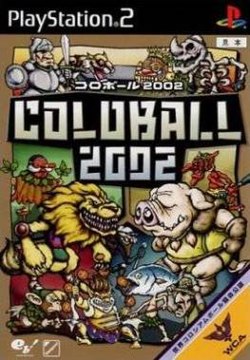
 Coloball 2002 on PS2
 One Piece: Pirates' Carnival on PS2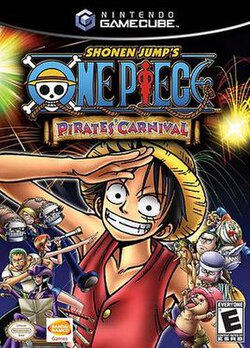













 Another SquareThought Site