

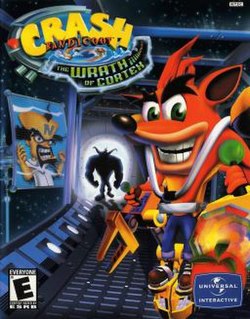

Crash Bandicoot: The Wrath of Cortex is the fourth main Crash outing and the first one to hop off of Sony's exclusive couch and onto the wider console party. On PS2 it arrives as a familiar but slightly remodeled package: 25 Crystals to collect, an army of boxes to pulverize, a handful of Elementals to send back to their mask-sized nap, and a new big bruiser named Crunch sitting in the corner like he owns the place. If you played the original trilogy, this feels like the same bandicoot-shaped medicine in a different bottle. That familiarity is both its comfort blanket and the source of its biggest design tension: is it a satisfying level of challenge, or a recycling of old trial-and-error wrapped in prettier textures? My review here will look at the gameplay through one lens only: challenge. What skills does Wrath of Cortex actually demand from you, the player, and how often will the game make you ruefully re-check your controller inputs?
Structure and objectives The game's bones are simple and classic Crash: Crash (and occasionally Coco) must collect 25 Crystals scattered across a VR hub system built by Coco, and beating the five Crunch boss fights unlocks further hubs until the big finale. Each VR hub has five main levels and, after you've cleared them, a sixth portal to face Crunch. That linear-to-layered design means progress is mostly about ticking boxes - literally smashing them - but the way the challenges are implemented is where the required skills start to show. Expect platforming, vehicle sections, underwater trawling, and those Atlasphere levels that turn Crash into a rolling marble of shame and glory. Platforming precision and timing At its core Wrath of Cortex demands precise jumps, clean timing, and repeatable muscle memory. A lot of levels are unforgiving in the old-school sense: one misjudged leap and you either lose a life or you find yourself backtracking through boxes and hazards. Fixed camera angles crop in at awkward moments and can hide upcoming pits or enemies, forcing a heavy reliance on anticipation and memorization. You will replay many sections not because the mechanical inputs are complex, but because the perspective change turns a doable jump into a blind leap of faith-so pattern recognition and patience become your best allies. Trial-and-error vs. learn-and-execute This is the distinction that defines the game's challenge for me. Some moments feel like true tests of dexterity: a string of moving platforms that require rhythm and a calm thumb; an Atlasphere run where precise steering prevents you from plummeting into a lava moat. Other moments are trial-and-error traps induced by the camera or a slippery control response-where failure feels arbitrary rather than earned. To succeed you need to switch mental modes constantly: accept some death as a learning opportunity, then convert that memory into a flawless run. Atlasphere and vehicle sections Atlasphere levels are a highlight and change-of-pace. Think Marble Madness with Crash's brand of cartoon chaos. These stages reward spatial awareness, momentum control and quick reflexes. Steering a ball through narrow tunnels and timed jumps requires a different skill set than standard jumping: you learn to 'feel' momentum, predict rolling trajectories and brake carefully. Vehicle-based challenges (spacecraft, buggies) lean on the same skills but add speed and hazard reading. When they click, they feel like mini mastery tests. When they don't, it's usually because of sluggish controls noted in contemporary reviews; timing windows widen into irritating waits. Underwater stages and their different laws Underwater segments attempt to mix things up by changing movement physics. They force you to slow down, plan arcs and shoot enemies in a limited space. Reviews of the time called the underwater bits "insidious"; they're less about twitch reflexes and more about patience and awareness of projectile arcs. Aim and control feel different to land-based stages, so adaptability-your ability to mentally switch physics models-is tested. Crates, gems and completionist skills The game layers optional challenges over the main path that significantly increase the skill ceiling. Break every crate in a level to earn Gems; find special colored gems to unlock hidden areas. Completing these requires thorough level exploration, careful platforming and, crucially, thorough crate awareness. Some crates guard pathways or secrets, so you must change your usual speedrun habits and examine the environment. The bonus platforms lead to one-time bonus areas where you must collect everything in sight. These are often maze-like and require risk management: can you get in, snag the items and get out alive? Time Trials, relics and speed optimization For players who want mastery, Time Trials are the true gauntlet. After grabbing the Crystal, you can re-enter a level and hit the floating stopwatch to initiate a timed run. The game hands you route puzzles: the goal is to race through with minimum bog-downs. Numbered yellow crates (1, 2, 3) freeze the timer by that many seconds when smashed - a quirky mechanic that adds strategic choice to the speedrun. Do you detour to smash a '3' crate and afford a riskier shortcut, or take the direct route and pray? Relics come in sapphire, gold and platinum tiers depending on how fast you clock the level. Collect your first five relics and you unlock secret warp rooms; every five relics opens another secret level. For completionists this means both speed optimization and flawless execution are required. Route planning, split-second decisions and mastery of the physics are paramount. Lives, resource management and risk trade-offs Crash and Coco start with five lives. Lives are gained by collecting 100 Wumpa fruits or finding special crates. Aku Aku masks act as short-term shields; three in a row grant temporary invulnerability. On paper resource management seems quaint, but in practice it forces you to weigh risk: sprinting for a distant extra life might cost you a cheap mistake on the way back. The game's challenge often becomes a tactical balance between exploration for gems and staying alive long enough to keep progress. Character control and design choices Coco is playable but many reviewers and players at the time found her less satisfying and even harder to control than Crash. The inclusion of another character could have provided variety; instead it sometimes felt like an unnecessary twist that demanded more adaptation without much reward. The overall control feel has been called sluggish, which affects how you approach tight timing windows-if inputs lag, you need to pre-empt problems and compensate with earlier button presses, an annoying but learnable habit. Difficulty philosophy and the 12-month development shadow Traveller's Tales had about a year to turn this into a full PS2 release after the original free-roaming concept was scrapped. That rush shows: the game tends toward conservative design-familiar level templates with a few new wrinkles. That conservatism affects the challenge design; instead of rethinking core mechanics for the new console, they amplified existing systems. The result is a difficulty that is part-old-school platformer, part camera-and-control frustration. It rewards persistence, repetition and a willingness to commit to memorizing levels. Who will enjoy the challenge? If you love methodical platforming, route optimization, and the mix of reflex and memorization that older 3D platformers demand, Wrath of Cortex will give you hours of satisfying repetition. If you hate fixed-camera surprises and trial-and-error deaths caused by perspective rather than player skill, this might be the bandicoot to file under "nostalgia with caveats."
Visual polish and platform differences On PS2 the game dresses familiar Crash tropes in richer colors and more detailed textures than the original PlayStation cousins. The environments pop with a bright palette and the particle effects-lava glows, water ripples-are welcome. Still, the presentation is conservative for a launch-era PS2 title: reviewers at the time praised the color use but noted that levels sometimes felt sparsely populated and architecturally empty. That wide-open feel affects challenge perception: large levels can look impressive but provide fewer visual cues, so you must rely on geometry-reading skills rather than flowery landmarks. Loading times and platform-specific visual notes The PS2 release had notably long loading times; players on the Xbox and GameCube noticed reduced loads and some upgraded visuals (especially the Xbox, which showed improved fur, lighting and particle effects). The Xbox version's visuals were lauded for richer lighting and fur detail, though some folk described those fur effects as "creepy" rather than charming. The GameCube port suffered from framerate drops in spots, which is a more direct hit to challenge: frame dips interfere with your timing, making precise jumps and momentum-based Atlasphere runs more difficult. How graphics affect challenge Because many of the game's pitfalls are perspective-based, visual clarity matters. When the camera is friendly and the environment gives you depth cues, precision platforming feels fair. When the camera stabs you with an awkward cut or the frame rate tanks mid-jump, the challenge shifts from your skills to technical frustration. So yes: the graphics and performance differences across platforms are not just cosmetic; they play into how challenging - and how fun - the game feels.
Wrath of Cortex is a love letter to old-school 3D platforming wrapped in a "same-but-larger" aesthetic. The challenge it offers is multifaceted: platforming precision, memorization, route optimization for time trials, momentum control in Atlasphere and vehicle stages, and the patience to finish tedious optional objectives like gems and relics. The downside is that fixed camera angles, sporadic sluggishness and platform framerate hiccups sometimes make failure feel cheap. If you enjoy learning a level until you can execute it with surgical accuracy, this game's challenge curve will satisfy you - sometimes in spite of its flaws. If you prefer modern, forgiving checkpointing and camera logic, prepare for a fight. For a PS2-era platformer that still makes you earn your victories (and your platinum relics), it's solid: not revolutionary, but plenty of occasions to grit your teeth, improve your skills and shout triumphantly when you finally nail that Atlasphere run. Score: 7/10 - good challenges, uneven delivery.
 Crash of the Titans on PS2
 Crash Twinsanity on PS2
 Crash Bandicoot 2: Cortex Strikes Back on PlayStation
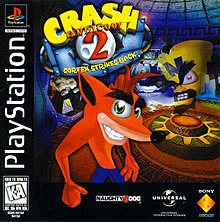 The Wacky History of Platform Games
 PlayStation Home on PS3
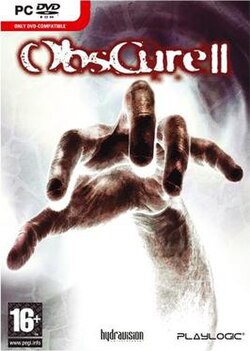
 Obscure: The Aftermath on PS2
 Cocoto Platform Jumper on PS2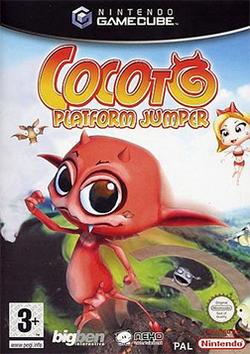
 Lego Star Wars: The Complete Saga on PS3
 Lego Star Wars: The Video Game on PS2
 Lego Star Wars: The Skywalker Saga on PS5
 Lego Harry Potter: Years 1–4 on PS3
 Lego Harry Potter: Years 1–4 on DS












 Another SquareThought Site