

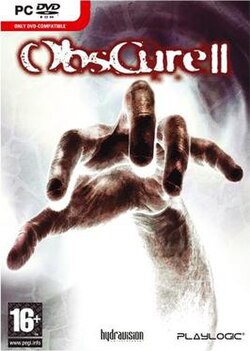

Obscure: The Aftermath arrives on PS2 as the sequel to Hydravision's culty campus-scaredemic, trading some of the first game's scrappy charm for bigger set pieces and a louder soundtrack. Built on RenderWare and shipped with the same adolescent ensemble-cast conceit - a dozen-ish students with varying backstories - it aims for cinematic horror on a console that by 2007 was already showing its age. The result is a technically competent but uneven package: atmospheric environments and decent character art rub up against clumsy cutscenes, variable pacing, and game design choices that reveal the limits of the engine and hardware. If you're buying for old-school co-op panic or for scrutiny of how a mid‑2000s team squeezes scale and lighting out of RenderWare on PS2, there's a lot to dissect. If you're buying for a tightly written horror narrative, the game inherits a plot-heavy baggage that critics called thin and occasionally melodramatic.
Obscure: The Aftermath positions itself as survival horror with a multiplayer twist - single-player and multiplayer modes are both present, which was still a notable feature for the genre on PS2. Gameplay documentation in the source is light, but from the structure and character list we can infer a group-based progression model: multiple protagonists (Shannon, Kenny, Stan, Corey, Mei, Amy, Sven and others) each contribute narrative beats and limited mechanical variety. Technically this influences several subsystems: - Character systems and state management: The roster implies per-character stats, voice lines, and unique states (for example, the plot notes that Stan and Kenny require medication to cope with the plant's effects while Shannon adapted and doesn't). On PS2 hardware this means the game needs to keep track of timed state variables for individual NPC companions and player-controlled characters, toggle AI behaviors when characters are incapacitated or mutated, and switch animation sets during scripted transformations (Kenny's monster phases are a recurring example). Implementing this on RenderWare requires a lean state machine per character and careful memory budgeting to avoid thrashing the PS2's limited RAM. - Co-op and multiplayer architecture: Co-op in a PS2-era survival horror usually means local split-screen or shared-screen two-player arrangements. The underlying challenge is asset streaming and draw budget: rendering two viewpoints at once doubles the worst-case fill-rate and geometry submission, so the engine must reduce LODs, cull aggressively, and throttle particle systems during multiplayer. Hydravision's decision to include multiplayer implies they accepted compromises in texture resolution, shadow quality and enemy counts to keep frame pacing viable on PS2. - Enemy AI and spawning: The game deploys hordes of mutants, harpies, and several large set-piece foes (the Friedman tree, Jedidiah, mutated Kenny). On the PS2 the trick for maintaining menace without grinding the CPU is to use scripted encounters with limited AI behaviors: patrols, charge states, and simple pathfinding, and to offload complexity to animations and sound cues. The plot reveals many ambushes and one-off boss fights; technically those are likely implemented as heavily scripted sequences tied to animation timelines and collision-triggered events rather than emergent AI, which keeps CPU overhead predictable. - Resource and inventory handling: Survival horror relies on resource scarcity. The narrative mentions medication as a gameplay element for Stan and Kenny - a mechanical gate that controls when characters can perform certain actions or even remain human. Managing inventory, consumables and item persistence across levels on PS2 is a small engineering headache: savegame footprint must be minimal, and item flags must be boolean-light to stay within memory constraints. - Boss and set-piece design: The Friedman tree - a huge moving-branch boss - and the giant platform-crush at the football pitch are examples of encounters where physics are essentially illusion. On PS2, full physics simulation is expensive, so these encounters are typically cinematic: kinematic animation of the boss, collision boxes tuned for player hit detection, and carefully synchronized camera/particle/sound events. This produces a cinematic feel but sacrifices player-driven emergent tactics. - Camera, controls and combat: IGN's contemporary notes about 'respectable character models' but 'cheap cutscenes' hint at a dichotomy: in-engine camera, assets and controls deliver gameplay clarity, while pre-rendered or low-budget in-engine cinematics underdeliver. Combat mechanics on this generation commonly mix light melee, context-sensitive actions, and limited ranged options. For a PS2 survival horror, hit detection, animation blending and response latency are critical; poor blending or sluggish input can turn tense encounters into tedious ones, and reviewers often penalized such problems. - Performance considerations: RenderWare is a cross-platform middleware that offers a predictable rendering pipeline and flexible asset pipeline. On PS2, RenderWare projects typically optimized heavily for memory and VU utilization (vector units). Expect LOD transitions, baked lighting for many interiors, and particle systems tuned low. The game's choice of large interiors (hospital, museum, dam, sprawling campus) indicates strong streaming systems and careful preloading to hide load times, but critics noted cheap cutscenes - often a symptom of divergent asset pipelines between interactive and cinematic content.
Obscure II's PS2 visuals are the part that most critics agreed behaved well within the platform's limits. IGN praised the atmospheric environments and character models, and that praise maps to concrete technical features: - Environments and lighting: The game builds moody interiors - hospital corridors, wooded exteriors, and a decaying university - using baked lighting and normal-mapped geometry where possible. On PS2 this often means static lightmaps for interiors combined with a handful of dynamic lights for flickering effects. The baked approach allows for richer-looking materials without two-player draw-call doubling (important for the title's multiplayer). Shadows are mostly blob-style or projected textures rather than full-screen shadow maps, a pragmatic trade that preserves frame rate. - Character modeling and textures: Review snippets calling the models 'respectable' correspond to mid-2000s PS2 character fidelity: reasonably detailed head and torso meshes, layered texture maps, and discrete facial expressions via blendshapes or frame-based facial animation. The presence of multiple playable characters requires reusing skeletons and texture atlases to save memory, and Hydravision appears to have prioritized variety in silhouette and costume over ultra-high-resolution textures. - Cutscenes and cinematics: The criticisms leveled at the cutscenes are telling from a technical standpoint. 'Pretty cheap cutscenes' suggests either low-budget pre-rendered sequences, awkward in-engine camera moves, or inconsistent animation polish - likely caused by separate pipelines for gameplay and cinematic assets. When cutscenes are treated as canned events rather than polished animations with high-quality facial work and lighting, the visual disconnect is obvious. - Effects, particles and scale: The Friedman tree boss and spore clouds are examples where particle systems and scale are used to sell horror. On PS2, particle count and overdraw are tightly constrained, so the design typically uses layered sprites, fog planes and alpha-masked geometry to simulate volume. The explosion of the helicopter and the platform-crush sequences would be carefully orchestrated to avoid physics costs while delivering spectacle. - Engine implications: Using RenderWare gave Hydravision cross-platform portability, which explains similar experiences across PC, PS2 and Wii. The engine's abstraction over rendering backends allowed the team to tune down features on PS2 while preserving scene composition. However, the hallmark of this era's cross-platform development is that cinematic ambition can outpace per-platform polish, which is precisely what reviewers observed.
Obscure: The Aftermath on PS2 is a textbook example of a mid-2000s survival horror sequel trying to be bigger, louder and more cinematic while constrained by legacy hardware and a mixed design brief. Technically, Hydravision and RenderWare deliver a capable package: atmospheric level art, workable character models, and dependable scripted encounters. The game's strengths are most visible when you examine the plumbing - efficient use of baked lighting, disciplined enemy scripting to avoid CPU overload, and asset reuse to support multiplayer without tanking performance. Where it falters is in the seams. Cheap-looking cutscenes, inconsistent narrative beats, and the inevitable trade-offs required to keep multiplayer and spectacle running on PS2 leave a product that feels heterogeneous: parts polished, parts patched. Critics' 'mixed or average' consensus (Metacritic ~60/100 for PS2) is fair from an engineering standpoint; the team did a lot with limited resources, but the design choices sometimes expose the platform's limits rather than hide them. If you care about technical anatomy - how a RenderWare-based PS2 title balances lighting, LOD, AI scripting and multiplayer overhead - Obscure II is an interesting case study. If you want a tautly paced, narratively tight horror experience, you'll probably come away wanting. For fans of the first game, or players who enjoy ensemble-cast survival horror with occasional cinematic ambitions, there's solid value here: a playable, often atmospheric romp through a compromised but competent technical package. For everyone else, it's worth a rental or a cheap storefront pick-up to admire the tech work and giggle at the melodrama.
 Surviving the Aftermath on Switch
 Slayers X: Terminal Aftermath: Vengance of the Slayer on PS5
 Crow Country on PS4
 Tormented Souls on PS5
 The Forest on PS4
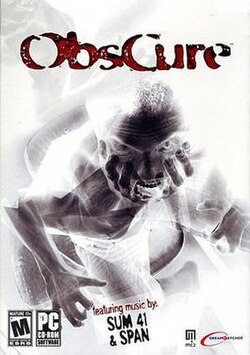 Alone in the Dark on PS2












 Another SquareThought Site