

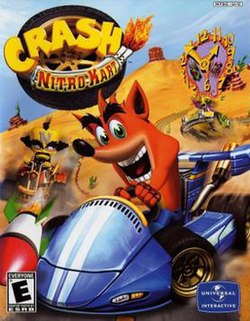

In the halcyon days when polygonal mascots still ruled the living-room roost and racing games fell into two distinct camps-simulators that make you feel like a mechanic, and kart games that make you feel like a cartoon lunatic-Crash Nitro Kart arrived as the latest bubblegum offering from the Crash Bandicoot stable. Billed, in some marketing copy, as the natural successor to Naughty Dog's much-loved Crash Team Racing, this PlayStation 2 entry was shepherded to completion by Vicarious Visions and presented to the public with a polish that betrayed real craft. It is important to state, from the outset, that Crash Nitro Kart does not try to reinvent the wheel. It borrows, refines, and occasionally stumbles on it. A stern, serious reviewer of the 1990s would tell you that a kart game lives and dies by three elements: feel, variety, and the small, delicious cruelty of item balance. On that account, CNK is a competent offering. It is earnest where CTR was artful, loud where CTR was sly, and robust where CTR was nimble. Its single-player Adventure Mode straps you into a hub-and-world progression that owes a polite debt to its predecessor, while the assortment of battle arenas and cup play provide enough multiplayer mischief to keep a party cackling for an evening. The game has more than a few moments where it shines-mostly in presentation and moments of frantic, neon-soaked arcade speed-but it also offers enough idiosyncrasies and rough edges to remind you that sequels do not always equal improvements.
Crash Nitro Kart is, in basic structure, a kart racer in the family tradition: pick a character, select a circuit, break crates, acquire items, and attempt to cross the line first while occasionally being humiliated by a blue-shell analogue. If you are comfortable with the genre, CNK's controls will be familiar and mostly satisfying. The game uses a conventional button-and-analog layout: accelerate, brake, reverse, hop and deploy items, with a powerslide mechanic that is central to higher-level play. The crate system in CNK is straightforward but varied. Item Crates-those cartoon question-mark boxes-yield single weapons or power-ups that can swing a race. Multiplier Crates, flagged with an "X", grant a triple dose of a single weapon and reward exploration and skillful line choice since they tend to sit in riskier parts of the track. Wumpa Crates contain the beloved Wumpa Fruit; ten of these strengthen your weapon potency. Activation Crates, marked with an exclamation point, do not hand out items so much as activate track hazards or boost pads-these are the little mechanical surprises that make a given lap feel alive. Boosting is where the game asks for finesse. You get brief top-speed surges from boost pads and early starting-line pump-ups, but the crown jewel is the powerslide. Hold hop while turning to enter the slide, watch the curved boost gauge swell from green to red, and press the opposite shoulder button at the right moment to unleash a burst of acceleration. The timing window is narrow; executed well, it separates competent drivers from those who will spend many races trailing a plume of blue smoke. The powerslide can be an acquired skill and, as reviewers at the time noted, it rewards precision rather than button-mashing. Modes cover a wide remit. Adventure Mode is the single-player backbone: five worlds, a hub in Velo's Coliseum, trophies, world keys, relic races, CNK challenges (collect the letters C, N and K while racing), gem cups and boss fights. The adventure progression is purposeful-win three trophies in a world, face the champion, earn a World Key and proceed-and it supplies a satisfying sense of accomplishment for completionists. Time Trial modes (both full race and single lap) allow ghost saving and ghost-chasing, a feature that encourages repeat runs and personal improvement. Quick Race and Cup Tournament modes offer the usual pick-and-race convenience, with Cup allowing up to multiple human players on a single console in the era before online ubiquity. Battle modes are where CNK stretches beyond pure racing. The arenas support Limit Battle (score via offensive play), Last Kart Driving (elimination by losing lives), Crystal Grab (hold crystals and survive), Capture the Flag and Steal the Bacon. Each mode is customizable for teams, score limits and time. When the battle mode design is right the result is a hectic, properly chaotic multiplayer break from the track-based discipline. The Team Race mechanic deserves a particular mention: sticking close to your AI or human partner fills a Team Meter, and when full it triggers a Team Frenzy that hands out unlimited weapons-an excellent burst-of-mayhem mechanic that is as tactical as it is entertaining. Characters and teams populate the game in numbers: about twenty-seven characters in total on the roster with sixteen playable at the start and many unlockables (Fake Crash, Doctor N. Tropy, Zam and Zem, among others) that reward exploration of Adventure Mode and mastery of time trials. The characters are arranged into four teams-Bandicoot, Cortex, Oxide and Trance-each with distinct kart attributes that alter acceleration, top speed, handling and momentum. The roster offers variety without feeling like a spreadsheet of stats; you can pick a favorite personality and usually expect the kart to match. If you are hoping for innovation, the game offers incremental rather than revolutionary changes. Its core is comfortably familiar: weapon balance tends toward the broad and memorable rather than the precise and nuanced. At its best the game feels like a competent, polished arcade racer with moments of real joy. At its worst it can feel deliberately safe-a well-made echo of what came before, but an echo nonetheless.
Visually, Crash Nitro Kart is unapologetically cartoony and aggressively colorful, a clear flag-plant for vibrancy in the early PS2 era. The in-game worlds maintain the Crash series' Day-Glo aesthetic: glossed textures, exaggerated set pieces and character models that retain the series' squashed, expressive proportions. Vicarious Visions built the in-game models for responsive play, using 3ds Max with inverse-kinematic rigs and morph targets to make characters feel lively even in the tight framerate required for four-player splitscreen mayhem. The game is notable for being the first Crash title to sport full-motion video cutscenes. Red Eye Studios handled the cinematics, crafting thirty-two minutes of pre-rendered sequences that are rather more polished than the realtime action could claim. Those cutscenes serve a double duty: they inject personality and spectacle, and they provide a moment of visual respite during which the developers can flex higher-detail models and richer lighting than the console could sustain in active gameplay. Contemporaneous reviews observed that the Xbox version shaved a bit of graphical roughness off the PS2 build; the PS2 is still handsome in the single-player vistas, but multiplayer splitscreen sometimes exposes texture pop and reduced detail. The engine-Intrinsic Alchemy, acquired by Vicarious Visions-delivers clean animation and solid framerates during solo play, and only dips noticeably when four karts, numerous items and arena hazards attempt to perform synchronized chaos on a single screen. The net effect is that the presentation punches above its weight: bright, well-animated, and very much a product of 2003's cartoony, pre-photorealistic sensibilities. If you sat down to play in 1999 or 2003 expecting a gritty racer, you would leave disappointed; if you came for color and kinetic charm, the game will oblige.
Crash Nitro Kart is a competent, sometimes spirited kart racer that wears its inspirations on its sleeve. It does not outshine Crash Team Racing in terms of pure ingenuity, but it staves off disappointment with a solid control scheme, a robust variety of modes, and a presentation that genuinely cares about spectacle-both in-game and in the sumptuous pre-rendered cinematics. Critics at the time reached a consensus of "mixed or average": it was praised for its controls, artwork and cutscenes while being criticized for being overly familiar and occasionally generic. If you approach CNK as a party game or a collection of well-made arcade systems it will reward you: the battle arenas are fun, the Team Frenzy mechanic is entertaining, and the powerslide mastery curve gives long-term players something to chase. If you hoped for a bold reinvention of Crash karting, you will probably feel let down. The audio is professional and cartoonish, the voice cast is accomplished, and the soundtrack is serviceable though occasionally repetitive. On balance, a score of 7/10 feels fair: better than forgettable, not quite classic. For a serious 1990s reviewer with a fondness for mascots and split-screen anarchy, Crash Nitro Kart is the sort of title you recommend with a caveat: bring friends, practice your slides and enjoy the spectacle, but do not expect it to replace the original in the pantheon. As a postscript, worth noting for the modern reader: content from Crash Nitro Kart later found new life when parts of it were remastered for Crash Team Racing Nitro-Fueled in 2019-proof that even competent echoes can be worth revisiting.
 Crash: Mind over Mutant on PS2
 Crash Team Rumble on Xbox Series X/S
 Roary the Racing Car on DS
 Garfield Kart: Furious Racing on Switch
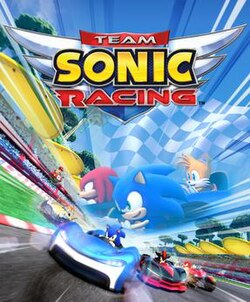
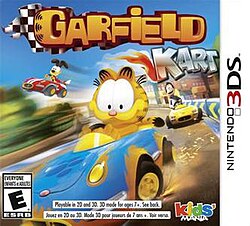 Team Sonic Racing on Switch
 Michael Schumacher Racing World Kart 2002 on PlayStation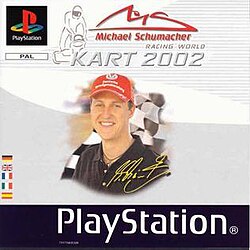
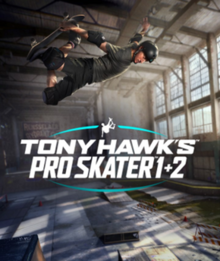 Crash Bandicoot N. Sane Trilogy on Switch
 Tony Hawk's Pro Skater 1 + 2 on PS5
 Diablo II: Resurrected on PS4
 Diablo II: Resurrected on Xbox Series X/S
 Crash Bandicoot N. Sane Trilogy on PS4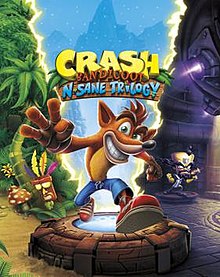












 Another SquareThought Site