

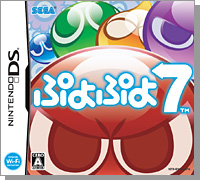

If you think falling colored blobs are boring, Puyo Puyo 7 will personally remind you that you are wrong (and a little melodramatic). This seventh mainline Puyo outing landed on the Nintendo DS in Japan on July 30, 2009 and brought with it the series' cheerful chaos: frantic chain-building, explosions of neon jelly, and a surprisingly melodramatic school-flooding subplot. Developed by Sonic Team and h.a.n.d. and published by Sega, Puyo Puyo 7 refuses to reinvent the wheel so much as redecorate it in confetti. It's pure puzzle-game comfort food with a twist - literally - thanks to the game's headline mechanic, Great Transformation, which lets characters change size mid-match and alters the very grid you're playing on. Charming, sometimes baffling, and absolutely willing to roast your combo pride, this DS edition is a portable little toaster oven of addictive puzzling.
Puyo Puyo 7 is first and foremost a Puyo game: drop two-block pairs of colored blobs, match four or more to pop them, and chain combos to send garbage Puyos to your opponent. If that sounds like a strategy you can learn in a minute and obsess over for months, congratulations - you've discovered the genre's cruel beauty. What Puyo Puyo 7 adds to that familiar formula is the Great Transformation mode, the game's raison d'être and headline gimmick. Each playable character has two forms: Mini (Chibi) and Mega (Deka). These aren't just costume changes. When you transform, the size of the Puyos changes and, crucially, so does the grid geometry you're working with. Small Puyos let you squeeze tighter combos into cramped spaces; big Puyos change the rhythm and spacing entirely. Switching between forms mid-battle means you're constantly recalibrating your mental Tetris. It's like going from playing chess to playing chess with someone who insists on moving two squares at once. Great Transformation is the primary focus in story mode, and matches there usually revolve around figuring out when to be compact and when to go huge. The story itself is a delightful, anime-flavored excuse to keep you facing new opponents. You play as Ringo Ando, a high schooler whose school gets flooded with Puyos (naturally). She gets a crash course from Arle Nadja, learns to transform, and goes on a quest to seven "power spots" to face strong opponents and unmask the mischief-making Ecolo. Yes, Puyo Puyo 7 manages to mix apocalyptic pudding with school drama and still come out smiling. Beyond Great Transformation, the DS version includes a respectable buffet of modes that will please purists and newcomers alike. Fever mode behaves like the Fever that Puyo fans know and love (copied straight from 15th Anniversary): it serves up preset boards where you aim to trigger big chains and activate a fever board for guaranteed high-scoring opportunities. The Puyo Puyo 2 and original Puyo Puyo modes emulate those classic rule sets, which is a nice touch for players who grew up on the older games or who want to practice different rule quirks. Mission Puyo (a nod to the Nazo Puyo puzzles) gives you specific puzzles to solve faster than your rival and works well as a brain-teasing detour. Multiplayer is where Puyo really shines, and Puyo Puyo 7 offers both local multiplayer chaos and, for its time, online matches via Nintendo Wi-Fi Connection (a function that was sadly discontinued in 2014). The Free Battle options let you run matches with up to five rule variations, and elimination rules mean that unless you're in Mission mode, topping out eliminates you from the round. For portable competitive sessions, the DS is comfortable and responsive: the stylus isn't required (thankfully), and the D-pad plus face buttons are perfectly suited for quick falls and precise rotations. There are a couple of caveats: the transformation mechanic is clever but can be a headache for players who prefer pure, predictable board geometry. If you're the kind of person who builds long-term setups slowly and methodically, sudden shifts in piece size will feel like someone rearranging the kitchen while you're still mid-recipe. Also, because the DS release is Japan-only, players outside Japan looking to experience the game natively need to import or emulate, and the story text is in Japanese - which is charmingly inscrutable if you don't read the language, but the gameplay communicates clearly enough that it isn't an absolute barrier. Overall, Puyo Puyo 7's gameplay loop is addictive: easy to pick up, devilishly deep to master, and spiced up by a gimmick that mostly succeeds at bringing freshness without breaking the core.
On the DS hardware, Puyo Puyo 7 doesn't exactly scream technical showstopper, but it doesn't have to - it's a puzzle game whose aesthetic duty is to look cute and keep the action readable, and it accomplishes both with aplomb. The art direction (credited to Akira Mikame) leans into bright palettes and expressive character portraits that pop on the DS's dual screens. The characters are charmingly designed and their child/adult forms are visually distinct, which helps you keep track of who you're playing and what mode you're in - very handy during the frantic tail-end of a match. Animations are crisp and snappy: Puyos pop with satisfying squelch sounds and little effects that never get in the way of the playfield. Backgrounds are simple and mostly decorative - they don't distract from the field, which is the correct decision for a game where split-second visual clarity matters. Sound design and music (with Masaru Setsumaru credited as composer) match the tone perfectly: jaunty, playful tracks that make you feel like you've stumbled into a particularly upbeat anime festival. The DS's audio limitations mean nothing here sounds bad; it's all pleasant and functional, and the musical cues help emphasize fever moments and big chains. Because the DS screens are small, the game's UI and font choices prioritize legibility. Menus are sometimes verbose (with story text in Japanese for the DS JP release), but the menus themselves are easy to navigate with the buttons. If you're playing on a DS Lite or DSi, the colors and contrast hold up well. The graphics won't make anyone buy a handheld on their looks alone, but they deliver the important thing: clarity of play and an upbeat personality that matches Puyo's bubbly soul.
Puyo Puyo 7 is a warm, slightly wacky entry in a long-running puzzle series that knows what it does best and leans into it. The Great Transformation mechanic injects genuine strategic novelty into classic Puyo rules - sometimes wonderfully clever, sometimes mischievously disruptive - and that tension is the game's main charm. Story mode is a cute, anime-leaning romp (high school gets flooded by jelly; welcome to Puyo logic) and provides a fun single-player scaffold for learning the rules. The inclusion of Fever, Puyo Puyo 2, original Puyo Puyo, and Mission Puyo means there's a mode for purists and newcomers alike. If you can get past the Japan-only DS release barrier, or if you already own a Japanese copy, this DS version is a solid portable puzzle package with personality to spare. Who should play it? Puzzle fans who love fast, competitive matches and the occasional brain-melting combo will find Puyo Puyo 7 addictive. If you like your puzzle games with a side of charming nonsense and unpredictable mechanics, this will be a delightful little troublemaker in your library. If you're strictly a rules purist who hates any twist on grid geometry, you might prefer one of the earlier entries that doesn't shrink and enlarge your blobs like a mischievous magic trick. In short: Puyo Puyo 7 is cute, clever, and occasionally infuriating - in the best possible way. It's not a genre-defining masterpiece, but it's a very good one that proves a simple, well-executed idea (plus a generous helping of adorable art and jaunty music) can keep a long-running series fresh. Consider this a portable sugar rush that will improve your reaction time and ruin your cool poker face in multiplayer lobbies. Score: 7.5/10 - sticky, sweet, and highly recommended for anyone who enjoys watching neon blobs explode into glorious chaos.
 Puyo Puyo Champions on PS4
 Puyo Puyo Tetris on PS4
 Puzzle by Nikoli 4: on PS4
 Professor Layton and the Last Specter on DS
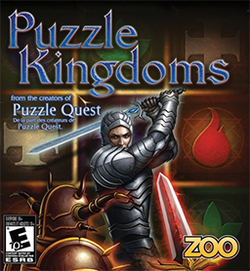
 Puzzle Kingdoms on DS
 Puzzle de Harvest Moon on DS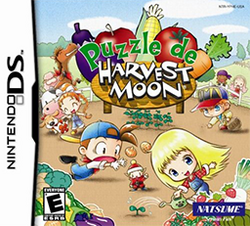












 Another SquareThought Site