

 Aug 2025
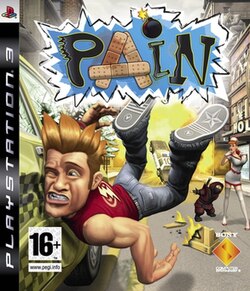

Pain is the game that asks a simple, existential question: what happens when you strap a human-shaped ragdoll into a slingshot and fling them into the world for laughs? Developed by Idol Minds and released on PS3, Pain turned that gleeful cruelty into a surprisingly lovable digital playground. The premise is intentionally thin - fling, smash, score - but the surprising star of the show is the cast. Each character, from licensed PlayStation mascots to celebrity cameos, arrives with a set of poses, catchphrases and a personal brand of humiliation that the game invites you to exploit. If you expect a sweeping narrative, you won't find it. If you want character-driven slapstick, where each avatar has a micro-arc that plays out across monuments, mall kiosks and explosive barrels, Pain gives you a serialized sitcom of impact and physics. The game's charm is equal parts physics engine and personality. Powered by Havok, every crash feels choreographed yet chaotic, and the characters' idiosyncratic taunts and animations turn each splat into a small performance. What follows is not so much a story in the traditional sense as several mini-arcs stitched together by breakable glass and trampoline benches, and that's where the real fun - and surprisingly human moments - hide.
Pain's mechanical skeleton is gloriously simple: use a rubber-band slingshot to launch a ragdoll into the environment, then enjoy the consequences. Underneath this bare-bones premise lies the dramaturgy. The characters have an arsenal of poses and phrases, can "ooch" (a charmingly named inching movement), and can grab, throw, or hang from objects. These actions combine with the Havok physics engine to produce emergent comedy - a character will somersault off a billboard and then, in a last gasp of dignity, attempt to cling to a lamppost while shouting a catchphrase. That tiny attempt at agency turns a mere ragdoll into a performer trying to control their fate. The initial download shipped with one sandbox level, "Downtown," which acts like Act One of a dark farce. Downtown's three unlockable environments and modes such as "Fun With Explosives," "Spank The Monkey," "Mime Toss," and "Bowling" function as scenes. Each character's arc in Downtown is a quick origin: we meet them, learn their lines, and watch them embrace humiliation. Later DLC levels act like sequels and spin-offs. "Amusement Park" brightens the palette and introduces modes like "Hot N' Cold" and "Trauma," letting characters trade cheap thrills for theatrical stunts. "Touchmounds Movie Studio" is meta - characters get to audition for cinematic catastrophe in a world built for spectacle. The DLC titled "Sore Spots" delivered two more environments, "Morningwood High School" and "Area 69," enriching the world and extending character stories into new genres: teen melodrama and sci-fi parody. "Stiffsonian Museum" adds a museum-of-broken-pride vibe that reads like a graveyard for failed mid-air poses. The 2010 Alpine Ski Slope update enabled PlayStation Move support, turning arcs into interactive slapstick where the player's motion input becomes the director's hand. The final free DLC, "Hurt Falls," sponsored by Axe, operates like a closing montage - a greatest-hits reel of carnage. Characters themselves are where Pain attempts genuine characterization. The roster includes in-house creations and recognizable faces: Buzz, Daxter, Fat Princess, plus celebrity reconstructions of David Hasselhoff, Flavor Flav, George Takei, Andy Dick, Elvira and even Santa Claus. Each of these avatars has a distinct persona encoded into idle animations and audio cues. Daxter's arc trades the platformer swagger for self-preserving contortions; Fat Princess's arc plays with her prior game identity by letting her use weight, bounce and a queenly tilt to turn collisions into calculated theatrics. Celebrity guests provide cameos that feel like short films: David Hasselhoff arrives as a living punchline, George Takei lends campy dignity, and Flavor Flav brings clock-centric chaos. The characters don't have dramatic evolutions so much as thematic beats: introduction, escalation (bigger jumps, bigger props), and repeated comedic payoff. The gameplay loop encourages you to craft those payoffs. Replay videos can be watched, edited, saved to the PS3 HDD and uploaded to YouTube. That means every pratfall can be curated into a short, shareable narrative - a tiny arc with a beginning (the launch), a middle (the impact), and an end (the slow-motion slide under a hotdog cart). The ability to edit replays turns simple physics into storytelling tools. You're not just scoring points; you're directing micro-comedies. That design choice elevates Pain from a party trick to a low-stakes auteur studio where your chosen avatar's short arc ends in glorious ruin.
Graphically, Pain never pretends to be realistic; it aims for comedic clarity. The urban textures, amusement park knickknacks and movie-studio props are detailed enough to provide meaningful interactions but loose enough that the Havok engine remains the visual star. The ragdoll animation system does the heavy lifting: each twist, flop, and mid-air prayer reads clearly, and the environments are designed to reward visual spectacle - waddling past a breakable window that sends a shower of glass across your character is almost a cinematic moment. The character models are expressive in a limited way: distinctive poses, flailing limbs, and audible grunts and quips give each avatar personality despite the low-poly aesthetic. Celebrity faces are stylized likenesses rather than uncanny replicas, which helps; they land in the uncanny valley only long enough for the joke. Lighting and particle effects - explosions, confetti, and smoke from ruptured gas lines - are used sparingly and to comedic effect. The DLC levels add visual variety: the Amusement Park brightens the visual palette; Morningwood High School leans into hallways and lockers that break in wonderfully messy ways; Area 69 favors sterile sci-fi fixtures you can bend into absurd shapes. Overall, the graphics focus on readable chaos rather than photorealism, and that posture suits the game's comedic intent.
Pain is a game about arcs - not the Shakespearean kind, but the arc of a character from launch to splat, the narrative of a replay clip, and the episodic journeys across DLC levels. Its greatest trick is giving personality to physics: a ragdoll becomes a character through poses, phrases and the way the engine insists on making every interaction dramatic. The celebrity roster and guest PlayStation characters function as cast members in a sketch comedy show, each with a predictable but satisfying comedic trajectory. Critically, Pain was judged as an above-average download; Metacritic sits near 71/100. Reviews praised its smartly sophomoric humor and excellent use of the Havok engine, while some critics - and this is fair - wished for more content at launch. The original release shipped with only Downtown, and that tightness initially constricted many characters' arcs to single acts. Idol Minds addressed that with a steady flow of DLC and a Blu-ray compilation that expanded the stages available for ruin. By 2009, Pain had become one of the most downloaded digital titles on the PlayStation Store, which suggests players appreciated the game's tiny, repeatable dramas. If you like games that hand you a sandbox and say "make a story," Pain is a charmingly cruel thesis on physical comedy. Its characters don't undergo deep transformations, but they do have memorable arcs you can stage, edit, and share - and there's a special kind of joy in watching a celebrity cameo come apart in glorious slow motion. For players looking for narrative depth, Pain will feel insubstantial; for anyone who enjoys directing short, humorous tragedies and watching characters accept their fate with dignity (and a snarky quip), Pain remains a guilty pleasure worth revisiting. Consider it less of a game and more of a ragdoll anthology series: short, ridiculous, and occasionally brilliant.
 Professional Underground League of Pain on PlayStation
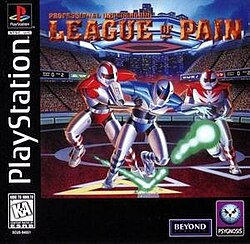 Klonoa Phantasy Reverie Series on PS5
 Onimusha: Dawn of Dreams on PS2
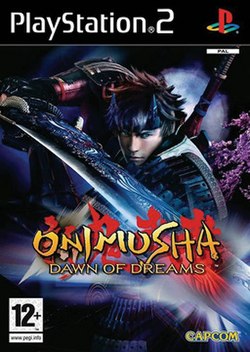 Action Man: Operation Extreme on PlayStation
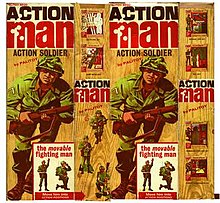 Door Kickers: Action Squad on Switch
 Combat Elite: WWII Paratroopers on PS2
 Rally Cross 2 on PlayStation
 Cool Boarders 2001 on PS2
 Cool Boarders 4 on PlayStation
 Cool Boarders 2001 on PlayStation
 Madagascar: Escape 2 Africa on PS2










 Another SquareThought Site