



Imagine being given control of a long metal vehicle full of people and being told your job is to be both boring and exact. That is Densha de Go! 3 Tsuukinhen, a train simulator from Taito that treats punctuality like a personal insult you have to slowly undo. Released for arcades, PC and ported to PlayStation 2 in 2000, this entry is where the series stopped pretending it was content with sprite-based charm and started modelling Japan's railways in proper 3D. If you like stress distilled into a timetable, or you want to know whether you can stop a train within 30 centimetres of a painted line while remaining emotionally unbroken, this is the title for you.
Densha de Go! 3 is very specifically not a racing game. There are no nitro boosts, no drifting across three tracks while a smug anime soundtrack screams at you. Instead the objective is to obey real-world train rules and an unforgiving timetable that will happily mark you as incompetent for arriving half a second late. Routes are authentic slices of Japanese railways - think the Sasaguri Line, Kagoshima Main Line, San'yō Main Line (JR Kobe Line), San'in Main Line, Chūō Main Line and Chūō-Sōbu Line. The game hands you those lines and says, in the calm tone of a conductor, "Don't make me call your supervisor." Gameplay logic is clean and strangely meditative. You accelerate with restraint, watch speed limits like they're law (they are), sound the horn for work parties, hit waypoints on time, and then perform the small miracle of stopping the train within a hair's breadth of a prescribed marker. The stopping requirements feel impressively literal: sometimes you have to be within 30 cm of the designated stopping point and within half a second of the scheduled arrival. The experience quickly turns your thumbs into tiny, tremulous engineers. Success feels less like victory and more like an expertly executed apology. Densha de Go! 3 is less about memorising rail lines and more about learning the rhythm of a route - the gentle rise of a slope here, the tiny speed restriction sign there. Compared with earlier entries, this version reduces the arcade-level punishment somewhat; it is still strict, but the improved GUI and route fidelity mean you get a little more feed-forward information. Those who played the old PS1 or arcade versions and missed being publicly humiliated by a coin-op cabinet will find the PS2 port slightly more forgiving, but only in the way a very polite executioner is forgiving. There are modes for quick familiarisation and serious timetable work, and the re-release (Daiya Kaisei) tidied some rough edges. For newcomers, it's helpful to know that this is a game of tiny adjustments - nudge the lever, watch the speed, reassure your passengers with timely stops. For obsessive types, unlocking perfect runs is a pursuit that lasts longer than most hobbies advertised on late-night TV. For everyone else, it's a zen exercise in not panicking while hundreds of pixels of commuters wait for you to be competent.
This was the first Densha de Go entry to embrace a markedly improved 3D engine on the series' home platforms, and the PS2 benefits from better models, textures and a clearer GUI. Where older versions used simpler visuals, 3 Tsuukinhen renders signalling, stations and trackside features with a seriousness that borders on passport photos. Time of day changes dynamically as you run a route, so a morning commute gradually shifts from sleepy dawn to hostile office-light. It's the kind of detail that makes you appreciate the art of rendering a telephone pole. The models are competent rather than dazzling - trains look like trains, platform shelters look like platform shelters, and textures sometimes have the slightly undersaturated sheen of a convincing simulation. The improvements are functional: better sightlines, more readable signs, and a general sense that the game finally trusts the player to look farther than the next station. If beauty were defined by efficiency and the absence of needless explosions, the graphics would be stunning. One small caveat: the visual ambition is practical, not showy. You won't confuse it with a contemporary AAA open-world release, but you also won't mistake it for a museum of polygons. The imagery serves the game's purpose - to make every signal and speed limit clear enough that you can obey it - which in a game about timetables is the whole point.
Densha de Go! 3 Tsuukinhen is a game for people who find calm in constraint and a strange satisfaction in being precise. It won't hold your hand with flashy tutorials, but it does reward patience: learn the nuances of braking curves, respect the signs, and be on time. The PS2 port benefits from a cleaner 3D engine and dynamic day-night transitions, and it's forgiving enough to be approachable while still maintaining the series' trademark discipline. If you're expecting action, explosions, or dramatic choices that determine the fate of a nation, look elsewhere. If you want a relaxing-but-serious simulator that can turn the act of stopping at a station into an emotional achievement, pick this up. The one downside is accessibility: the series and this title are very much made with Japan in mind, so menus, announcements and line names come with minimal translation. For the dedicated, that's part of the charm; for the casually curious, it is a minor barrier. Score: 7.5/10. It's precise, oddly calming, occasionally unforgiving and entirely sincere about trains. Which, remarkably, is its selling point.
 Densha de Go! Ryojouhen on PS2
 Densha de Go! Shinkansen: Sanyou Shinkansen-hen on PS2
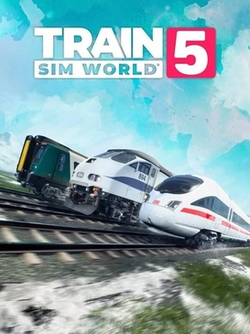
 Train Sim World 5 on PS5
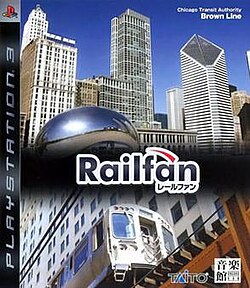
 Railfan: Chicago Transit Authority Brown Line on PS3
 Railfan: Taiwan High Speed Rail on PS3
 Densha de Go! Professional 2 on PS2
 Densha de Go! on PlayStation
 G-Darius on PlayStation
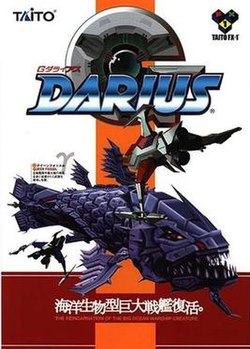 Darius Gaiden on PlayStation












 Another SquareThought Site