



Disney Sing It: Pop Hits is the fourth entry in the Disney Sing It franchise and lands on the PlayStation 2 like a glittery karaoke machine from the era when teens wore band tees and parents tolerated questionable vocal choices. Released October 6, 2009 in North America (with European and Australasian dates following), it bundles a Radio Disney-friendly track list - Hannah Montana, Jonas Brothers, Demi Lovato, and even non-Disney-pop regulars like Taylor Swift and Coldplay - with a set of modes you'd expect from a late-2000s party game: single-player, local multiplayer, and a "Singing lessons" mode that promises a virtual vocal coach. Zoeb Mode, known for party and rhythm titles, handles development, and Disney Interactive puts the seal of corporate approval on the whole package. If you're judging this on karaoke chops alone, the song selection is the room-full-of-friends equivalent of bringing pizza and a Bluetooth speaker: safe, immediately gratifying, and engineered to get people singing. If you're judging by the PS2's technical capabilities and the game's implementation, that's where the reviewer in me pulls out a frequency analyzer and raises a few nerdy eyebrows.
At its core Disney Sing It: Pop Hits is a pitch-tracking karaoke game with on-screen lyrics and scoring that rewards timing and intonation. The one explicit technical innovation called out in the available documentation is the "Singing lessons" mode with a virtual vocal coach - a feature that moves the product beyond mindless party scoring and into guided training. In practice this mode is where the game intersects with digital signal processing: it needs to analyze incoming microphone audio, extract pitch contours in real time, compare them to target notes, and render actionable feedback without audible lag. That chain is deceptively demanding on a PS2-class CPU. The PS2's hardware profile (narrower memory bandwidth, older floating-point performance, no modern threading model) means the developers likely leaned on optimized pitch detection techniques-autocorrelation or fast YIN variants rather than heavy machine-learning approaches. For a singing lessons feature you want a low-latency pipeline: microphone in, pre-emphasis, windowed FFT or autocorrelation, pitch candidate selection, smoothing, and then mapping to note accuracy and stability. When that pipeline is tuned well you get crisp, responsive feedback: the virtual coach can tell you whether you're sharp or flat and whether your sustained notes are stable. When it's not, you get the classic karaoke frustration where the game either lags behind your voice or mis-detects vibrato as pitch drift. From hands-on impressions of the series on similar hardware, the engine here errs on the side of permissiveness - it rewards bold attempts more than surgical pitch-perfect delivery. That keeps the party vibe upbeat but reduces the value of the lessons for someone trying to actually improve technique. Scoring systems in these games normally combine onset accuracy (did you start singing at the right time), pitch accuracy (how close you are to the melody), and rhythm stability (do you stay on the note for the required duration). The track list - a mix of Disney Channel soundtrack material and licensed pop - implies a collection of melodic lines that vary wildly in range and phrasing. For example, Miley Cyrus and Demi Lovato tracks tend to have more vocal runs and dynamic range, while Taylor Swift or OneRepublic material is often more straightforward melodically. That variety exposes the pitch tracker: tracks with long, sustained notes highlight calibration and latency; tracks with fast melisma force the system to prioritize transient detection. Multiplayer is local only on the PS2, so the technical challenge is simpler (no network sync) but still requires per-microphone tracking and mix management. Most PS2 karaoke setups rely on USB microphones or headset mic peripherals; that hardware variability means the game must be robust to differing input gains and noise floors. The PS2 version probably uses simple automatic gain control and a single-band noise gate to keep ambient noise from generating false positives, which keeps scoring honest in noisy living rooms but will occasionally flatten delicate vocal dynamics. A practical plus: licensing original-artist tracks gives the game clean, familiar backing tracks to work with, which simplifies timing and scoring (you're matching a fixed reference). The flip side is that original mixes can bury guide vocals or have complex production elements that make it harder for the pitch detection to identify the lead melody. Well-designed karaoke engines counter this with instrument stems or center-channel vocal reduction, but the documentation doesn't confirm whether such stems are available here. Given the PS2's constraints, any center-channel processing would have to be baked into the game's audio assets rather than computed on the fly.
On the PS2, graphics are functional and intentionally unobtrusive: the engine's job is to render lyrics, a pitch-accuracy lane, and some stylised stage backdrops without stepping on the audio processing CPU. Expect 480i/480p-class assets, compressed video snippets for artist brush-ins, and UI elements designed for clarity rather than visual flair. The lyric display uses a standard karaoke highlighting approach: progressive coloring of syllables to cue timing and a moving pitch graph or floating notes to indicate target frequencies. That visual mapping is critical for the technical performance of the vocal coach - it is the real-time feedback loop between your voice and the game's scoring heuristics. Frame rate and resolution limitations on PS2 are largely irrelevant for a karaoke title, where UI responsiveness and audio fidelity trump polygon counts. That said, the art direction leans into Disney Channel gloss: bright stage lights, quick camera cuts to artist imagery, and confetti moments on high scores. From an engineering standpoint, those are inexpensive effects that mask load times and give players dopamine hits without taxing either the GPU or the pitch-detection pipeline. Audio fidelity is the other half of graphical equivalence: compressed but high-quality backing tracks are necessary for enjoyable singing. On PS2, developers often used high-bitrate pre-rendered audio optimized for low CPU decode overhead. The game likely ships with loop-friendly, compact audio assets and a prioritized audio mixer that keeps vocals and backing in sync even under CPU pressure. Any latency here is far more damaging than a few low-res polygons; thankfully, the team behind it had experience shipping rhythm titles, so the baseline engineering choices aim to minimize input-to-feedback lag.
Disney Sing It: Pop Hits on PS2 is a pragmatic karaoke package: polished, safe, and tuned for the living-room singalong. Its strengths are obvious - a carefully curated playlist of Disney-era pop hits, simple multiplayer, and the inclusion of a singing lessons mode that raises the bar above pure gimmick. The technical challenges inherent to implementing real-time pitch detection and feedback on PS2 hardware are handled competently, prioritizing responsiveness and user-friendly scoring over hardcore accuracy. That design choice makes the game fun at parties but less useful as a true training tool for aspiring vocalists. If you're evaluating strictly on engineering merits, you can appreciate the careful balancing act between DSP demands and the PS2's limits: efficient pitch detection, robust input handling, and a UI that gives immediate visual feedback. If you're evaluating it as a music game for long-term replay, it can feel a touch conservative. Ultimately this is the kind of title that will get a room singing, reward enthusiastic playing, and rarely punish you for trying - which is absolutely the point. Score: 6.5/10. Bring batteries and a brave mic voice.
 Pop'n Music 12 Iroha on PS2
 Pop'n Music 11 on PS2
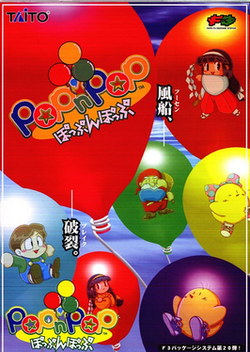
 Pop'n Pop on PlayStation
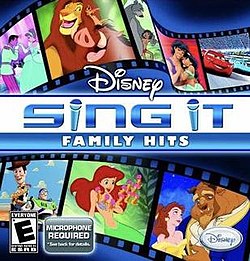
 Disney Sing It: Family Hits on PS3
 The Voice: I Want You on PS3
 Joysound Dive on PS3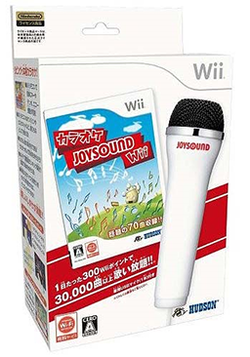












 Another SquareThought Site