



Pop'n Music 14 FEVER! slides into the PlayStation 2 era like a sugar-coated sugar rush with a perfectly timed clap. Part of Konami's long-running Pop'n Music series, FEVER! keeps the franchise's DNA intact: bright colors, ridiculously adorable characters, and a gameplay plate of nine giant buttons that somehow make you feel like you're conducting a tiny pop orchestra while trying not to spaz out. If you've ever wanted to press huge rainbow buttons in perfect sync to a beat and be rewarded with a dance animation so cute it should be illegal, this is your jam. The game sits comfortably in the Bemani family of rhythm games but refuses to pretend it's an instrument-because dramatic showmanship and exaggerated facial expressions are more fun than realism anyway.
The basic idea is deliciously simple and deceptively cruel: nine columns of notes (each linked to one of nine oversized buttons) tumble toward a red line and your job is to press the corresponding button when they hit it. The buttons are arranged in two rows-five on bottom, four on top-so it's like playing whack-a-mole while babysitting a rave. The notes themselves are called Pop-kun and even have little faces; it's impossible not to feel slightly guilty for missing one. Accuracy is reported with polite but judgmental messages: "Great," "Good," or "Bad." The scoreboard caps at 100,000 points, which is either comfortingly finite or frustratingly neat depending on whether you just shattered your own combo. Pop'n Music 14 FEVER! keeps the series' options menu intact, letting you tweak Hi-Speed (note scroll speed), Pop-kun styles (so you can stare at different smiling blobs), visibility settings, and randomness. These options matter: crank up Hi-Speed and you can make tricky charts readable; crank up the challenge and your thumbs will file an official complaint. The Groove Gauge is the game's life meter-play well and it rises into the "clear zone". When it's maxed out, your "Greats" become flashy "Fever" hits. Fever is mostly cosmetic: your character performs fancier animations but you don't get extra score beyond your ego swelling. Modes are where Pop'n flexes personality. Enjoy Mode (the beginner-friendly mode) trims the song list, simplifies charts, and protects newbies from total humiliation by starting you with a point pool and docking for mistakes. Challenge and Cho-Challenge modes score you on a point system across multiple songs, assign difficulty values, and let you enable "Norma" goals or "Ojama" annoyances. Choose Ojama and you're basically consenting to having random little obstacles thrown at you-like ordering a spicy side of chaos with that rhythm meal. Expert Mode (introduced in earlier entries and present in the series' DNA here) is for masochists who enjoy Stamina life bars that don't refill and a new accuracy tier called "Cool"-this one reduces the value of "Great" and "Good," making high scores ethically dubious and technically demanding. For the competitive souls, Battle Mode offers a two-player face-off with fewer buttons and an "action" button that triggers minigames mid-song. Get enough "Great" hits and you start a little duel that requires alternating button presses on beat while still keeping up with the normal chart. Fumble and you receive an Ojama. There's also Net Taisen in the arcade lineage-matching players across networks-but on the PS2 you get local and CPU-mode approximations. Pop'n's charts can be punishing on higher difficulties; some veteran players argue they're among the hardest in rhythm-game history. On the flip side, the lower difficulties and simplified modes make the series remarkably welcoming for beginners, so you can go from lovable klutz to furious button warrior without changing your console.
Visually, Pop'n Music 14 FEVER! wears its kawaii heart on its sleeve. The interface favors solid, saturated colors and cheerful 2D character art over photorealism or flashy 3D menus. Each song is represented by its own character avatar, and your chosen character rewards or roasts you with different animations depending on performance-miss a lot and the cat sulks, nail a streak and the rabbit does a tiny victory jig. There aren't elaborate backgrounds or stage cinematics; the focus is the notes and the characters, which keeps the screen clean and your attention where it should be. On the PS2 the visuals hold up nicely for what they are: crisp sprites, bright palettes, and readable note lanes. The presentation intentionally avoids clutter-there's no effort to fake a real instrument interface because Pop'n never wanted to be a simulator. It's more like a flash cartoon that only occasionally judges your soul. The physical PS2 controller revisions and the official mini-controllers (and the arcade-era big-button controllers) add to the charm; if you've ever seen a homemade Pop'n pad you know that part of the fun is how tactile the experience can be. In short, FEVER!'s graphics aren't trying to be modern art-they're trying to be adorable, and they succeed.
Pop'n Music 14 FEVER! is a feel-good, addictive rhythm game that knows what it is and does it with panache. It's accessible enough for friends and newcomers to pick up and enjoy in Enjoy Mode, but deep enough that experienced players will find brutal challenges hiding in Hyper and EXtra charts. The nine-button layout makes the game visually and mechanically distinct from its Bemani cousins, and the Groove Gauge/Fever theatrics keep the mood playful rather than purely competitive. If you want variety, there are genre-spanning songs from reggae to eurobeat and cute medleys to keep your thumbs busy. The only real downsides are those of design choice rather than execution: if you crave flashy, cinematic visuals or online multiplayer bells and whistles, Pop'n's minimalist visual focus and era-limited PS2 online features might feel quaint. For anyone who values charm, precise timing, and a game that makes you grin while it destroys your combo, Pop'n Music 14 FEVER! is a delightful pick. It earns an 8 out of 10: a winning concoction of color, challenge, and cheer that's still great at parties-or at 3 a.m. when you're trying to master an impossible chart and your cat gives you that look.
 Pop'n Music 11 on PS2
 Pop'n Music 10 on PS2
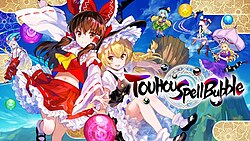
 Touhou Spell Bubble on Switch
 Nodame Cantabile on PS2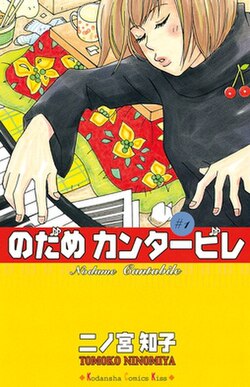
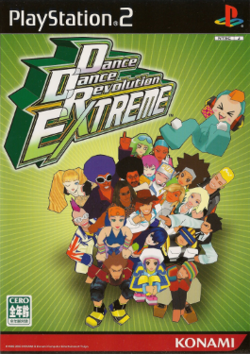
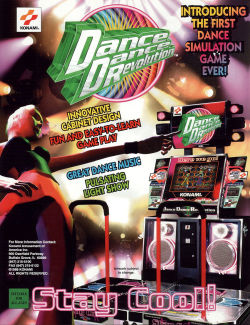 Dance Dance Revolution Extreme on PS2
 Pop'n Music 5 on PlayStation












 Another SquareThought Site